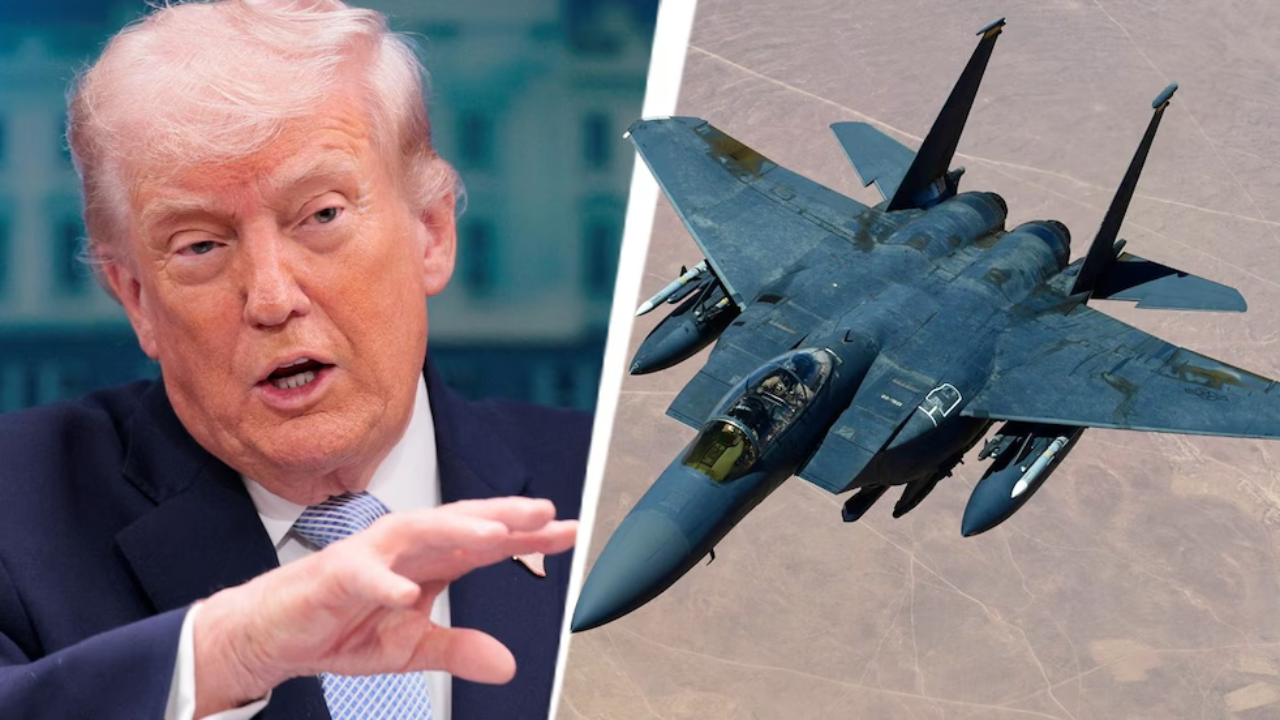
In early April 2026, the U.S. military executed what is now being called the most massive Combat Search and Rescue (CSAR) operation in modern history. To recover two crew members of a downed F-15E Strike Eagle, the U.S. deployed a staggering 176 aircraft and utilized a complex series of decoys to outmaneuver Iranian forces.
Thank you for reading this post, don't forget to subscribe!The “Air Armada” Strategy
- 155 Aircraft for One Man: To rescue the Weapons Systems Officer (WSO)—who was severely injured and hiding in mountainous terrain—the U.S. dedicated 155 planes to provide top cover, electronic jamming, and refueling.
- The “Lego” Insertion: In a feat of technical speed, cargo planes landed at a remote, abandoned strip where teams reportedly assembled three small helicopters in under 10 minutes to fly the final “hop” into the extraction zone.
Subterfuge and Decoys
- Seven LZ Shell Game: Planners established seven different Landing Zones (LZs) across the region. This forced Iranian trackers to split their resources, never knowing which site held the rescue team.
- Strategic Sacrifice: To maintain the pace of the mission, the U.S. followed a “leave no man, but leave the gear” policy. When two MC-130J transport planes became stuck or damaged, U.S. forces intentionally blew them up to keep the tech out of Iranian hands.
Mission Outcome
The Cost of Recovery: While the U.S. lost an F-15E, an A-10 Warthog, and two MC-130Js (totaling hundreds of millions of dollars), the mission reported zero American fatalities.