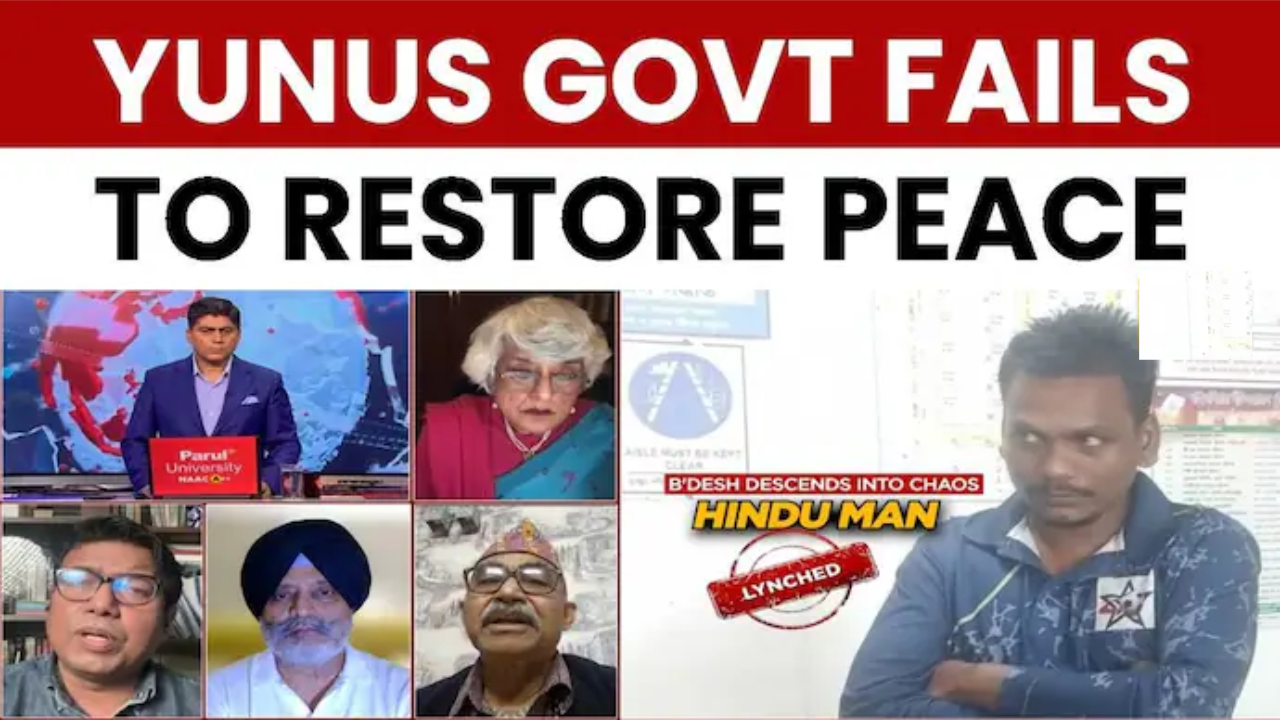
The ouster of Sheikh Hasina has triggered a profound ideological crisis in Bangladesh. a panel of strategic and diplomatic experts warned that the country is witnessing a violent rejection of the very principles—secularism and linguistic nationalism—that defined its 1971 independence.
Thank you for reading this post, don't forget to subscribe!1. The War on Secular Values
Senior journalist Subir Bhaumik presents a grim assessment, arguing that the current instability is not merely political but a “complete all-out attack” on the foundational values of the Liberation War.
- Institutional Targeting: The violence has moved beyond the streets to target the pillars of Bangladeshi civil society. This includes coordinated attacks on the Chhayanaut cultural center and leading secular media outlets like Prothom Alo and the Daily Star.
- A New Radicalism: Bhaumik suggests these attacks are intended to erase the secular “1971 spirit” and replace it with a more hardline, religious-nationalist identity.
2. Influence of the Jamaat-e-Islami
Former Indian High Commissioner Ambassador Veena Sikri provided a sharp critique of the current governance structure under Muhammad Yunus.
- The “Shadow” Power: Sikri warns that while Muhammad Yunus heads the interim government, the Jamaat-e-Islami is increasingly pulling the levers of power.
- Minority Vulnerability: She highlights the escalating attacks on minorities as a direct consequence of this shift, suggesting that the interim administration is either unable or unwilling to curb the influence of radical factions.
3. Strategic Dependency on India
From a military and geopolitical perspective, Lt Gen Tiny Dhillon (Retd), former DG of India’s Defence Intelligence Agency, emphasized the harsh realities of the regional map.
- Economic & Security Reliance: Dhillon asserts that Bangladesh “cannot survive without India’s support.” Whether through trade, energy, or security cooperation, the two nations are deeply interdependent.
- Regional Stability: He warns that if Bangladesh continues to spiral into radicalism, it creates a “strategic vacuum” that could destabilize India’s borders and the wider South Asian region.
Summary of the Crisis
| Key Concern | Expert Viewpoint |
| Ideological Shift | An assault on the secular values of 1971. |
| Governance | Concerns that Jamaat-e-Islami is controlling the interim government. |
| Media Freedom | Coordinated attacks on secular newspapers like Daily Star. |
| Geopolitics | Bangladesh’s survival remains tied to its relationship with India. |