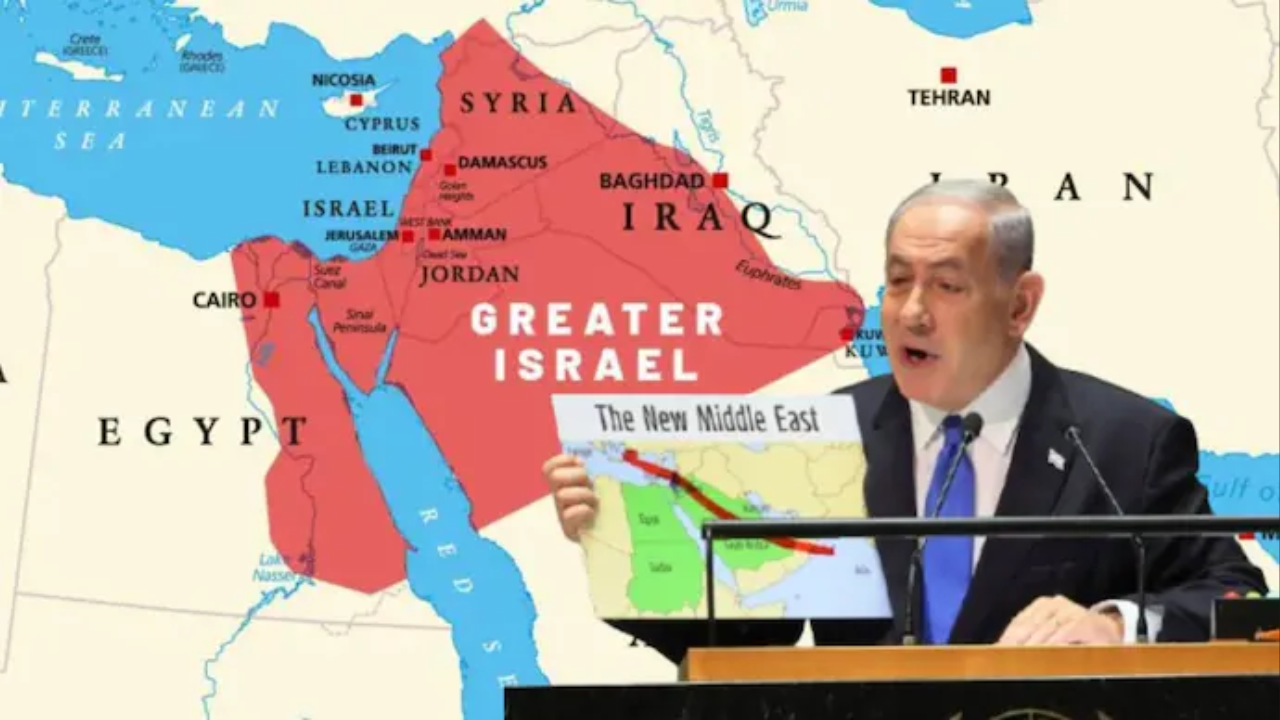
The question of whether Israel is expanding its borders through war involves a complex interplay of military necessity and political ideology. While official national borders haven’t been formally redrawn, significant structural changes on the ground suggest a transition from temporary occupation to long-term territorial control.
Thank you for reading this post, don't forget to subscribe!1. The West Bank: Administrative Integration
Outside the immediate combat zones, the West Bank is experiencing what experts call “Bureaucratic Annexation.”
- Legal Shifts: In early 2026, the Israeli security cabinet transferred several civil authorities from military commanders to civilian officials. This move effectively integrates West Bank administration into the Israeli state apparatus.
- Settlement Footprint: Record-breaking approvals for new housing units and the retroactive legalization of remote outposts have created a continuous Israeli presence that complicates the possibility of a future Palestinian state.
2. Gaza: The Strategic Shrinkage
In Gaza, the Israeli Defense Forces (IDF) have shifted from active combat to establishing permanent security infrastructure:
- The Buffer Zone: A cleared perimeter along the border acts as a “no-go” area, physically reducing the habitable land within the strip.
- The Netzarim Corridor: This fortified, east-west highway allows the IDF to control all movement between northern and southern Gaza, effectively bisecting the territory indefinitely.
- Operational Control: Military planners have implemented “Security Lines” where Israeli forces maintain long-term oversight, a move critics describe as a “creeping” reduction of Gaza’s sovereign space.
3. Southern Lebanon: The New “Security Belt”
Following the 2026 conflict with Hezbollah, the concept of a northern “buffer” has moved from theory to reality.
- The Litani Objective: Influential members of the Israeli cabinet have called for the border to effectively sit at the Litani River, roughly 30km north of the current international boundary.
- Demolition and Displacement: Systematic clearing of border villages has created a depopulated zone intended to prevent direct fire on Israeli towns, mirroring the security models used in Gaza.
Comparison of Territorial Control (2026 Status)
| Region | Primary Mechanism | Current Reality |
| West Bank | Legislative/Civilian | Increased settlement density; civilian-led governance. |
| Gaza | Military Engineering | Fixed corridors; permanent “no-go” zones. |
| S. Lebanon | Strategic Occupation | Active “buffer zone” pushing toward the Litani River. |
Conclusion: Security vs. Sovereignty
The Israeli government maintains that these measures are purely defensive—essential to preventing a repeat of the October 7 attacks. However, the international community and legal bodies like the ICJ have raised alarms, suggesting that the permanence of this infrastructure constitutes an unlawful expansion of territory under the guise of security.

"Suresh Kumar Saini is an experienced Tax Assistant and finance writer. He specializes in US & Canada Tax Guide, Indian Income Tax laws, GST compliance, and personal finance, helping freelancers and remote workers optimize their taxes."