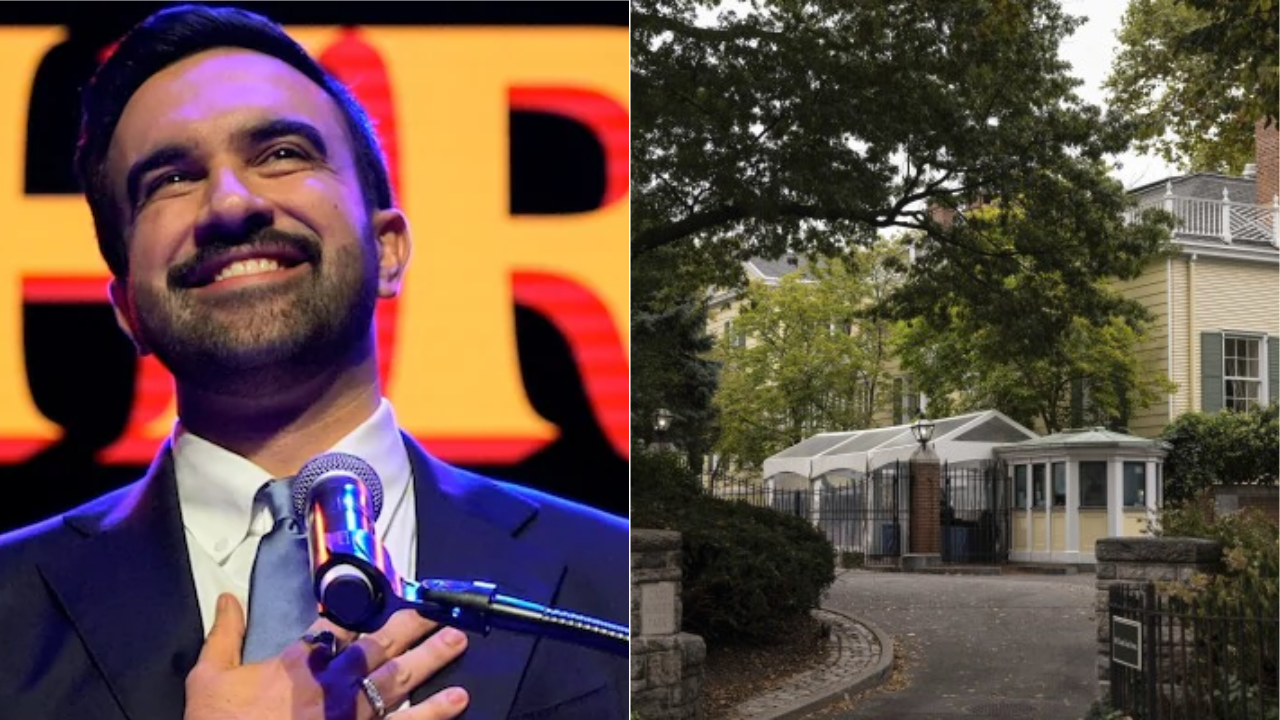
Zohran Mamdani, the Indian-American Democratic socialist and Mayor-elect of New York City, is poised for a dramatic change in address. His journey from a humble one-bedroom rental in Queens to the threshold of the historic mayoral mansion is a powerful symbol of his rise and the weight of his office.
Thank you for reading this post, don't forget to subscribe!The choice he faces—to stay in his current neighborhood or move into the official residence—is not just about square footage; it is a defining statement for a mayor who ran on a platform of grassroots affordability.
Tale of Two Homes: Astoria vs. Upper East Side
The contrast between Mamdani’s current life and the life offered by Gracie Mansion is stark, underscoring the shift in his political role.
| Feature | Astoria One-Bedroom Apartment | Gracie Mansion (Official Mayoral Residence) |
| Size & Style | 800 sq. ft., 1929 rental | Nearly 11,000 sq. ft., 226-year-old Federal-style manor |
| Monthly Cost | USD 2,300 (modest by NYC standards) | Residence provided by the city (no personal rent) |
| Amenities | No in-unit laundry (uses communal room), shared elevator, leaky sink | Chandeliers, grand ballroom, veranda, lawns with apple/fig trees, full-time chef |
| Location | Astoria, Queens (buzzing with immigrants, working-class professionals) | Carl Schurz Park, Upper East Side (tucked behind high fences) |
| Security | None mentioned | Round-the-clock police presence and cameras |
The Weight of the Decision: Undecided, For Now
Mamdani has yet to confirm his living plans, stating, “I don’t yet have an answer on where I’m going to be living… but I can tell you where I’m going to be working, and that’s City Hall.”
- Staying in Astoria: Would reinforce his progressive, grassroots image, sending a message that he remains rooted among everyday, working-class New Yorkers who face high rents and apartment troubles (like a leaky sink).
- Moving to Gracie Mansion: Represents an embrace of the office’s traditions and responsibilities. It offers the necessary space for official duties, receiving dignitaries, and a crucial level of security that his current home lacks.
Mamdani’s transition mirrors his own story: from a modest apartment concerned with a leaky sink to the threshold of a home steeped in power and history. The towels may still be on the floor, but the keys to Gracie Mansion await.