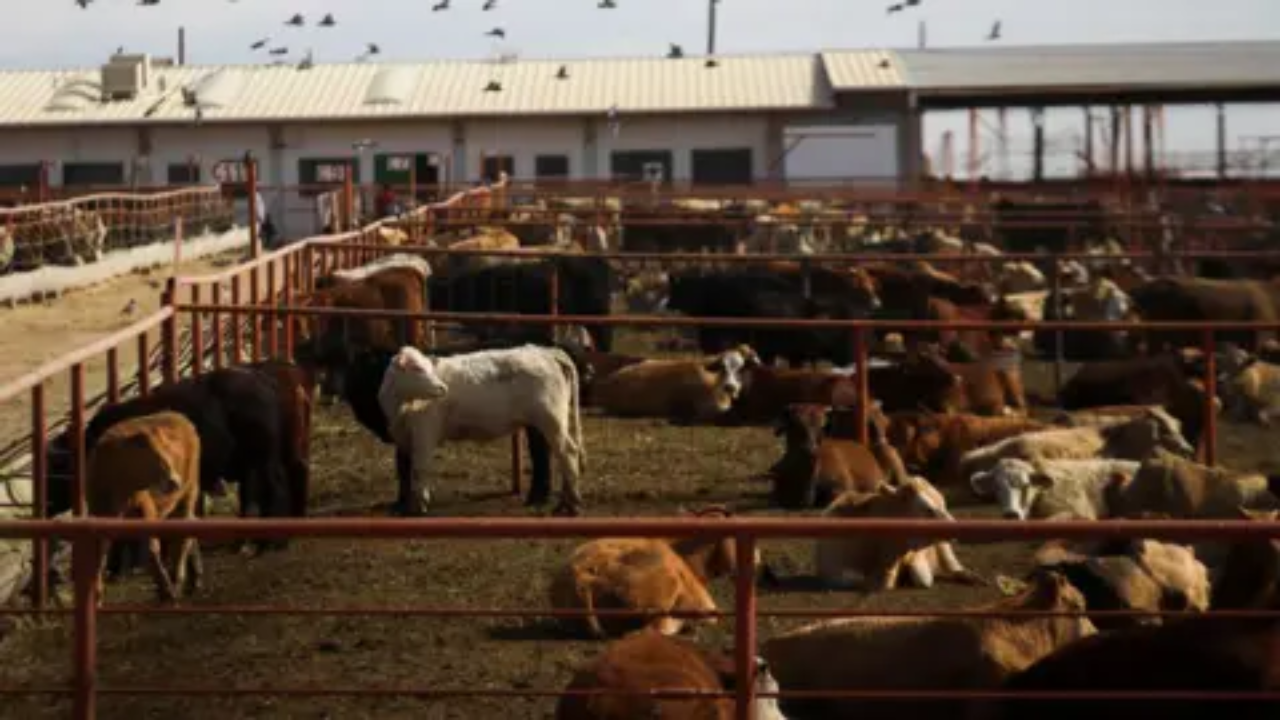
The Canadian Food Inspection Agency (CFIA) has enacted emergency import restrictions on American and Mexican livestock. The drastic measure follows confirmation of a New World screwworm (Cochliomyia hominivorax) infestation in a three-week-old calf on a ranch in La Pryor, Texas.
Thank you for reading this post, don't forget to subscribe!Texas Governor Greg Abbott has declared a state of disaster over the outbreak. This case marks the first locally acquired instance of the devastating parasite in the United States since 1966.
Inside Canada’s Emergency Restrictions
To shield the Canadian agricultural sector from the parasite, the CFIA has implemented the following strict border protocols:
- The Texas 21-Day Rule: Any livestock—including cattle, bison, sheep, goats, swine, cervids, and horses—that originated in or traveled through Texas within 21 days of reaching the Canadian border will be denied entry.
- Total Ban on Mexican Livestock: The CFIA has completely halted all livestock imports from Mexico, where the parasite has been tracking steadily northward.
Why the Screwworm is an Agricultural Nightmare
Unlike standard blowflies or maggots that feed only on dead, necrotic tissue, the New World screwworm is uniquely destructive because its larvae feed exclusively on living flesh.
[Adult Fly Lays Eggs in a Minor Cut or Wound]
                      │
                      ▼
[Larvae Hatch & Use Sharp Mouthhooks to Burrow Inside]
                      │
                      ▼
[Deep, Foul-Smelling Wounds Form, Attracting More Flies]
- Targeting the Vulnerable: Female flies are drawn to open wounds, scratches, or tick bites. Newborn calves are prime targets, as the flies easily exploit healing umbilical cords.
- High Fatality Rate: Left untreated, hundreds of maggots will burrow deep into the host, causing massive tissue destruction, secondary infections, and ultimately, death.
Food Safety Update: The USDA and CFIA stress that the larvae do not affect meat. This outbreak poses no risk to commercially inspected, cooked beef products. Human cases are also incredibly rare, generally restricted to individuals unable to access basic wound care.
The Collapse of a 60-Year Barrier
The United States successfully eradicated the screwworm in 1966 using the Sterile Insect Technique—a process where billions of male flies are sterilized via radiation and released into the wild to disrupt the mating cycle. For decades, a strict biological barrier maintained in Panama kept the pest confined to South America.
However, over the last two years, that barrier failed. The fly breached containment, rapidly advancing through Central America and Mexico before finally crossing the Rio Grande into southern Texas.
The Outlook
While Canada’s cold climate prevents the screwworm from establishing a permanent population, the larvae can thrive and spread during warm summer months. Canadian veterinarians and ranchers are now on high alert to inspect herds for unusual or rapid wound degradation.
Meanwhile, the USDA is deploying emergency field teams to release millions of sterile flies in Texas, aiming to crush the outbreak before the parasite can threaten the broader U.S. cattle market.

"Suresh Kumar Saini is an experienced Tax Assistant and finance writer. He specializes in US & Canada Tax Guide, Indian Income Tax laws, GST compliance, and personal finance, helping freelancers and remote workers optimize their taxes."