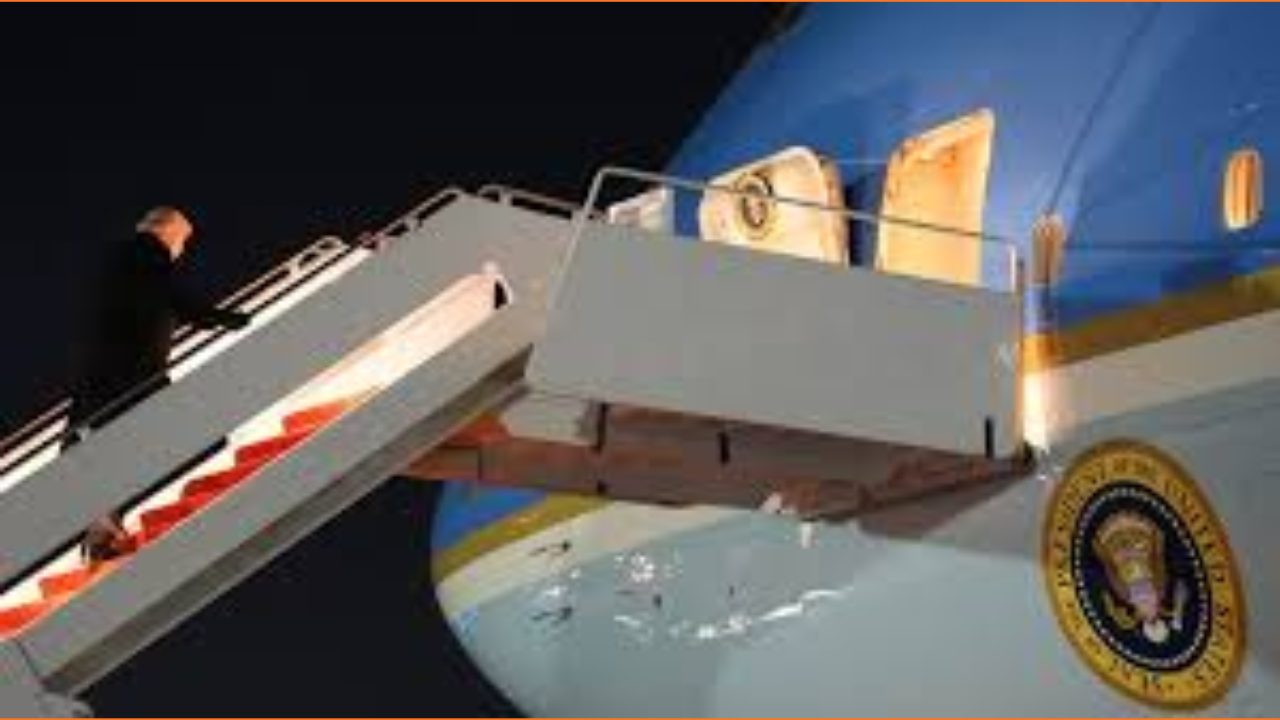
President Donald Trump’s trip to the World Economic Forum in Davos faced an unexpected setback Tuesday night. Roughly 30 minutes after departing Joint Base Andrews, the iconic VC-25A aircraft (Air Force One) was forced to abort its mission and return to Maryland.
Thank you for reading this post, don't forget to subscribe!Timeline of Events
- 10:30 PM ET: Takeoff from Joint Base Andrews. Reporters on board reported flickering cabin lights shortly after the plane reached cruising altitude.
- 11:07 PM ET: The aircraft landed safely back at the base. White House Press Secretary Karoline Leavitt confirmed the return was due to a “minor electrical issue” and was handled out of an “abundance of caution.”
- 12:15 AM ET: The President and his staff transferred to a backup Air Force C-32 (a modified Boeing 757) to resume the journey to Switzerland.
Why It Happened: The Aging Fleet
This incident highlights the ongoing challenges with the current presidential aircraft:
- Outdated Tech: The two primary 747-200B jets have been in service since the George H.W. Bush administration (1990).
- Maintenance Hurdles: Maintaining these “flying Oval Offices” has become increasingly difficult as parts become rarer.
- The Successors: New Boeing 747-8s are currently in production but have been plagued by delays, with an expected delivery date not until 2027 or 2028.
Impact on the Davos Trip
Quick Comparison: The Planes Involved
| Feature | Primary Air Force One (VC-25A) | Backup Aircraft (C-32) |
| Model | Boeing 747-200B | Boeing 757-200 |
| Capacity | ~70 passengers | ~45 passengers |
| Status | Returned for repairs | Used for Davos flight |
| Issue | Electrical failure | N/A |