An adjustable-rate mortgage (ARM) is a home loan with a fixed interest rate for an initial period that then adjusts periodically based on market conditions. ARMs can help you land a lower interest rate in today’s high-rate environment. According to the latest Mortgage Bankers Association (MBA) data, choosing a 5/1 ARM over a fixed-rate 30-year mortgage would mean the difference between a 6.28% rate and a 7.21% rate. However, ARMs aren’t without risk, and they’re only right for certain borrowers in certain situations.
How does an ARM loan work?
ARMs behave like two different mortgages rolled into one loan agreement. It begins with a fixed-rate term, usually between five and 10 years. During this period, your interest rate and payment will remain the same.
After that, it converts to a variable-rate loan with an interest rate that can change (up or down) every six months or annually, based on market conditions. This means your monthly mortgage payment also changes.
To fully understand how ARMs work, you need to understand what their formulas mean. For example, let’s examine the “5/1” ARM:
- The first number is the number of years for the introductory fixed-rate term. In a 5/1 ARM, the “5” means the introductory period lasts five years. In other words, your intro rate is locked in for five years.
- The second number is the period for each adjustment after the initial term. In this case, a “1” means the rate changes annually. If the second number were a “6,” the rate would fluctuate every six months.
Not every mortgage lender will offer all iterations of ARMs. If there’s a specific term or adjustment period you’re looking for, you may need to shop around for it.
ARM rate caps
Though ARM rates can rise, they typically have limits on how high they can go. Usually, three maximums are built into a variable-rate structure.
These caps can put a limit on:
- The initial rate increase
- The amount the rate can move in subsequent adjustments
- The maximum rate change over the entire mortgage
Knowing the caps a loan comes with allows you to calculate the absolute maximum rate and payment you could face down the line. This can help you decide if a particular loan offer is right for you.
How ARM rates are determined
ARMs use one of several broad-market interest rate indexes to determine a loan’s variable rate. Authorities regulate these indexes, which serve as benchmark rates for many loan products.
To set a loan’s rate, mortgage lenders choose an index and add a percentage cushion, called a margin, on top. Different lenders add different margin amounts, so it pays to compare several companies’ ARM mortgage rates as you would with any other loan product.
Types of adjustable-rate mortgages
5/1 ARM
An ARM is where the initial fixed-rate period lasts for five years, and then the interest rate adjusts every year thereafter.
5/6 ARM
With this ARM, the introductory fixed interest rate lasts for five years, then adjusts every six months.
7/1 ARM
With a fixed interest rate that lasts for seven years, the 7/1 ARM then resets its variable rate annually.
7/6 ARM
The introductory fixed rate lasts for seven years, after which the interest rate is subject to change every six months.
10/1 ARM
One of the longest-term ARMs on the market, the 10/1 maintains a fixed mortgage rate for 10 years. After that, the interest rate is variable, with possible adjustments every year.
10/6 ARM
An ARM with an interest rate set for a full 10 years, then vis variable and subject to change every six months.
Payment-option ARM
A payment-option ARM lets you choose how much of the principal and interest to pay for a specified time. The borrower can pay only the interest on the loan, or some combination of the mortgage principal and interest, over several years. You’ll owe less initially, but will face much higher monthly payments later.
Interest-only ARM
With an interest-only ARM, you’ll have a lower monthly payment, but you won’t be reducing the debt you owe. A lender may offer the interest-only option for the initial period of an ARM. Once that period expires, your monthly payment may skyrocket because your payment will consist of both principal and interest.
Tax Assistant Tip: Payment option and interest-only ARMs can result in negative amortization. That’s when your monthly payment is insufficient to cover the interest due. The amount you owe will increase rather than decrease. It’s probably best to avoid these ARM options.
Convertible ARM
A convertible ARM includes an option to convert to a fixed-rate loan without additional closing costs. It’s like having a refinance option automatically included in your loan.
One downside: The conversion option is usually only available after the introductory period, when the ARM begins rate adjustments. That limits when you can refinance and at what interest rate.
Pros and cons of an adjustable-rate mortgage
Pros
- You may get a lower initial interest rate compared to a 30-year loan.
- Your monthly payment will likely be lower at the start.
- Your rate could decrease in the future.
- You may be able to convert or refinance your mortgage to a lower fixed rate later.
Cons
- Interest rate increases during the adjustment period may make your payments increasingly less affordable over time.
- Budgeting for a payment that can change every six months to a year can be challenging.
- Interest rates may be higher when you’re ready to refinance to a fixed-rate mortgage.
- You may end up paying more in interest in the long run.
How to qualify for an ARM
Getting approved for an ARM is much like qualifying for any other mortgage. Lenders will consider your credit score, income, debt, and payment history. Generally, you’ll need a minimum FICO credit score of 620, at least for a conventional ARM.
Down payment requirements are generally the same as fixed-rate mortgages. Many lenders prefer at least a 5% down payment, though you may be able to put down as little as 3.5% with an FHA ARM.
Is an ARM a good idea in 2027?
You may be anxious to get any break you can from today’s high mortgage rates. And while an ARM may offer that opportunity, it’s still important to shop around for lenders and compare several mortgage loan options.
“The mortgage industry is ultra competitive,” said Walter Payne, president and founder of Vantex Capital Group. “We always recommend shopping with the large direct mortgage lenders to start with, then finding a reputable mortgage broker to see if they can do better. Because mortgage brokers have the ability to shop multiple lenders, many offer a highly qualified borrower a much better deal than they can find themselves.”
Refinancing an ARM loan
If you qualify, you can refinance an ARM into a fixed-rate mortgage later on. You might want to do this if your income changes and you need a more steady payment, rates are rising and you want to avoid even more increases to your payment in the future, or interest rates fall on fixed-rate products, as industry experts project.
Take note, though: Some lenders will charge a prepayment penalty if you refinance or pay off your loan during the first few years. You will also pay closing costs on the new loan.
Your personal situation may say otherwise
Market conditions currently point to rates rising through the end of 2027, so you may feel pressure to lock in a lower interest rate now. That said, interest rates are only one piece of the homebuying puzzle. To determine whether an ARM is a smart move, consider your personal finances, goals, and other factors.
How long do you expect to live in this house and have the mortgage? Will you sell the home or refinance your mortgage before the rate on your ARM can start to adjust?
Most ARMs have a set rate for the first three, five, seven, or 10 years, and after that introductory rate period, it can move up or down based on the index it’s tied to. As long as you plan to refinance the loan or sell the home before the end of your intro rate period, you’re safe from any potential mortgage rate increases.
You should also consider your financial situation, specifically your income. Do you have a consistent income you can rely on each month, or does it vary monthly or seasonally? Do you expect to earn more or less in a few years? Is your job stable?
The answers to these questions can help you decide if you can handle shifting mortgage payments over the years. If your budget is already tight with the introductory ARM rate and you don’t expect to earn much more in a few years, you could be setting yourself up for financial strain.
Be sure to ask each mortgage lender the following questions:
- How long are my initial interest rate and payment guaranteed to stay the same?
- Will I be making sufficient principal and interest payments to pay off the loan over the term?
- How high can the interest rate on my ARM go?
- How high would my payment (with principal and interest) be at the maximum interest rate? (Then ask yourself, can I afford that payment if it becomes a reality?)
- Does the loan have a conversion option? (See “Convertible ARM” above.)
- Is there a prepayment penalty if I refinance or pay off the loan during the introductory interest rate period?
- Does the ARM have a “teaser rate” built in? If so, what will the first adjustment payment be?
Tax Assistant tip: A “teaser rate” provides an even lower initial interest rate; however, it does increase the likelihood that your payment will rise, whether index interest rates do or not.
ARMs vs. fixed-rate mortgages
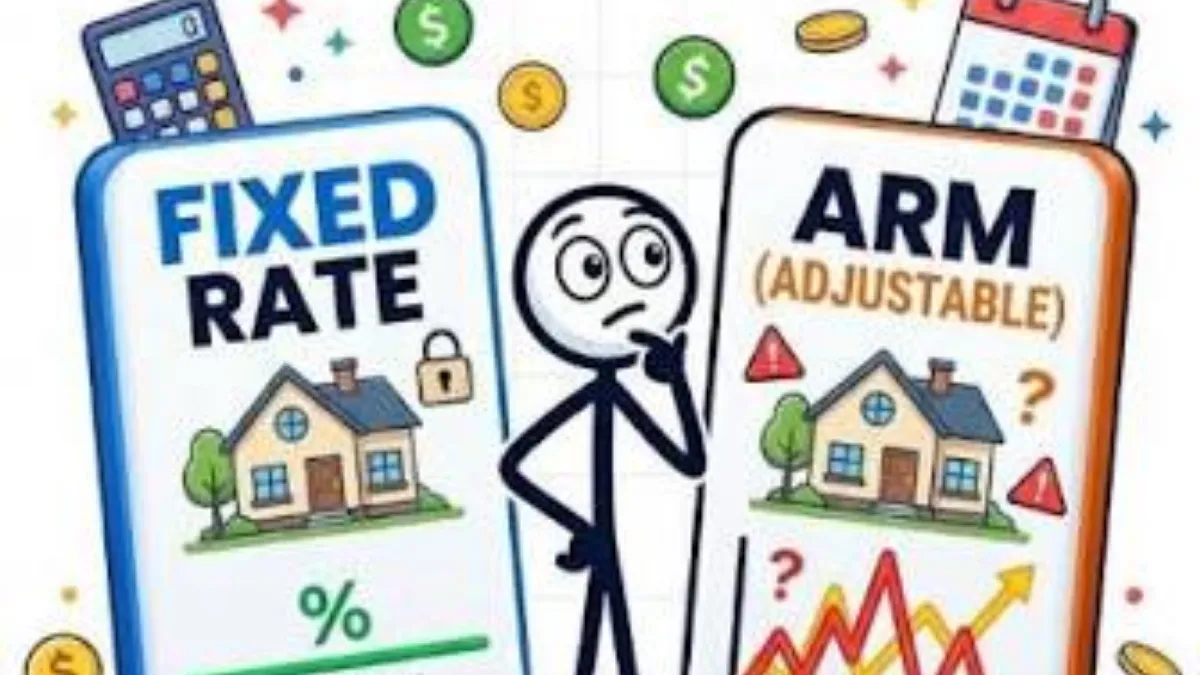
The main difference between fixed-rate mortgages and ARMs is that one offers a consistent rate and payment for the entire loan term, while the other has a rate and payment that can fluctuate.
Keep in mind that market rates change, so an ARM is typically only the best choice in two scenarios: You know you will own the house for only a short period of time, (meaning you will sell the house before that initial interest rate expires), or you have sufficient income to cover higher monthly payments that accompany any future rate bumps.
A fixed-rate loan may be a better option if you intend to stay in a home for many years or you have a variable income that could make it difficult to cover a constantly changing payment.
Refinancing an ARM loan
If you qualify, you can refinance an ARM into a fixed-rate mortgage later on. You might want to do this if your income changes and you need a predictable budget, interest rates are rising and you want to avoid future payment increases, or interest rates fall on fixed-rate products, like a 30-year loan.
Giving yourself some lead time can be wise. “The most common ARM loans are ones that have a long-term fixed period, typically 7 to 10 years,” Payne said. “This feature locks in the initial interest rate payment for a long enough time to give the borrower an opportunity to refinance and lock in a lower fixed rate and monthly payment for the life of the loan.”
Take note: Some lenders will charge a prepayment penalty if you refinance or pay off your ARM loan during the first few years. You will also pay closing costs on the new loan.
Is an ARM the right choice?
You may be surprised to find that the published initial rates on ARMs aren’t that much lower than advertised fixed-rate mortgage rates. That’s why it’s so important to shop multiple lenders and get preapproved to learn what interest rates you might earn.
Tax Assistant Tip: Lenders build points into their loan offers to sweeten their advertised interest rates. If you ask loan providers for offers with zero mortgage discount points, you’ll be comparing offers on an equal basis.
An adjustable-rate mortgage (ARM) works like two loans in one: it starts with a fixed interest rate and predictable monthly payment for an introductory period—typically five, seven, or 10 years—before switching to a variable rate that adjusts every six months or once a year based on a broad-market interest rate index plus the lender’s margin.
The first number indicates how many years the introductory fixed interest rate lasts, while the second number tells you how often the rate can adjust afterward. In a 5/1 ARM, your rate is locked for five years and adjusts once per year thereafter; in a 7/6 ARM, your rate is locked for seven years and adjusts every six months afterward.
Most ARMs include three rate caps that limit how high your interest rate can climb:
Initial adjustment cap: Limits how much the rate can increase the very first time it adjusts after the introductory period.
Subsequent adjustment cap: Limits how much the rate can rise during each adjustment period after the first.
Lifetime cap: Sets the absolute maximum interest rate increase allowed over the entire life of the loan.
Qualifying for an ARM is similar to qualifying for a fixed-rate mortgage—lenders evaluate your credit score, income, debt-to-income ratio, and payment history. For a conventional ARM, you generally need a minimum FICO credit score of 620 and at least a 5% down payment, though an FHA ARM may allow a down payment as low as 3.5%.
An ARM can be a smart way to secure a lower initial rate—such as a 5/1 ARM averaging around 6.28% to 6.38% compared to 30-year fixed rates above 7.20%—if you plan to sell the home or refinance before the introductory fixed period expires, or if you have enough income flexibility to comfortably afford higher payments should rates rise. A fixed-rate mortgage is usually safer if you plan to stay in the home long-term or rely on a tight, predictable monthly budget.

Suresh Saini is the Founder and Lead Financial Researcher at Tax Assistant. He holds a Master of Commerce (M.Com) degree with a specialized focus on Advanced Accountancy, providing him with a robust academic and analytical foundation in complex accounting principles, credit systems, and personal finance structures.
Driven by a passion to democratize financial literacy, Suresh has spent years analyzing and decoding shifting fiscal guidelines. At Tax Assistant, he manages the platform’s core editorial direction, transforming dense government updates and complex banking parameters into structured, clear, and actionable guides for both individual taxpayers and small businesses across North America.
Before launching taxassistant.org, Suresh conducted deep financial and market dynamics research, focusing on asset management, personal wealth optimization, and strategic tax planning. His dedication to data integrity ensures that every piece of news, breakdown, or analysis published under his leadership is rigorously fact-checked by certified tax professionals and aligned perfectly with contemporary regulatory frameworks.