U.S. President Donald Trump has radically shifted the landscape of Middle East diplomacy. In a series of Truth Social posts, Trump declared it “mandatory“ for major Muslim-majority nations involved in regional peace talks to sign the Abraham Accords and normalize relations with Israel as part of any final deal with Iran.
By linking a potential Tehran truce to a sweeping regional realignment, Trump is aiming for a massive diplomatic breakthrough—though critics argue it introduces immense friction into already fragile negotiations.
The Mandatory Signatories
Trump named six key nations that he insists must join the U.S.-brokered accords alongside any final agreement:
- Saudi Arabia & Qatar: Crucial Gulf power players.
- Pakistan & Turkey: Major regional military and economic forces.
- Egypt & Jordan: Both already hold independent peace treaties with Israel but are being pressured to integrate into the broader Accords framework.
Trump explicitly warned that countries refusing to sign “should not be part of this Deal,” framing refusal as a sign of “bad intention.” In an even more ambitious twist, Trump suggested that Iran itself could eventually join the Accords once Washington settles its terms.
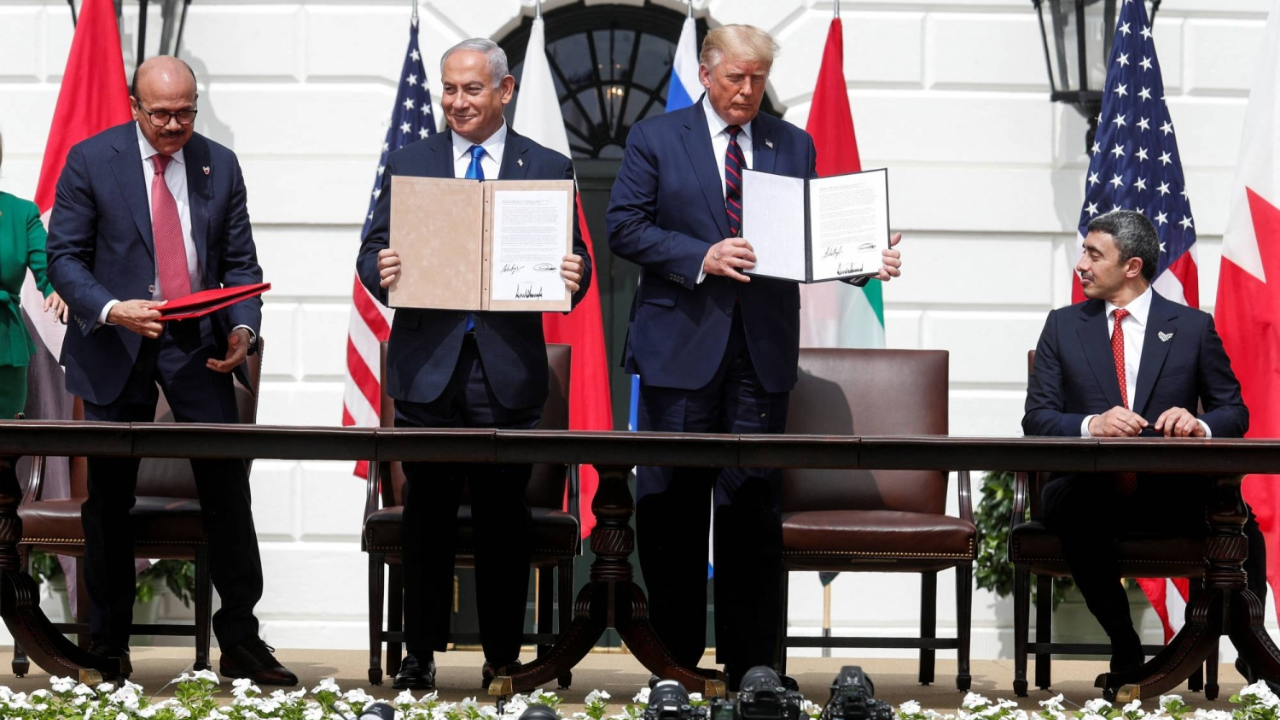
Flashback: Brokered during Trump’s first term in 2020, the Abraham Accords established formal diplomatic and economic normalization between Israel and several Arab nations, including the UAE, Bahrain, Morocco, and Sudan.
Immediate Roadblocks & Regional Resistance
While Trump claims negotiations are “proceeding nicely,” his new ultimatum has run into immediate diplomatic walls:
- The Palestinian Condition: Heavyweights like Saudi Arabia and Qatar have long maintained that formal recognition of Israel requires a clear, irreversible path to an independent Palestinian state—a condition not required by the original Accords. Reports indicate Trump’s proposal was met with stark silence during a recent weekend conference call with regional leaders.
- Pakistan’s Pushback: Pakistani officials quickly rejected the linkage, stating that the Iran ceasefire negotiations and relations with Israel are entirely separate issues that “cannot be interlinked.”
- The Nuclear Hurdle: Israel remains firm that any deal must entirely dismantle Iran’s nuclear enrichment capabilities, a massive demand that complicates immediate goals like reopening the Strait of Hormuz.
The Bottom Line
The Strategic Play: Trump is trying to transform a narrow, fragile maritime truce into a historic, legacy-defining regional security coalition. By labeling it an “Abraham Accords sequel,” he aims to make a deal with Tehran politically palatable to both domestic skeptics and Israeli leadership.
The Risk: Analysts warn that demanding everything at once could backfire, trading a realistic, limited economic truce for a complex geopolitical puzzle that might be impossible to solve.

Suresh holds a Master of Commerce (M.Com) degree and is a dedicated personal finance researcher and writer. Combining his advanced academic background in commerce with deep industry research, he covers complex topics like taxation, banking systems, credit analysis, and personal finance strategies. As the founder of Tax Assistant (taxassistant.org), Suresh is committed to translating complicated financial guidelines and economic data into simple, accurate, and actionable educational resources for everyday readers.