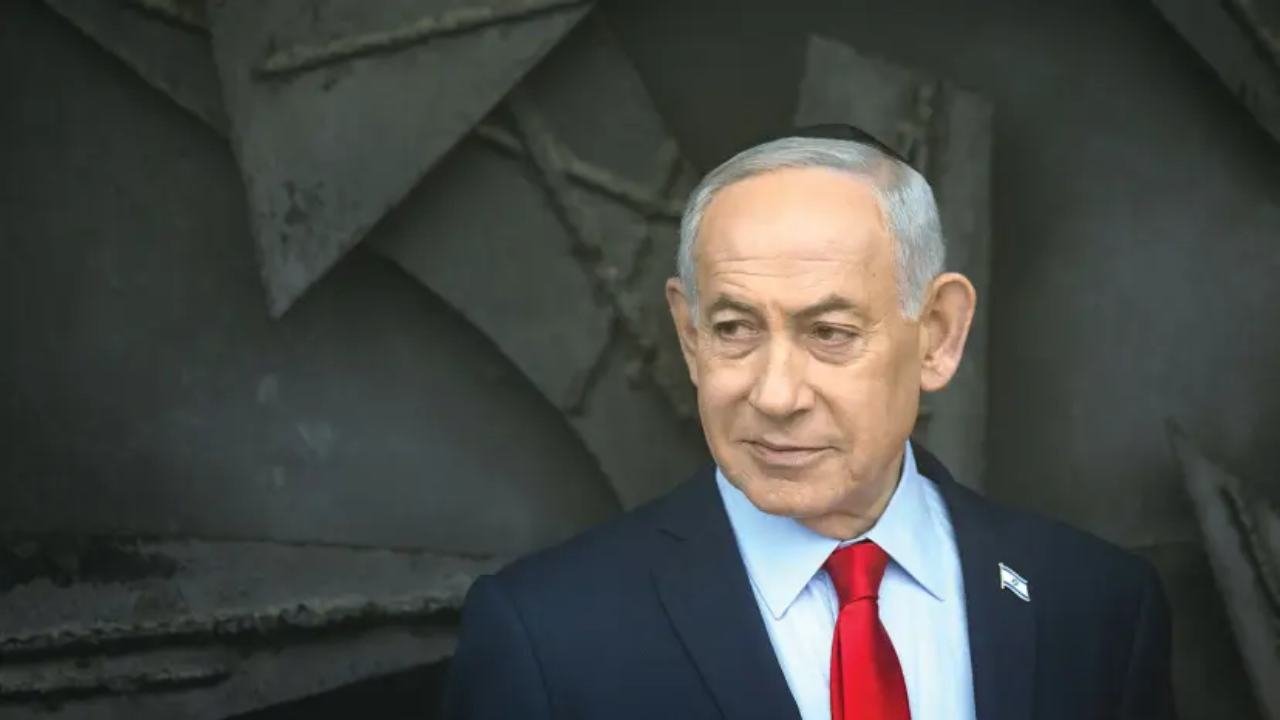
For veteran commentator Ben Caspit, the current shadow war with Iran isn’t just a geopolitical inevitability—it is the result of a series of strategic “wrong turns” taken by Benjamin Netanyahu. Caspit’s central thesis is a haunting one: Everything could have been different. In his view, Netanyahu correctly identified the Iranian “monster” but, through political ego and tactical shortsightedness, actually helped feed it.
Thank you for reading this post, don't forget to subscribe!1. The Ghost of the “Sunni Alliance”
Caspit argues that Netanyahu’s greatest failure was the sacrifice of a regional “Grand Bargain.”
- The Lost Opportunity: For over a decade, moderate Arab states were ready to form a public, unified front against Tehran. The price was a credible commitment to the “two-state” path.
- The Result: By prioritizing his right-wing coalition over diplomatic flexibility, Netanyahu kept this alliance in the shadows. Caspit contends that a formal “Middle East NATO” would have exerted a level of economic and military pressure on Iran that no Israeli “red line” speech ever could.
2. Diplomacy as a Partisan Weapon
- The DC Divide: By bypassing the White House to address Congress in 2015, Netanyahu turned the Iranian threat into a Republican vs. Democrat issue.
- The Fallout: This friction encouraged the U.S. to oscillate wildly between the JCPOA and “Maximum Pressure.” Caspit suggests that a collaborative approach—working with the U.S. to fix the deal’s flaws—would have kept Iran in a much tighter, internationally-sanctioned box.
3. Words vs. Works: The “Ring of Fire”
- The Critique: While Israel focused on PowerPoint presentations at the UN, Iran successfully completed its “Ring of Fire,” entrenching Hezbollah, the Houthis, and militias in Syria.
- The Alternative: Caspit posits that a leader less enamored with public bravado and more focused on the “gray zone” of covert destabilization might have triggered the regime’s internal collapse long before they reached the nuclear threshold.
4. The Deterrence Gap
Caspit’s most recent and biting criticism links Israel’s internal strife directly to Iranian emboldenment.
- Projecting Weakness: He argues that the 2023–2024 judicial overhaul and the resulting societal fracture were interpreted by Tehran as the “withering of the Zionist entity.”
- The Tragedy: To Caspit, the events of October 7 and the subsequent multi-front escalation are the ultimate proof: A Prime Minister who divides his own house cannot effectively defend the walls against a patient, predatory enemy.
The Verdict: In the “Caspit Version” of history, Netanyahu is a tragic figure—a man who spent thirty years warning the world about a fire, only to find himself accused of preventing the very people with the hoses from putting it out.