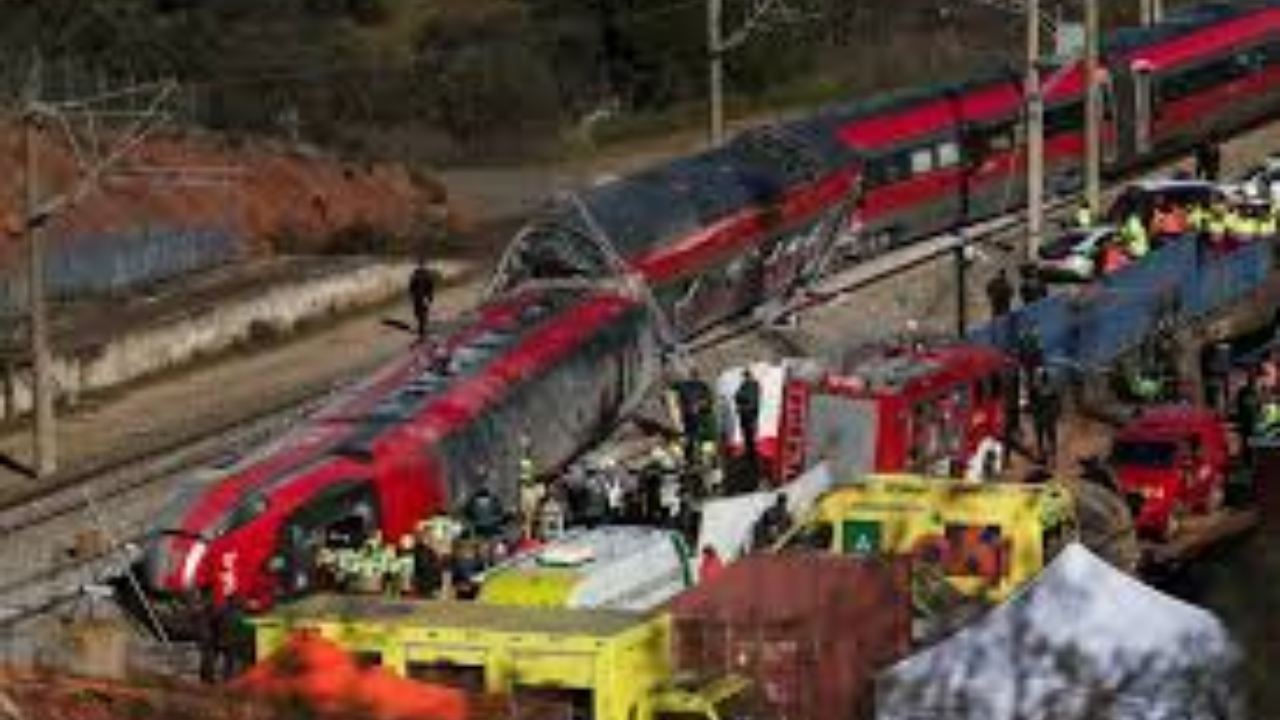
Spain has begun three days of official mourning following a catastrophic rail collision in Córdoba that has now claimed 41 lives. As flags fly at half-staff across the country, emergency crews continue a grim search through the wreckage of what is being described as one of the nation’s worst rail disasters in decades.
Thank you for reading this post, don't forget to subscribe!The Current Situation
- Fatalities: 41 confirmed deaths.
- Injuries: Over 120 people treated; 39 remain hospitalized, with several in critical condition.
- Search Status: Rescuers are still working to account for several missing passengers reported by family members.
How the Disaster Unfolded
The accident occurred on Sunday evening near Adamuz on a high-speed line. The sequence of events involved two separate rail operators:
- The Derailment: A Madrid-bound Iryo train carrying nearly 300 passengers derailed on a straight section of track.
- The Impact: As the Iryo carriages swerved into the path of oncoming traffic, they were struck by a Renfe train traveling toward Huelva.
- The Aftermath: The force of the collision sent multiple carriages down an embankment, leaving a debris field spanning hundreds of meters.
Investigation: Seeking Answers
The Spanish government has launched a high-priority investigation. While high-speed rail is generally considered the safest mode of travel in Europe, this incident has raised urgent questions:
- The “Straight Line” Mystery: Officials noted that the derailment happened on a straight stretch of track where neither train was exceeding speed limits.
- Technical Failure: Investigators are focusing on potential mechanical failures in the Iryo train’s rear carriages or a possible obstruction on the rails.
“The pain the country is feeling is immense. We are committed to finding the exact cause of this tragedy to ensure it never happens again.” — Official Government Statement.