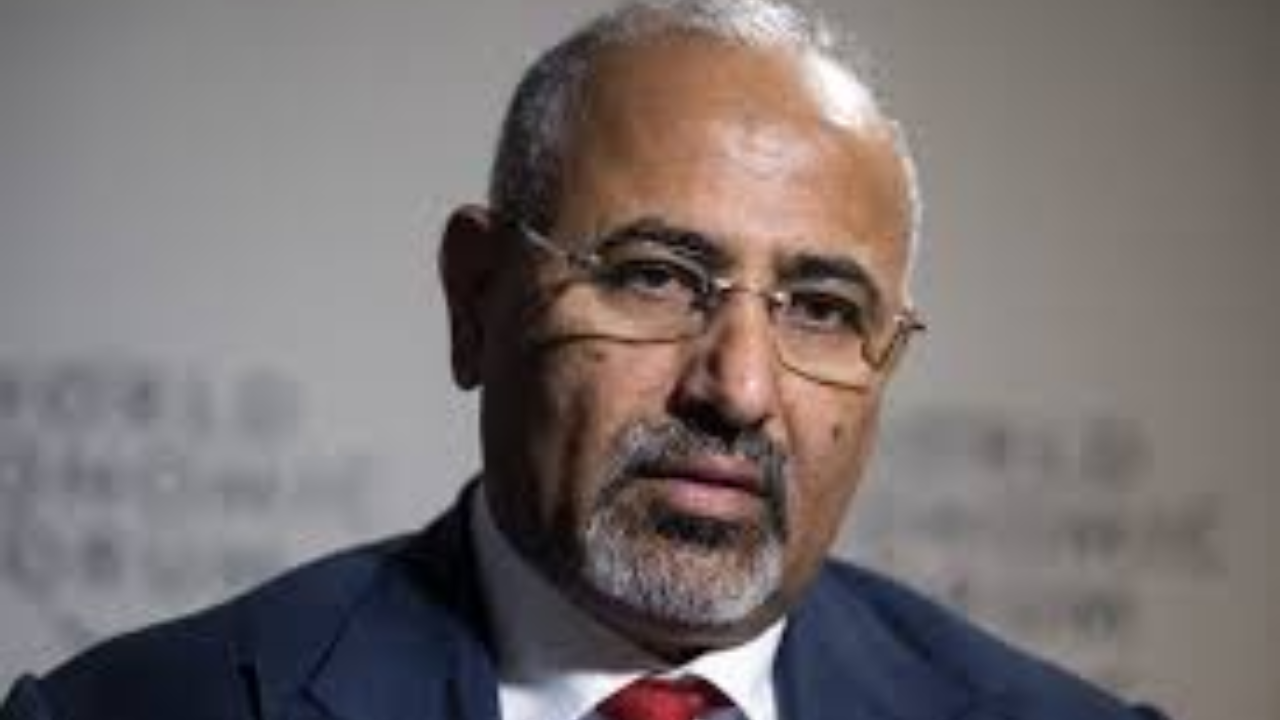
A major diplomatic crisis has erupted within the Gulf coalition as Saudi Arabia formally accused the United Arab Emirates (UAE) of orchestrating the clandestine escape of Aidarous al-Zubaidi, the leader of the Southern Transitional Council (STC).
Thank you for reading this post, don't forget to subscribe!The Alleged Operation
According to a detailed military briefing by Saudi Maj. Gen. Turki al-Malki, the operation involved a complex multi-country route to evade Saudi surveillance:
- The Departure: Al-Zubaidi reportedly fled Aden by sea under the cover of night.
- The Transit: He landed at the port of Berbera in Somaliland.
- The Extraction: From there, he was allegedly flown to a military airfield in Abu Dhabi on a UAE-affiliated cargo plane.
The Escalation: From Ally to “Wanted” Fugitive
The Saudi allegations follow a rapid breakdown in internal Yemeni politics:
- High Treason Charges: Just 24 hours prior to the escape, the Saudi-backed Presidential Leadership Council (PLC) stripped al-Zubaidi of his titles and charged him with treason.
- Failed Ultimatum: The charges were issued after al-Zubaidi ignored a direct order to report to Riyadh for mediation.
- Media Campaign: In a striking departure from typical diplomatic decorum, Saudi-state media has branded the STC leader a “wanted criminal,” signaling that Riyadh no longer views him as a legitimate political partner.
Strategic Implications
This rift exposes the diverging goals of the two regional powers:
- Saudi Arabia remains committed to the territorial integrity of Yemen under the PLC.
- The UAE has long supported the STC’s goal of an independent Southern Yemen, which would give Abu Dhabi strategic influence over vital maritime trade routes.

"Suresh Kumar Saini is an experienced Tax Assistant and finance writer. He specializes in US & Canada Tax Guide, Indian Income Tax laws, GST compliance, and personal finance, helping freelancers and remote workers optimize their taxes."