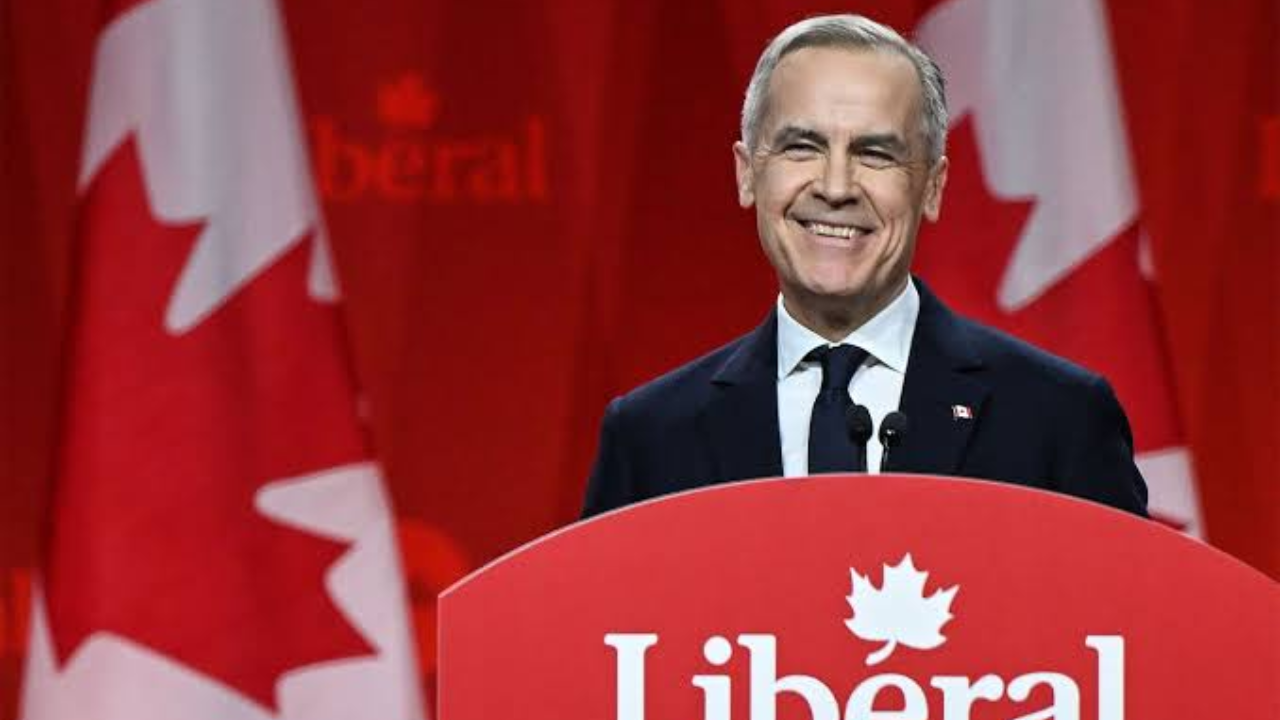
Canadian Prime Minister Mark Carney has issued a blunt warning to Alberta, calling its upcoming non-binding vote on separation a “dangerous bluff” that threatens the province’s economic stability.
Thank you for reading this post, don't forget to subscribe!Drawing a direct parallel to his time as Governor of the Bank of England during the 2016 Brexit crisis, Carney cautioned that treating separation as a risk-free negotiation tactic is a high-stakes gamble that can easily spiral out of control.
1. The Brexit Parallel: A “Free Option” Fallacy
Carney strongly rejected the idea that an independence vote can be used safely as political leverage to force federal concessions.
“I saw firsthand what happened in the United Kingdom. They’re still 10 years later trying to undo what people didn’t think they were voting for, but what they ended up having.”
— Mark Carney, Prime Minister of Canada
He noted that independence movements often pitch these referendums to voters as a “free option” to gain bargaining power. In reality, he argued, they create long-term economic friction and uncertainty that is incredibly difficult to reverse.
2. Market Stability and Investment Risks
The timing of the vote introduces significant economic risk, according to the Prime Minister. Alberta is actively seeking global investment for major infrastructure projects—most notably a newly brokered, Pacific-bound oil pipeline negotiated between Ottawa and the province. Carney warned that injecting constitutional chaos into the mix is entirely counterproductive to securing that capital.
3. No Democratic Mandate
Carney pointed out that Premier Danielle Smith’s right-of-center United Conservative Party (UCP) never included a separation vote in its platform during the 2023 provincial election. Because the public never voted on this agenda, Carney argues the initiative lacks a genuine democratic mandate and acts as an unnecessary distraction.
The Anatomy of the Alberta Vote
The upcoming vote is not a straightforward exit question, but rather a complex legal maneuver.
| Aspect | Current Status |
| The Vote Concept | Scheduled for October, it functions as a “referendum on a referendum.” Instead of voting to separate immediately, Albertans will be asked if the province should initiate the constitutional process to hold a binding vote later. |
| The Legal Catalyst | Premier Smith’s government introduced the measure after a court struck down an independent separatist petition. The court ruled the province had failed to consult with Indigenous communities regarding impacts on treaty rights. |
| What the Polls Say | Public sentiment remains firmly locked against separation. An Angus Reid Institute poll shows 60% of Albertans want to remain in Canada, and 67% would vote “no” if a definitive, binding split were on the table today. |
Federal and Conservative Pushback
The federal government is currently reviewing the proposed referendum text to ensure it complies strictly with Canada’s Clarity Act, the legislation defining the legal framework for provincial secession.
While regional UCP representatives have accused Carney of stoking economic fear, federal opposition leader Pierre Poilievre confirmed his caucus will also campaign for Alberta to stay in Canada. Carney plans to campaign heavily on “co-operative federalism,” pointing to shared national programs—like health transfers, affordable childcare, and the Canada Pension Plan—as the baseline reasons the federation must hold together.

"Suresh Kumar Saini is an experienced Tax Assistant and finance writer. He specializes in US & Canada Tax Guide, Indian Income Tax laws, GST compliance, and personal finance, helping freelancers and remote workers optimize their taxes."