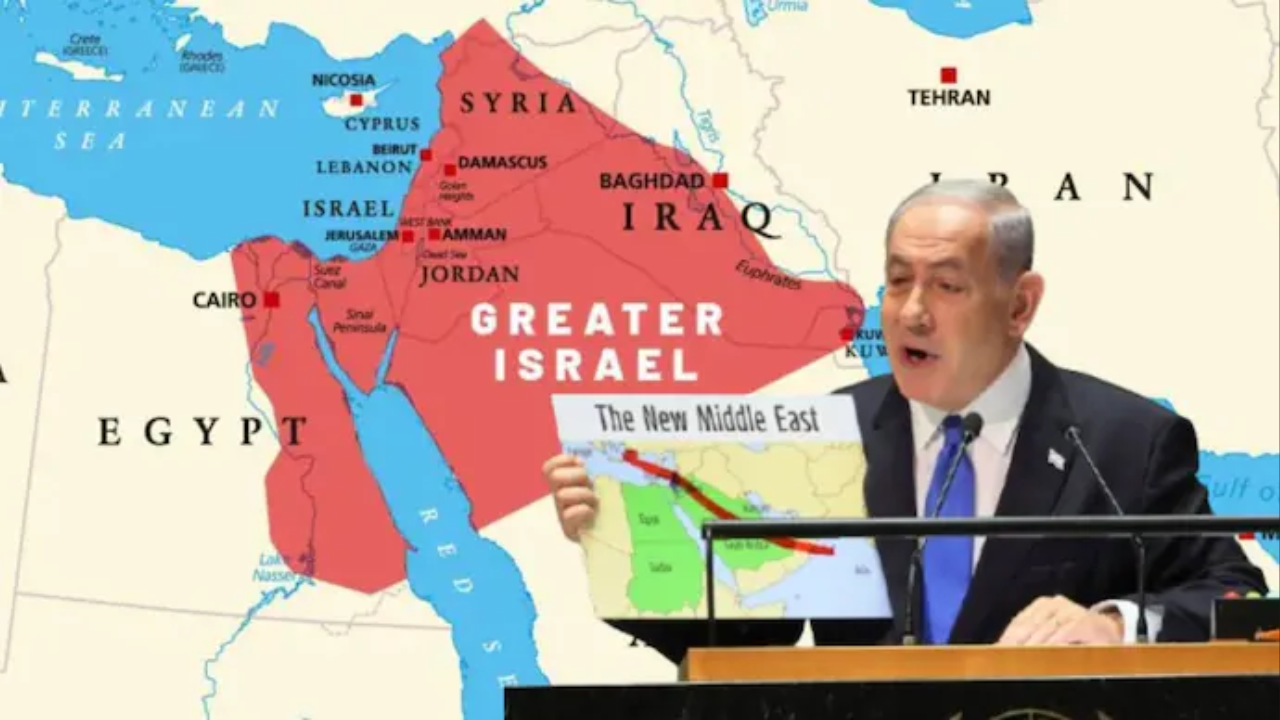
The question of whether Israel is expanding its borders through war involves a complex interplay of military necessity and political ideology. While official national borders haven’t been formally redrawn, significant structural changes on the ground suggest a transition from temporary occupation to long-term territorial control.
Thank you for reading this post, don't forget to subscribe!1. The West Bank: Administrative Integration
Outside the immediate combat zones, the West Bank is experiencing what experts call “Bureaucratic Annexation.”
- Legal Shifts: In early 2026, the Israeli security cabinet transferred several civil authorities from military commanders to civilian officials. This move effectively integrates West Bank administration into the Israeli state apparatus.
- Settlement Footprint: Record-breaking approvals for new housing units and the retroactive legalization of remote outposts have created a continuous Israeli presence that complicates the possibility of a future Palestinian state.
2. Gaza: The Strategic Shrinkage
In Gaza, the Israeli Defense Forces (IDF) have shifted from active combat to establishing permanent security infrastructure:
- The Buffer Zone: A cleared perimeter along the border acts as a “no-go” area, physically reducing the habitable land within the strip.
- The Netzarim Corridor: This fortified, east-west highway allows the IDF to control all movement between northern and southern Gaza, effectively bisecting the territory indefinitely.
- Operational Control: Military planners have implemented “Security Lines” where Israeli forces maintain long-term oversight, a move critics describe as a “creeping” reduction of Gaza’s sovereign space.
3. Southern Lebanon: The New “Security Belt”
Following the 2026 conflict with Hezbollah, the concept of a northern “buffer” has moved from theory to reality.
- The Litani Objective: Influential members of the Israeli cabinet have called for the border to effectively sit at the Litani River, roughly 30km north of the current international boundary.
- Demolition and Displacement: Systematic clearing of border villages has created a depopulated zone intended to prevent direct fire on Israeli towns, mirroring the security models used in Gaza.
Comparison of Territorial Control (2026 Status)
| Region | Primary Mechanism | Current Reality |
| West Bank | Legislative/Civilian | Increased settlement density; civilian-led governance. |
| Gaza | Military Engineering | Fixed corridors; permanent “no-go” zones. |
| S. Lebanon | Strategic Occupation | Active “buffer zone” pushing toward the Litani River. |
Conclusion: Security vs. Sovereignty
The Israeli government maintains that these measures are purely defensive—essential to preventing a repeat of the October 7 attacks. However, the international community and legal bodies like the ICJ have raised alarms, suggesting that the permanence of this infrastructure constitutes an unlawful expansion of territory under the guise of security.