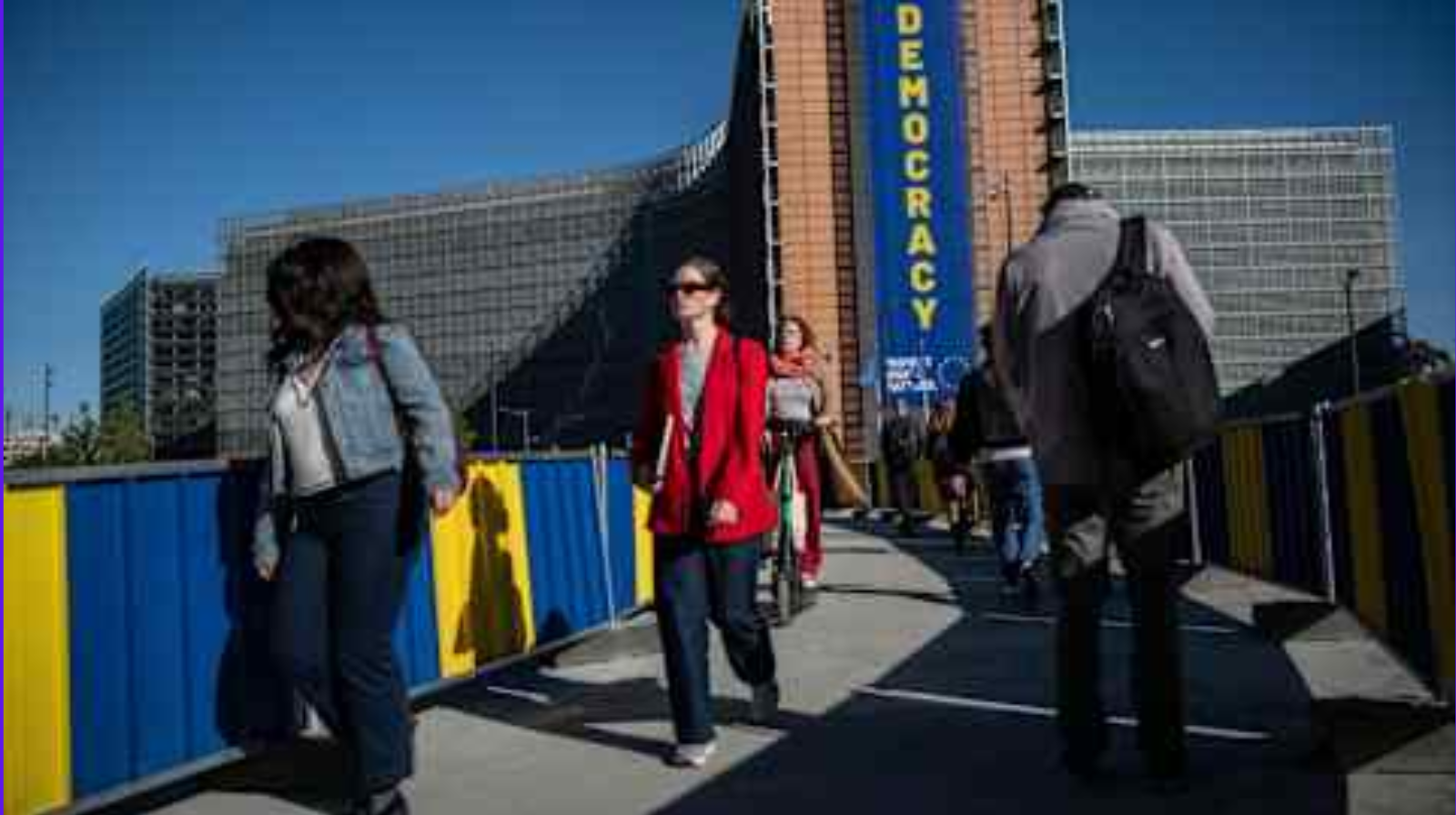
The European Commission is pushing a major bureaucratic overhaul to accelerate its notoriously sluggish trade negotiations: circulating critical documents to member states exclusively in English, skipping the lengthy process of translating them into all 24 official EU languages.
Thank you for reading this post, don't forget to subscribe!France is leading a fierce counter-attack, blasting the proposal as an unacceptable “anglicisation” of European affairs.
The Commission’s Goal: Speed up the Pipeline
The European Commission is frustrated by a massive bottleneck. Currently, it can take over two years from the conclusion of a trade deal to its actual implementation.
A massive chunk of that delay is caused by “legal scrubbing” and the mandatory process of translating thousands of pages of technical legal text before national governments can even review them.
The Commission proposed using a recently concluded trade deal with India as a pilot for this English-first approach:
- The Plan: Negotiations and initial regional reviews happen entirely in English. Full translation is delayed until after political ratification, right before final publication.
- The Justification: EU Trade Chief Maroš Šefčovič argues that these prolonged delays carry a massive economic cost, actively harming EU GDP by stalling export opportunities.
France’s Line in the Sand
French diplomats have vowed to firmly block the shift, raising three core arguments:
- Erosion of Multilingualism: France views this as a direct violation of the EU’s core identity. Legally, the EU has three working languages: English, French, and German. Elevating English to an exclusive tier relegates the others to secondary status.
- Democratic and Legal Risk: French officials argue that forcing national lawmakers to review and provisionally approve massive, legally binding pacts in a foreign language creates dangerous transparency gaps. A single technical mistranslation can risk millions of euros.
- The Post-Brexit Paradox: There is a distinct political irony at play. Since the UK left the European Union, English is only an official language for Ireland and Malta (comprising less than 2% of the EU population). Yet, English has only grown more dominant in Brussels while French and German usage declines.
The Underlying Strategy: This linguistic standoff overlaps with deep French skepticism toward the EU’s broader trade agenda. Facing intense domestic pressure from local farmers over deals like the EU-Mercosur pact, Paris is using strict adherence to translation protocols as a powerful bureaucratic brake to slow down trade deals it believes will harm its economy.
Reed More……https://www.ft.com/europe
Editing by-katie willimas