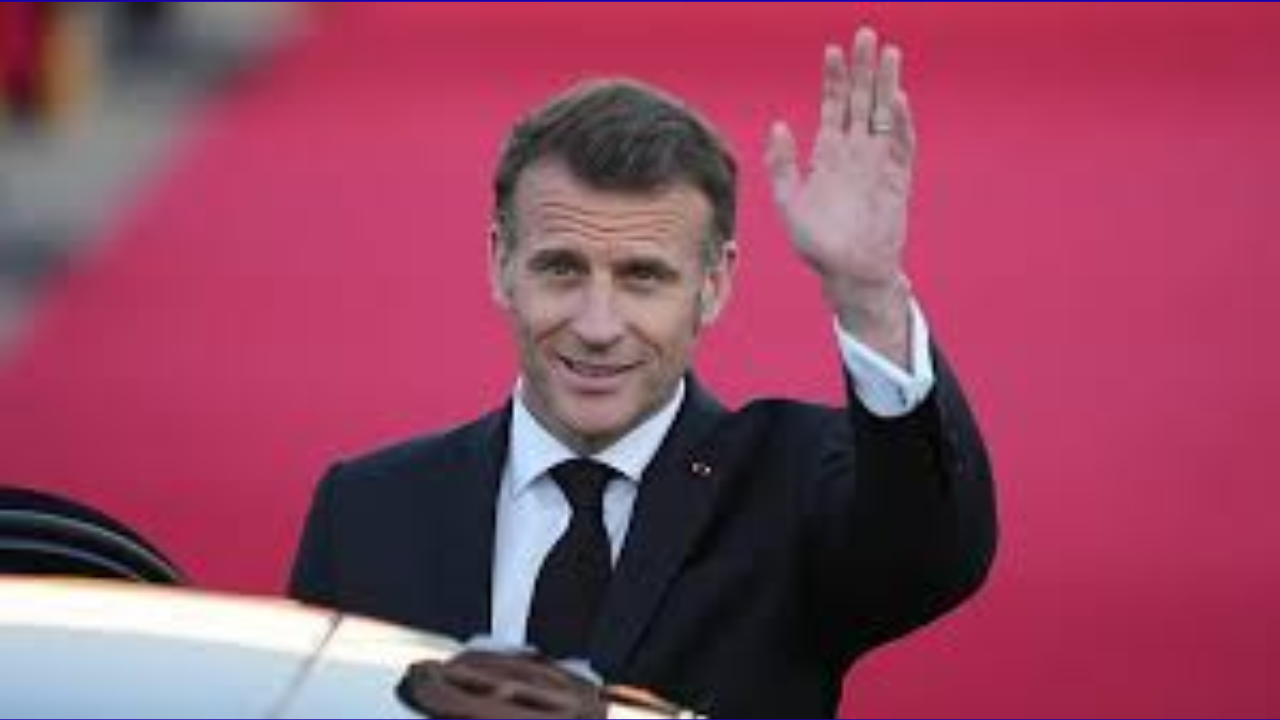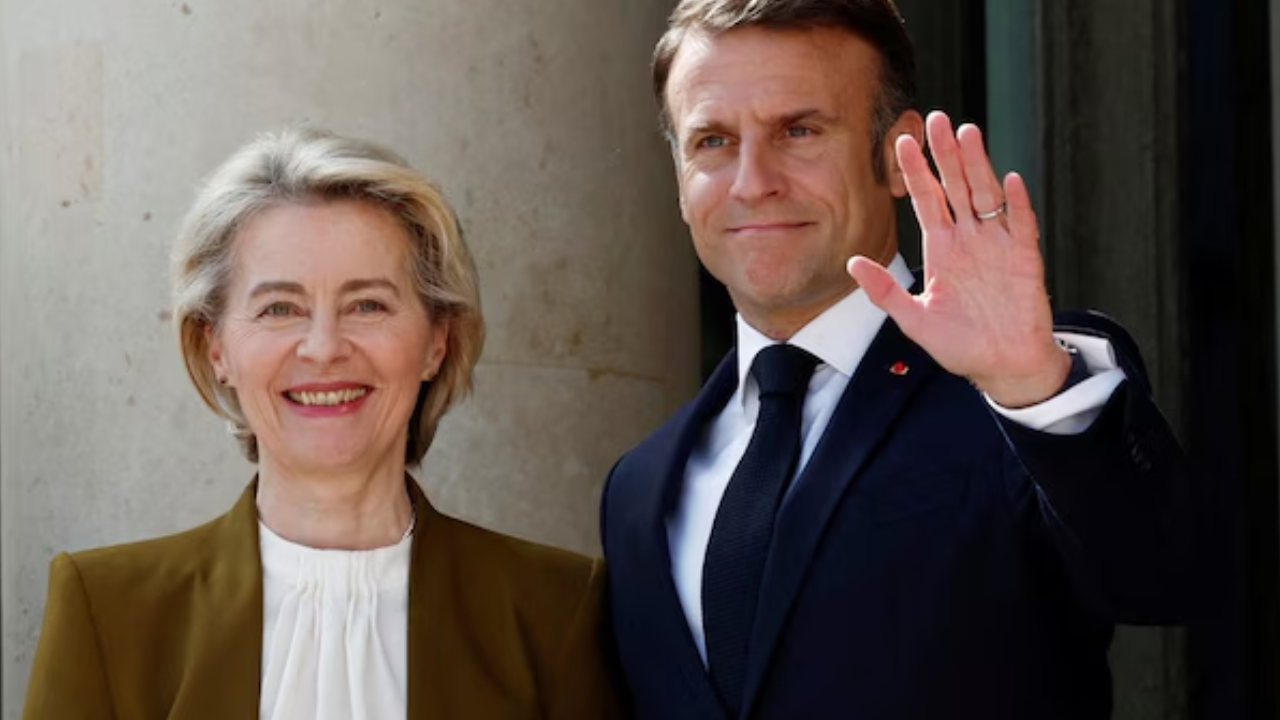
European Commission President Ursula von der Leyen will not accompany French President Emmanuel Macron on his state visit to China next week (December 3–5) for talks with President Xi Jinping, according to a recent report.
Thank you for reading this post, don't forget to subscribe!This decision marks a significant break from the recent tradition of joint EU-French diplomatic engagements with Beijing, which Macron had championed as an effort to “Europeanise” France’s dialogue. The visit will now be a “strictly bilateral” French affair.
A Tale of Two China Approaches
The absence underscores a perceived strategic division between the EU’s institutional stance and France’s bilateral approach:
| Leader/Institution | Core Strategy | Key Features & Focus |
| 🇪🇺 Von der Leyen (EU Commission) | “De-risking, Not Decoupling” | The architect of the EU’s push for a more assertive stance. Focuses on cutting “dangerous dependencies” on Beijing and using the EU’s full trade defense toolkit. She represents the EU’s unified, regulatory approach. |
| 🇫🇷 Emmanuel Macron (France) | Personal Rapport & Bilateral Channel | Has cultivated a close personal relationship with Xi Jinping, seeking to engage directly on major issues. He is expected to discuss the “future of EU-China relations” on behalf of France and will report back to his European partners. |
Key Issues on the Agenda
Macron’s three-day, two-city tour (Beijing and Chengdu) is expected to confront thorny topics:
- Trade and Economic Balance: Macron is carrying an “agenda of cooperation and balance in economic and trade issues,” which aligns with the priorities of France’s upcoming G7 presidency in 2026. This comes amid the EU’s ongoing anti-subsidy investigations (e.g., into Chinese electric vehicles).
- The War in Ukraine: A central focus will be urging Xi Jinping to leverage his influence on Russia for a ceasefire. Europe remains concerned that China is financially aiding Moscow’s military campaign, despite Beijing’s claim of neutrality.
Diplomatic Significance
- Reversion to Bilateralism: The visit reverts to a purely bilateral format, which China often prefers as it gives them more leverage against a fragmented European position.
- China’s Message: Chinese Foreign Minister Wang Yi reportedly spoke with Macron’s advisor ahead of the trip, expressing hope that “France would encourage the EU to pursue a positive and rational policy towards China.” This highlights Beijing’s desire to soften the EU’s assertive “de-risking” rhetoric.
- EU Strategy in Play: Von der Leyen’s refusal to join signals that the EU’s institutional commitment to the “de-risking” strategy remains firm and will not be diluted by a high-profile, friendship-focused state visit.