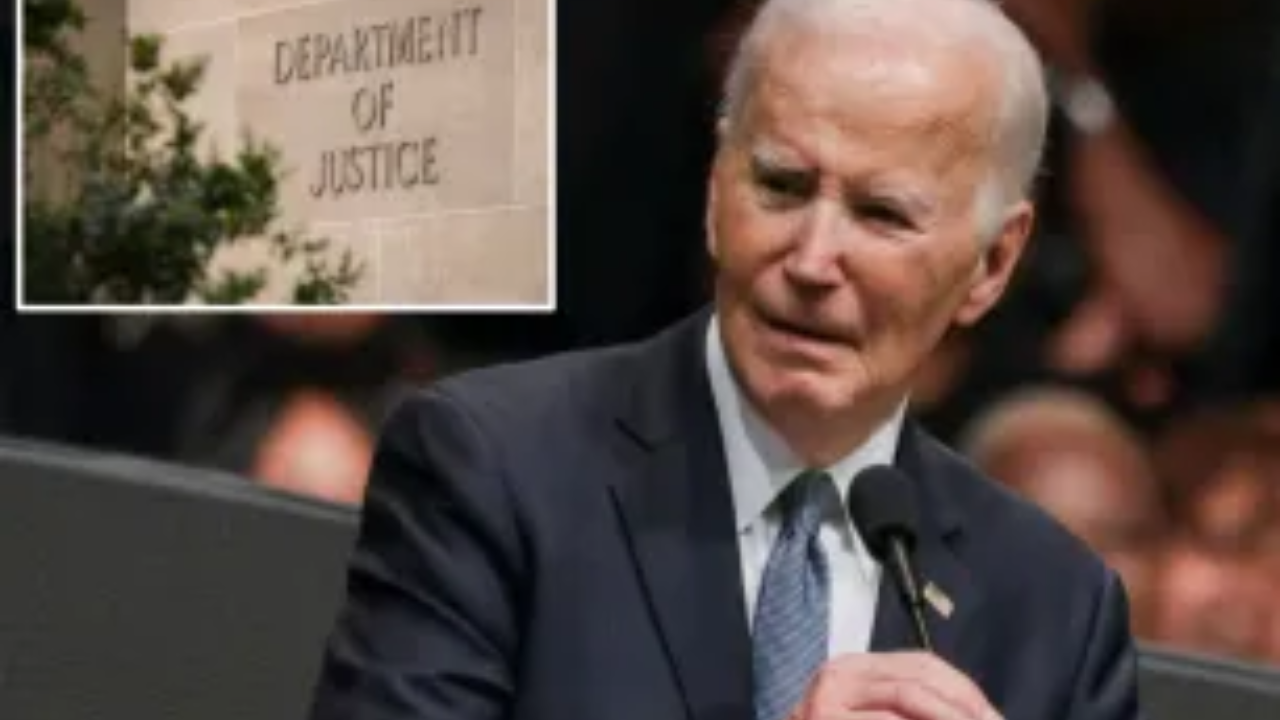
Former President Joe Biden filed a lawsuit against the Justice Department in a Washington federal court, aiming to block the public and congressional release of roughly 70 hours of private audio recordings and transcripts.
The legal battle highlights a stark pivot by the Justice Department under the current administration, which recently reversed its long-held stance that the files were exempt from public disclosure.
What’s at Stake?
The files consist of intimate interviews from 2016 and 2017 between Biden and Mark Zwonitzer, the ghostwriter who assisted him with his memoirs (including Promise Me, Dad).
- The Origin: The recordings were swept up by Special Counsel Robert Hur during his investigation into Biden’s handling of classified documents.
- The Turnaround: The DOJ announced plans to release redacted versions of the audio and transcripts by June 15 to the House Judiciary Committee and the Heritage Foundation (following a Freedom of Information Act lawsuit).
The Core Arguments
| Party | Stance & Reasoning |
| Biden’s Legal Team | Privacy Violation: Argues the interviews occurred in Biden’s private home and cover deeply sensitive, non-governmental topics, like the death of his son, Beau. They claim the DOJ has a duty to protect private information obtained via criminal probes. |
| The Opposition | Public Interest & Consistency: Republican lawmakers and conservative groups argue the files are critical to full transparency. They maintain the public has a right to review the evidence behind the Special Counsel’s decision not to recommend criminal charges. |
“Every American, including a sitting or former Vice President, has a right to privacy in the personal conversations he has within his own home. And when the U.S. Department of Justice obtains that private information through a criminal investigation, the Department bears a particular responsibility to protect it from disclosure.”
— Excerpt from Biden’s legal complaint
Partisan Divide
This lawsuit marks a major escalation in the multi-year battle over the Special Counsel evidence. Back in 2024, the White House invoked executive privilege to block the release of audio from Biden’s direct interviews with Hur—a standoff that led the House to hold Attorney General Merrick Garland in contempt.
While written transcripts of the Hur interviews were ultimately released, Biden’s team is drawing a strict line at the actual audio of his private conversations, calling the push for the tapes entirely partisan.

Suresh holds a Master of Commerce (M.Com) degree and is a dedicated personal finance researcher and writer. Combining his advanced academic background in commerce with deep industry research, he covers complex topics like taxation, banking systems, credit analysis, and personal finance strategies. As the founder of Tax Assistant (taxassistant.org), Suresh is committed to translating complicated financial guidelines and economic data into simple, accurate, and actionable educational resources for everyday readers.