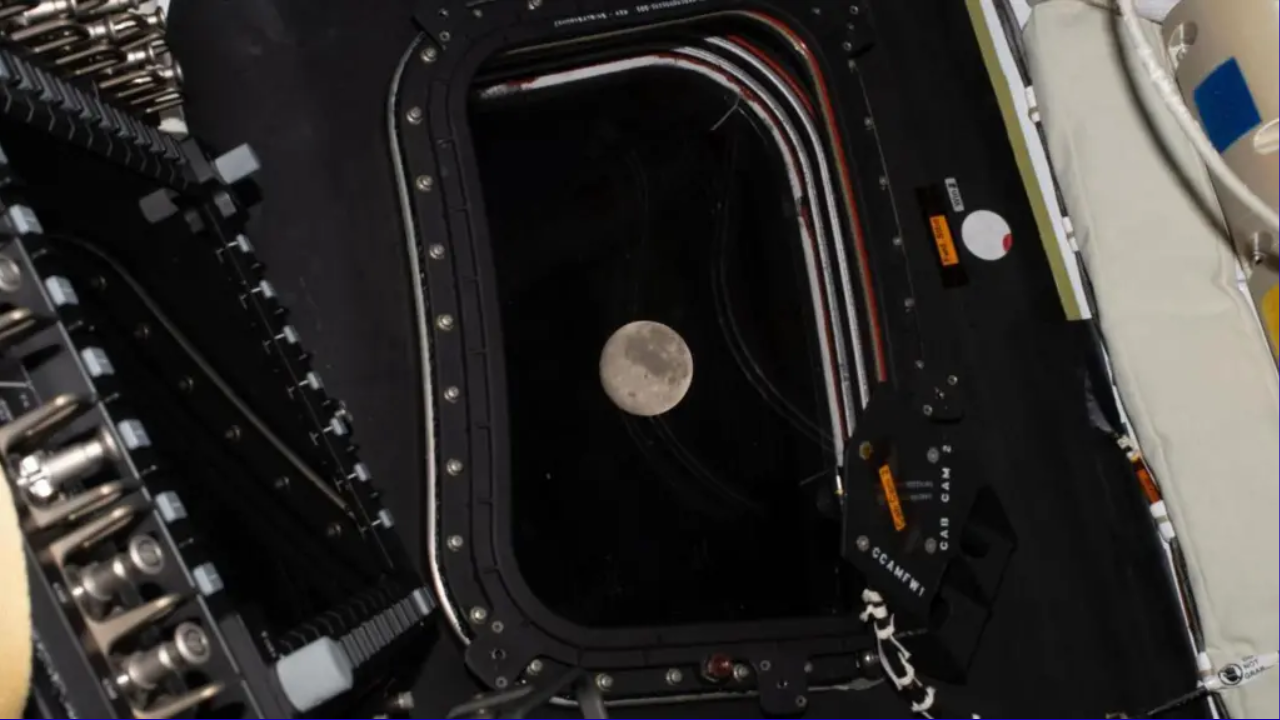
The crew of Artemis II just experienced the most cinematic “homecoming” in history. On April 6, 2026, as the four astronauts completed their historic loop around the Moon and re-established contact with Earth, they were greeted by the breathtaking sight of a total solar eclipse from deep space.
Thank you for reading this post, don't forget to subscribe!Here are the highlights of this extraordinary mission milestone:
Breaking Records and Going Dark
Before the celestial show began, the crew—Reid Wiseman, Victor Glover, Christina Koch, and Jeremy Hansen—achieved a new milestone for humanity. Their spacecraft, Integrity, reached a distance of 252,756 miles from Earth, officially breaking the record for the farthest humans have ever traveled into the cosmos.
A Different Kind of Eclipse
- Size Contrast: Because they were so close to the Moon, it appeared five times larger than the Sun, creating an incredibly long and dark totality.
- The Lunar Corona: Astronauts described the Moon’s edge as “glowing” with a shimmering ring of light as the Sun’s corona became visible.
- Meteor Watch: In the deep darkness of the Moon’s shadow, the crew reported seeing four flashes on the lunar surface—potential meteoroid impacts that are usually drowned out by sunlight.
“Moonjoy” and the Journey Home
“To see the Earth rising while the Sun was eclipsed by the Moon… it’s a perspective no human has ever had before,” reported Mission Specialist Christina Koch.
What’s Next? The Integrity is currently on its final approach for a scheduled splashdown in the Pacific Ocean this Friday, April 10. After nearly 10 days in space, the crew is bringing home a wealth of data—and some of the most unique photos ever taken by human hands.