The AI infrastructure boom has officially flipped the semiconductor script. Memory chips—historially treated as volatile, boom-and-bust commodities—are now the ultimate gatekeepers of global technology.
Following an extraordinary market surge, South Korea’s SK Hynix and US-based Micron Technology have officially crossed the $1 trillion market capitalization threshold, joining industry titan Samsung in the exclusive club. This historic rally highlights a critical reality in tech: the world is locked in a massive high-bandwidth memory (HBM) supply crunch, and these three companies hold all the keys.
The Big Three of Next-Gen Memory
Only three companies on Earth possess the manufacturing capability to build the bleeding-edge HBM chips required to feed the ravenous data centers of Nvidia, AMD, and the world’s major cloud providers.
| Company | Market Cap Status | Market Catalyst & Positioning |
| Samsung | Reached $1T | The world’s largest overall memory manufacturer; propelled by soaring hardware demand and expanding global chip supply talks. |
| Micron Technology | Reached $1T | Propelled across the milestone by a massive Wall Street upgrade. Its HBM production capacity is completely sold out through the end of next year. |
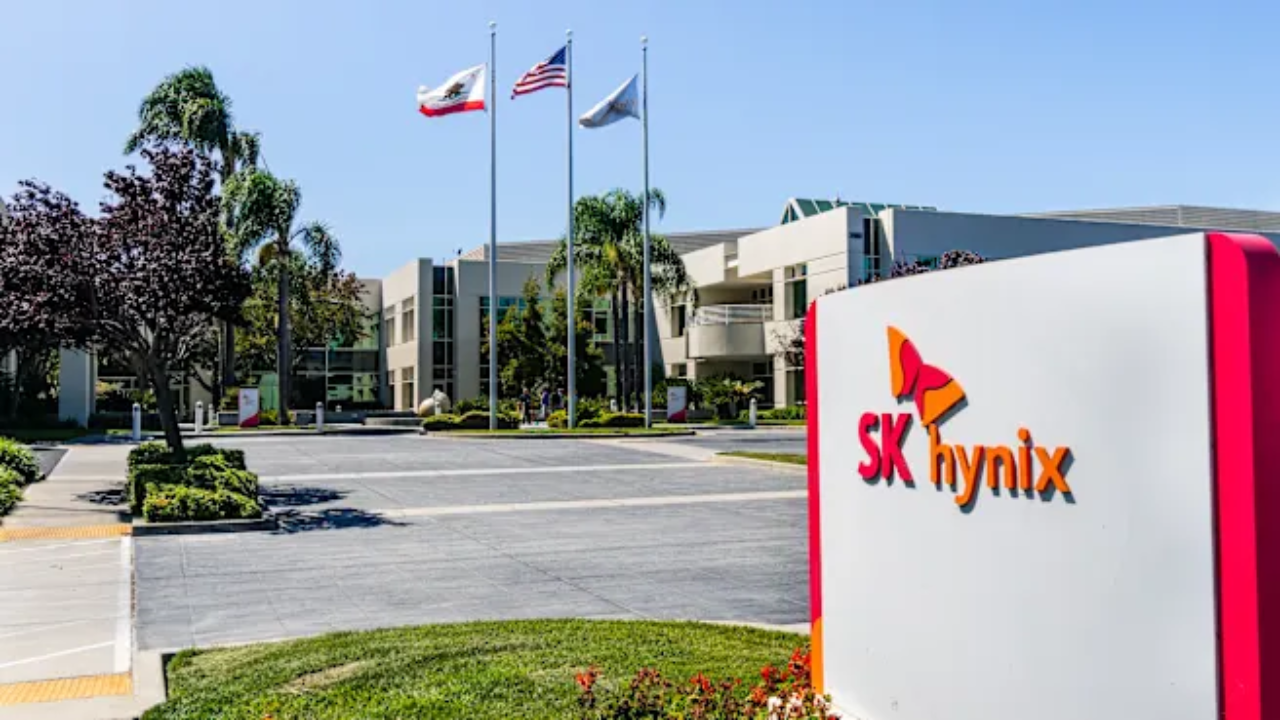
| SK Hynix | Reached $1T | Jumped 11% in a single session to clear the mark, lifting South Korea’s benchmark KOSPI index with it. Backed by its strong, early position as a core Nvidia supplier. |
Why Memory is the New Tech Bottleneck
In traditional computing, processors (CPUs and GPUs) did the heavy lifting, while memory (DRAM) was an afterthought. The generative AI boom completely shattered that paradigm.
The HBM Bottleneck: If a cutting-edge AI processor is an ultra-fast race car, traditional memory is a single-lane highway. High-Bandwidth Memory (HBM) vertically stacks memory chips to create a massive, multi-lane superhighway. Without it, the world’s fastest AI chips sit completely idle waiting for data to load.
Because cloud giants like Microsoft, Google, Amazon, and Meta are racing to build out infrastructure, they are buying up entire future production runs. With Micron entirely sold out for the next 18 months and SK Hynix aggressively scaling production, the premium margins on HBM have decoupled these companies from their historical, cyclical patterns.
The Risks Ahead
While the market is celebrating, analysts urge caution regarding two primary macro factors:
- The Ghost of Cycles Past: Memory has historically been deeply cyclical. If AI infrastructure spending plateaus, or if these three giants overbuild production capacity too aggressively, the current supply shortage could shift back toward an oversupply in the coming years.
- Geopolitical Vulnerabilities: With supply chains tightly webbed across the US, South Korea, and Taiwan, international trade tensions and export controls remain a permanent wild card.
Are you looking to use this rewrite for a specific audience, such as a LinkedIn professional network or a casual tech newsletter?

Suresh holds a Master of Commerce (M.Com) degree and is a dedicated personal finance researcher and writer. Combining his advanced academic background in commerce with deep industry research, he covers complex topics like taxation, banking systems, credit analysis, and personal finance strategies. As the founder of Tax Assistant (taxassistant.org), Suresh is committed to translating complicated financial guidelines and economic data into simple, accurate, and actionable educational resources for everyday readers.