
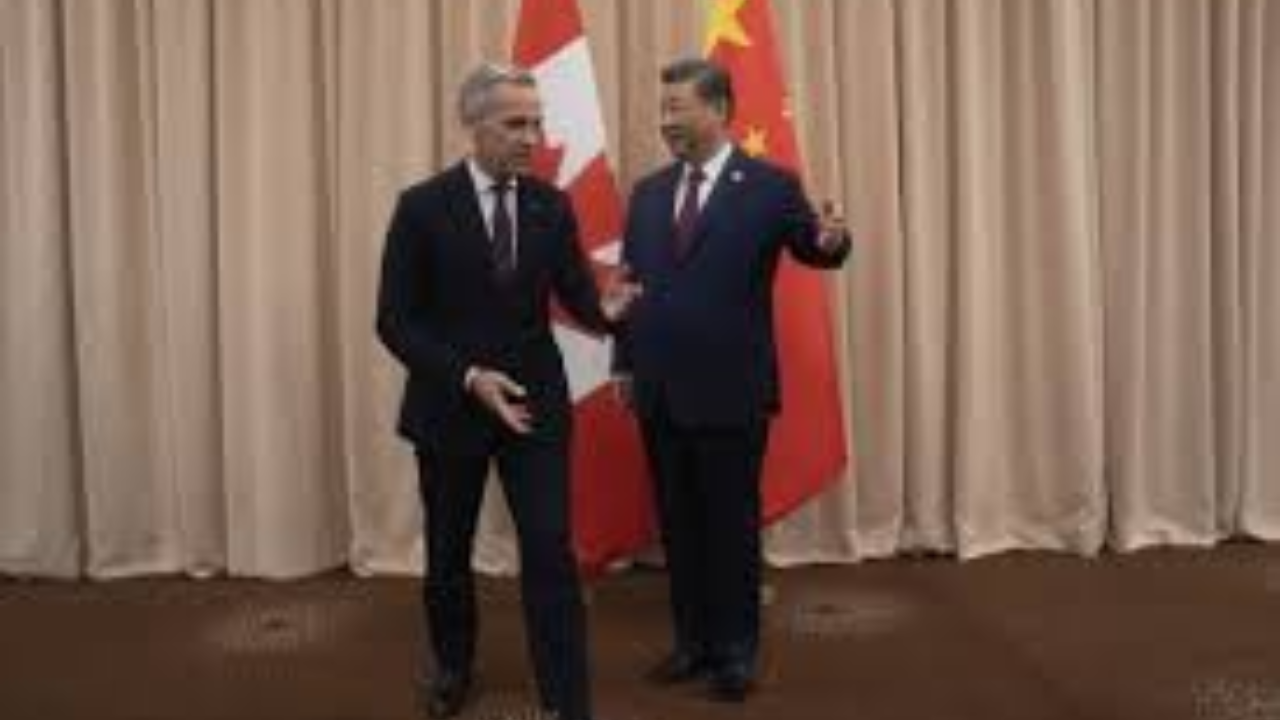
As Prime Minister Mark Carney prepares for his landmark visit to Beijing to meet President Xi Jinping, the mission is being framed as a necessary—though dangerous—recalibration of Canadian foreign policy. Amidst a “new global political order” defined by American protectionism and shifting alliances, Carney is attempting to walk a diplomatic tightrope.
Thank you for reading this post, don't forget to subscribe!The Strategic Pivot: Moving Beyond the U.S.
The catalyst for this diplomatic thaw is the increasingly unpredictable relationship with Washington. With the U.S. moving toward universal tariffs and isolationist rhetoric, the Carney government is signaling that Canada can no longer afford to keep all its economic eggs in one basket.
- Trade Diversification: The visit aims to resolve punishing trade disputes, specifically China’s retaliatory measures on Canadian canola and seafood.
- Economic Resilience: Carney’s “Canada First” economic strategy hinges on opening doors to the Indo-Pacific to buffer against shocks from the southern border.
The “Caution” Consensus
Despite the potential economic gains, a chorus of critics—from national security experts to human rights advocates—is urging the Prime Minister to proceed with extreme care. The risks are categorized into three main “red zones”:
- Weaponized Trade: Skeptics warn that by deepening ties to solve current tariff issues, Canada may inadvertently create new vulnerabilities that Beijing could exploit in future disputes.
- Human Rights vs. GDP: There is significant pressure on Carney to ensure that the “new order” does not come at the cost of silence regarding the treatment of Uyghurs or the erosion of democracy in Hong Kong.
- National Security: With ongoing concerns regarding foreign interference in Canadian elections, many argue that re-engagement must include strict, non-negotiable “guardrails.”
A New Era of Realism
The 2026 summit marks a departure from the “sunny ways” of the past and the “deep freeze” of the early 2020s. It represents a era of Pragmatic Realism, where engagement is viewed as a tool for survival rather than a sign of endorsement.
Carney’s performance in Beijing will be judged on a single metric: can he secure Canadian economic interests without sacrificing the country’s security or its values?
Comparison of Strategic Goals
| Strategic Pillar | The Objective | The Risk |
| Market Access | Reopening China to Canadian agriculture. | Increased reliance on an autocratic trade partner. |
| Climate Action | Collaboration on green tech and EV supply chains. | Intellectual property theft and security vulnerabilities. |
| Diplomatic Status | Positioning Canada as a bridge between East and West. | Alienating traditional “Five Eyes” intelligence allies. |











Comments are closed.