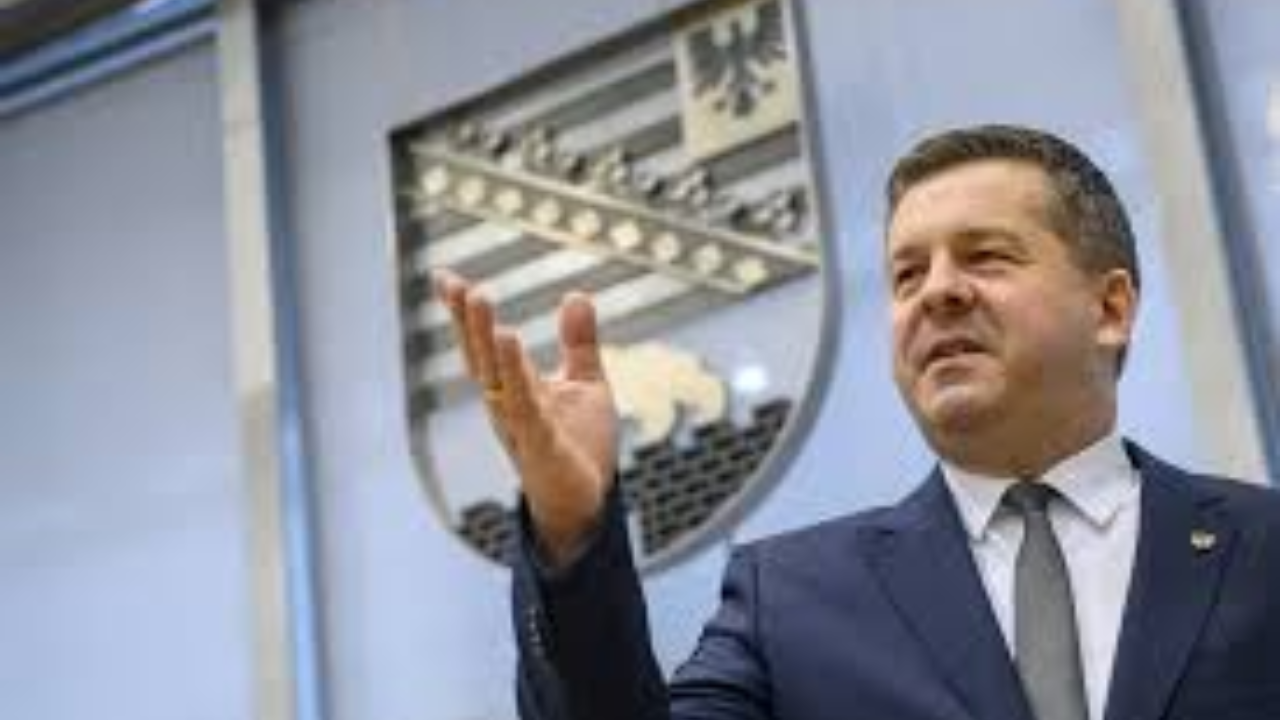
In a calculated move to block the far-right Alternative for Germany (AfD), lawmakers in the German state of Saxony-Anhalt have officially elected Sven Schulze (CDU) as the new Minister-President.
Thank you for reading this post, don't forget to subscribe!Schulze, 46, steps in months ahead of the September 2026 regional elections, replacing the long-serving Reiner Haseloff. The early transition is designed to give the center-right incumbent “the power of the podium” to stabilize his image before a high-stakes electoral showdown.
The Strategy: Why Now?
- The Incumbency Advantage: By taking office in January, Schulze has eight months to govern and build public trust. Mainstream parties hope this “head start” will make him a more formidable opponent against AfD candidates.
- The “Firewall” Policy: This transition reinforces the commitment of Germany’s centrist parties to keep the AfD out of power, a policy known as the Brandmauer.
- Addressing Discontent: Schulze, formerly the economy minister, is tasked with addressing the economic anxieties and migration concerns that have fueled the AfD’s recent surge in eastern Germany.
The Political Landscape
| Party | Strategy in Saxony-Anhalt |
| CDU (Center-Right) | Transitioning to younger leadership to project a “new era” of stability. |
| AfD (Far-Right) | Utilizing high polling numbers to challenge the “firewall” and demand a seat at the table. |
| SPD/Greens/FDP | Supporting the CDU transition to ensure a cohesive centrist front. |
Bottom Line: This isn’t just a change in personnel; it’s a defensive maneuver aimed at ensuring the far-right remains on the sidelines of German governance.