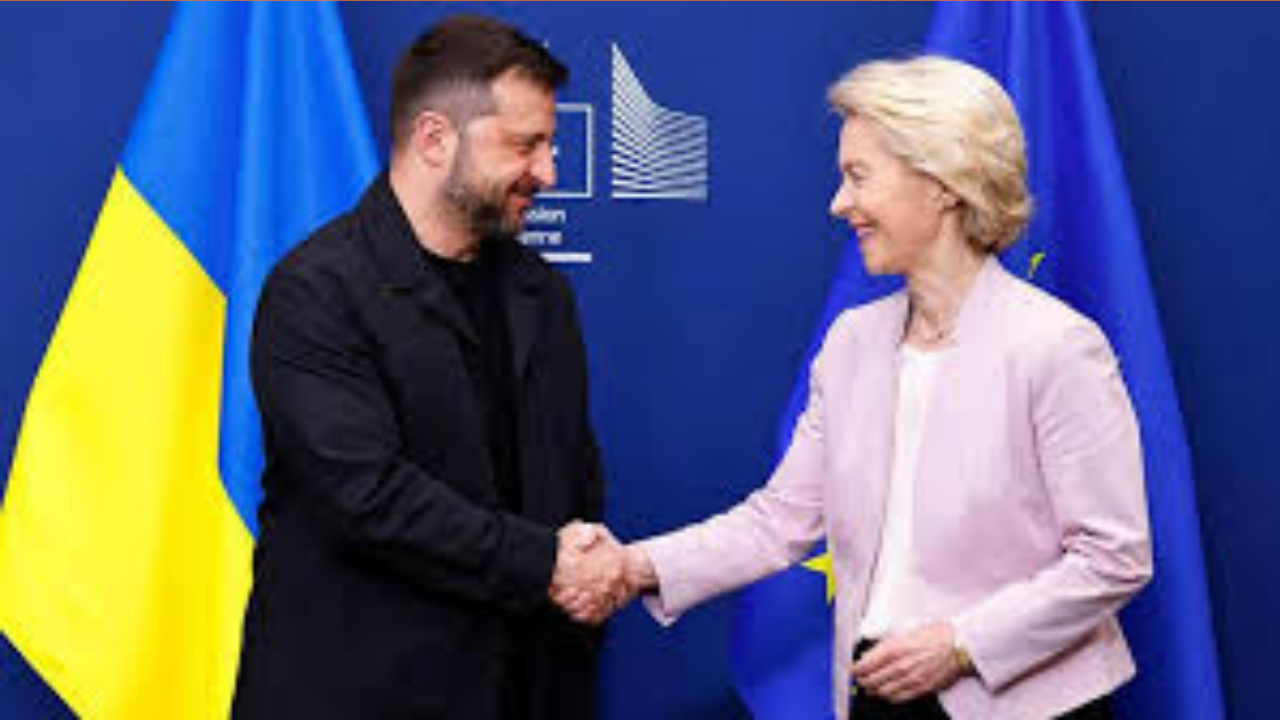
NICOSIA — Marking a historic shift in European leadership, Cyprus officially assumed the rotating Presidency of the Council of the European Union today. The inauguration was distinguished by the high-profile arrival of Ukrainian President Volodymyr Zelenskyy, signaling a unified European front as the continent enters a pivotal 2026.
Thank you for reading this post, don't forget to subscribe!A Symbolic Handover
Joined by European Commission President Ursula von der Leyen and European Council President António Costa, Zelenskyy’s presence in Nicosia underscores the high stakes of the Cypriot term. For Cyprus—a nation that remains divided—the hosting of the Ukrainian leader served as a powerful symbolic bridge between two countries facing ongoing territorial struggles.
The “Nicosia Priorities”
Under the theme “An Autonomous Union – Open to the World,” the Cypriot presidency (running from January to June 2026) aims to tackle five critical areas:
- Ukraine’s Path to Accession: President Zelenskyy expressed optimism that Nicosia would oversee the opening of “fundamental” negotiation clusters for Ukraine’s EU membership.
- Mediterranean Stability: Leveraging its geography, Cyprus intends to act as a diplomatic mediator between the EU and the Middle East, specifically focusing on stability in Lebanon and Gaza.
- Defense & Autonomy: A push to strengthen the EU’s independent military capabilities and reduce reliance on external supply chains.
- Migration Reform: Finalizing the implementation of the new Migration and Asylum Pact.
- Economic Competitiveness: Boosting the Single Market to compete more effectively with the U.S. and China.
Strategic Diplomacy
Comparison: Cyprus vs. Previous Presidencies
| Priority | Poland (2025) | Cyprus (2026) |
| Primary Focus | Eastern Flank Security | Mediterranean Stability |
| Enlargement | Western Balkans | Ukraine & Moldova |
| Economic Goal | Energy Independence | Strategic Autonomy & Trade |