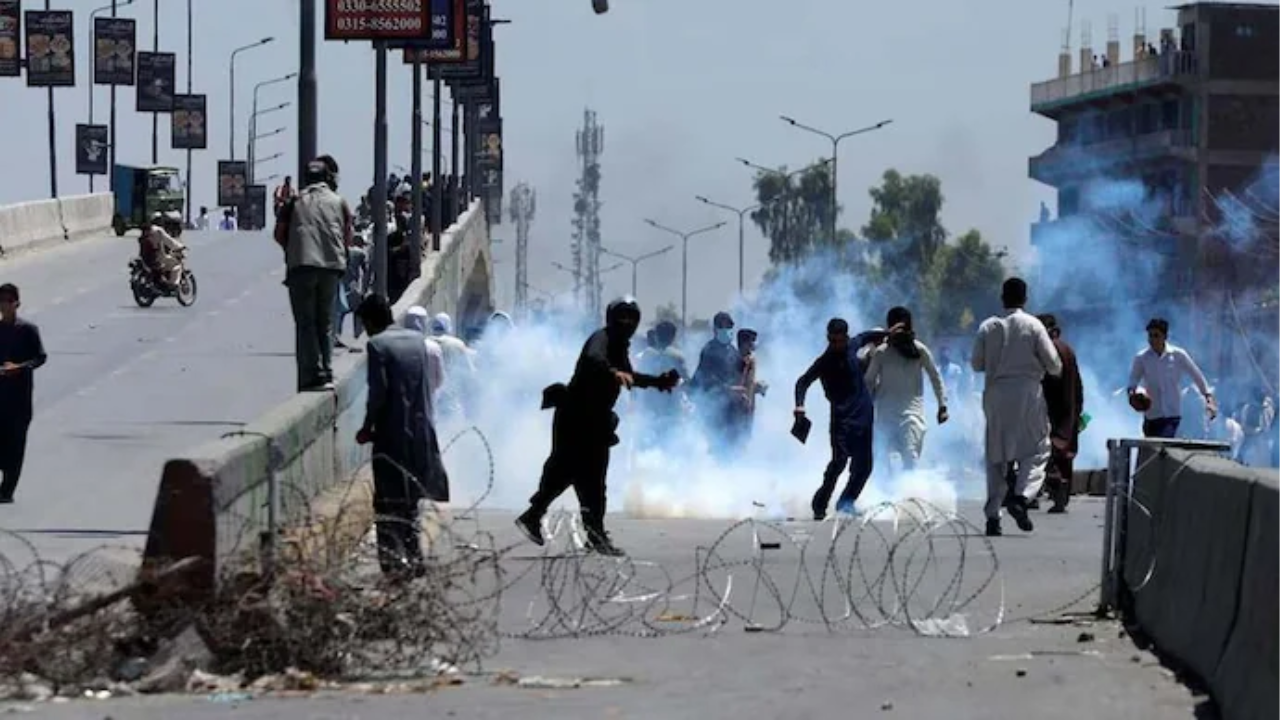
Tensions recently escalated in Karachi, Pakistan, after protests demanding the creation of an independent Sindhudesh devolved into violence, featuring stone-pelting, vandalism, and clashes with police.
Thank you for reading this post, don't forget to subscribe!The Catalyst and the Protesters
- When: The violence began on Sunday, coinciding with Sindhi Culture Day.
- Who: A large group of Sindhi nationalists, primarily under the banner of the Jiye Sindh Muttahida Mahaz (JSSM), led the protests.
- What: Protesters chanted slogans of ‘Azadi’ (freedom) and ‘Pakistan Murdabad’ (Down with Pakistan), calling for the “liberation of Sindh”—Pakistan’s third-largest province.
- The Incident: The situation deteriorated after authorities diverted the planned rally route. Sections of the crowd began throwing stones at security personnel and engaging in vandalism, prompting police to use tear gas to disperse them.
- Aftermath: Local reports confirm that at least 45 people were arrested, and five police personnel were injured in the clashes.
Global Appeals and Nationalist Grievances
The Sindhi nationalist movement is amplifying its decades-old demand, citing claims of political repression and human rights abuses.
- Appeal to the UN: The JSSM, led by exiled chairperson Shafi Burfat, previously urged the United Nations to intervene and recognize Sindhudesh as a sovereign state.
- Appeal to India: The group also specifically appealed to Indian Prime Minister Narendra Modi to support their demand, citing historical and cultural ties between Sindh and India.
- Accusations: The JSSM accuses Pakistan’s security forces of widespread human rights abuses in Sindh, including enforced disappearances, torture, and extrajudicial killings of activists. They also claim the anti-terrorism law is being misused to target the Sindhudesh movement.
The Political Context: Why Now?
The demand for Sindhudesh has gained fresh relevance due to recent political statements and discussions in the region.
- The ‘Sindhudesh Card’: Recent Pakistani news reports discussed a claim that MQM chief Altaf Hussain suggested the 18th Amendment had put the “Sindhudesh card” in their hands, fueling new political chatter.
- Indian Minister’s Remarks: The issue also gained attention in India after Defence Minister Rajnath Singh suggested that the Sindh region might “return to India again” someday.
- Speaking at the Sindhi Samaj Sammelan, Singh stated that Sindh is “civilisationally” linked to India, noting the reference to the River Sindh in the Indian national anthem.
- Historical Roots: The first formal demand for a separate Sindhudesh dates back to 1967, under the leadership of G.M. Syed. It was significantly galvanized by the 1971 liberation of Bangladesh, which inspired the community to emphasize Sindh’s distinct ethnic, linguistic, and historical identity tied to the Indus Valley Civilisation.
Key Distinction: While there are some calls for support from India, the article clarifies that the primary political movement within Sindh advocates for autonomy within Pakistan or the formation of an independent Sindhudesh, not a merger with India.