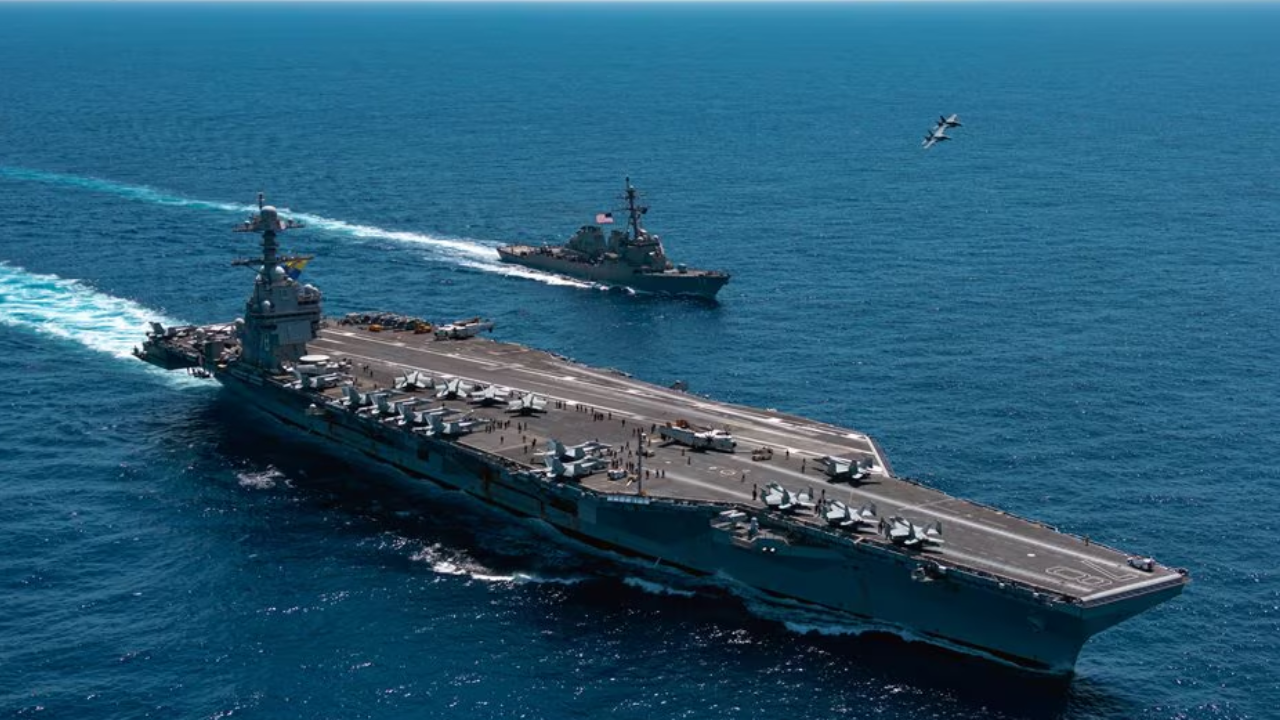
The Biden-Trump transition era has reached a fever pitch as the U.S. Navy maneuvers its most lethal assets. The USS Gerald R. Ford (CVN-78)—fresh off its high-profile mission in Venezuela—has been ordered to the Middle East to join the USS Abraham Lincoln.
Thank you for reading this post, don't forget to subscribe!Strategic Breakdown
- The “Armada” Effect: By placing two nuclear-powered carriers in the same theater, the U.S. is positioning hundreds of advanced aircraft within striking distance of the Persian Gulf.
- A Pivot from the West: The Ford’s departure from the Caribbean marks a significant shift in focus, moving resources away from the recent capture of Nicolás Maduro to address the escalating crisis in Tehran.
- A “Traumatic” Warning: This move follows President Trump’s recent ultimatum, where he warned that a refusal to negotiate a new deal would result in “traumatic” consequences for the Iranian leadership.
The Combat Power Involved
| Asset | Role | Status |
| USS Gerald R. Ford | Lead Carrier | En route from Caribbean |
| USS Abraham Lincoln | Lead Carrier | Currently on station in Arabian Sea |
| USS Normandy | Guided Missile Cruiser | Escort for the Ford |
| Destroyer Squadron 2 | Surface Combatants | Multiple Arleigh Burke-class ships |
The Context of the Escalation
This deployment isn’t just about naval posturing; it is a response to internal Iranian instability and the regime’s continued uranium enrichment. With human rights groups reporting massive casualties within Iran following recent protests, the U.S. is banking on this show of force to prevent the regional conflict from spiraling out of control while the diplomatic clock ticks down.
Peer Perspective: It is worth noting that the Ford is technically overdue for maintenance after a grueling eight-month stint. Moving it now is a high-stakes gamble that prioritizes immediate deterrence over the long-term health of the ship’s systems.