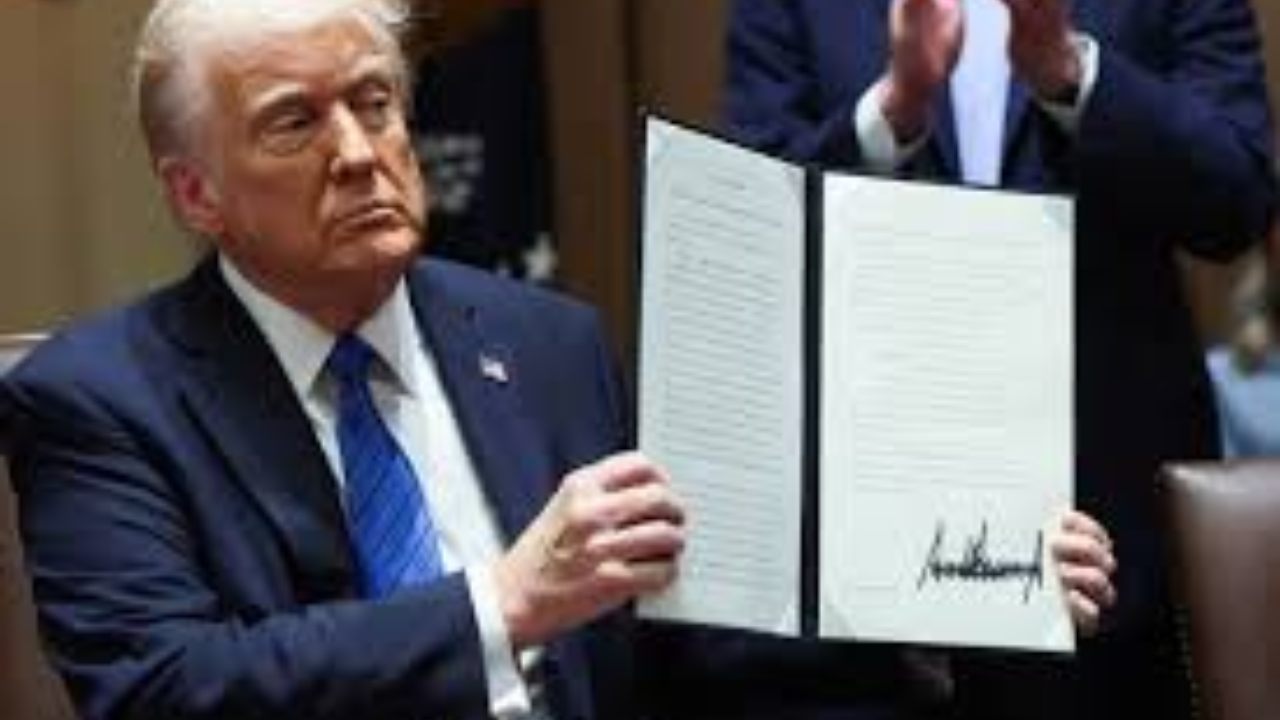
President Trump has intensified his campaign against what he calls “soft-on-crime” Democratic leadership. This narrative isn’t just rhetoric anymore; it has evolved into a series of aggressive federal actions aimed at reshaping local law enforcement.
Thank you for reading this post, don't forget to subscribe!The Administration’s Strategy
The Trump administration is currently focusing on three primary pillars to address urban crime:
- Federal Intervention: Using the District of Columbia as a blueprint, the President has advocated for federalizing local police departments in cities where he deems crime “out of control.”
- Targeting Bail Reform: A major point of contention is “cashless bail.” The President argues these policies create a “revolving door” for offenders, leading to his 2025 executive order that pressures states to reinstate cash bail.
- The Border-Crime Link: By framing immigration as a public safety crisis, the administration has utilized the 2025 Laken Riley Act to increase federal arrests of undocumented individuals, tying national security directly to local precinct issues.
The Pushback: Data vs. Rhetoric
Critics and data analysts have raised several red flags regarding this “expense” to America:
- The “Crime Wave” Debate: Despite the “soft on crime” labels, many of the targeted cities saw a statistical decrease in violent crime through 2025. Critics argue the President is “campaigning on fear” rather than facts.
- Resource Diversion: Opponents claim that by flooding cities with federal agents, the administration is neglecting high-level investigations into cyber-terrorism and financial fraud.
- Constitutional Concerns: Local leaders have labeled these moves as overreach, arguing that “federalization” of police undermines the 10th Amendment and local autonomy.
Key Policy Comparisons
| Policy Area | Trump Administration Stance | Democratic/Critic Counterpoint |
| Bail | Mandatory cash bail to keep suspects in jail. | Cashless bail prevents the poor from being “jailed for poverty.” |
| Policing | Increased federal oversight and “Stop-and-Frisk.” | Community-led policing and focus on root causes like housing. |
| Immigration | Mandatory detention for any accused non-citizen. | Focus on violent offenders only to save resources. |
The Bottom Line: As we head toward the 2026 midterms, the “Soft on Crime” slogan is more than a talking point—it’s the fuel for a massive shift in how the federal government interacts with America’s largest cities.