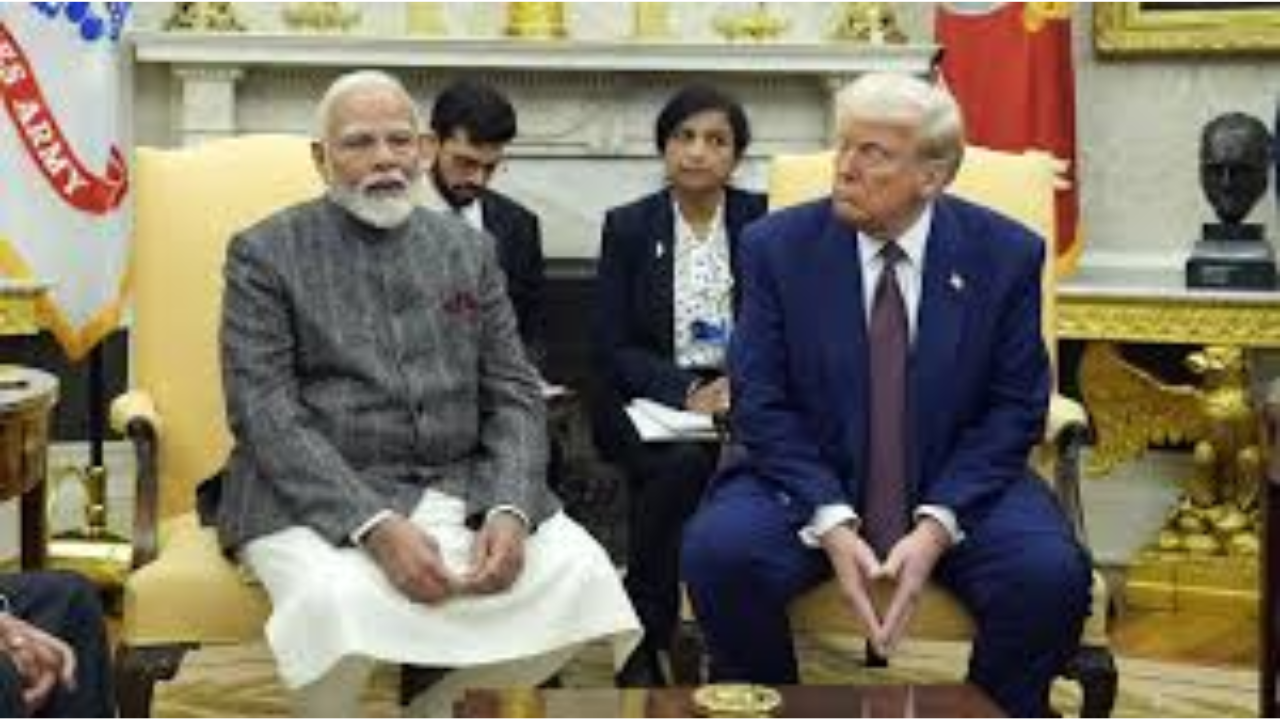
The National Security Strategy (NSS) 2025 signals a cold, calculated shift in Washington’s stance toward New Delhi. The era of “sentimental partnership” and democratic alignment has been replaced by a transactional blueprint that views India through the lens of utility rather than shared destiny.
Thank you for reading this post, don't forget to subscribe!1. From “Natural Ally” to “Functional Tool”
In a departure from the Biden administration’s high-praise diplomacy, the 2025 document mentions India only four times. This is not a slight by omission, but a deliberate downgrade in status. India is no longer portrayed as a “democratic counterweight” to China, but as a regional actor whose value is measured strictly by its contributions to U.S. interests in the Indo-Pacific.
2. The Reciprocity Mandate
The strategy effectively turns the partnership into a “pay-to-play” model:
- Commercial Leverage: Washington now explicitly links trade concessions to India’s military activity within the Quad.
- Burden Sharing: The U.S. expects “reciprocity” over “reassurance,” pressuring India to shoulder more of the security costs in the region.
- Strategic Recruitment: This marks a move from courting India’s favor to recruiting its resources for American industrial and security goals.
3. Key Friction Points
The “America First” doctrine creates three major vulnerabilities for the Indian government:
- Border Disinterest: The strategy’s silence on India-China border tensions suggests the U.S. will not intervene in land disputes that do not directly impact American prosperity.
- The STEM Barrier: By framing merit-based immigration as a “loophole,” Trump’s blueprint threatens the H-1B pipeline and the Indian tech diaspora.
- Autonomy vs. Alignment: The U.S. expresses growing unease with India’s “multi-alignment” policy, signaling that New Delhi’s independent streak is now viewed as an obstacle rather than an asset.
The New Reality
The 2025 strategy isn’t hostile, but it is indifferent to sentiment. For New Delhi, the challenge is no longer about maintaining a “special relationship,” but about navigating a partnership defined by constant renegotiation. India must now prove its worth daily in a marketplace of power where praise is dead and pressure is the new standard.