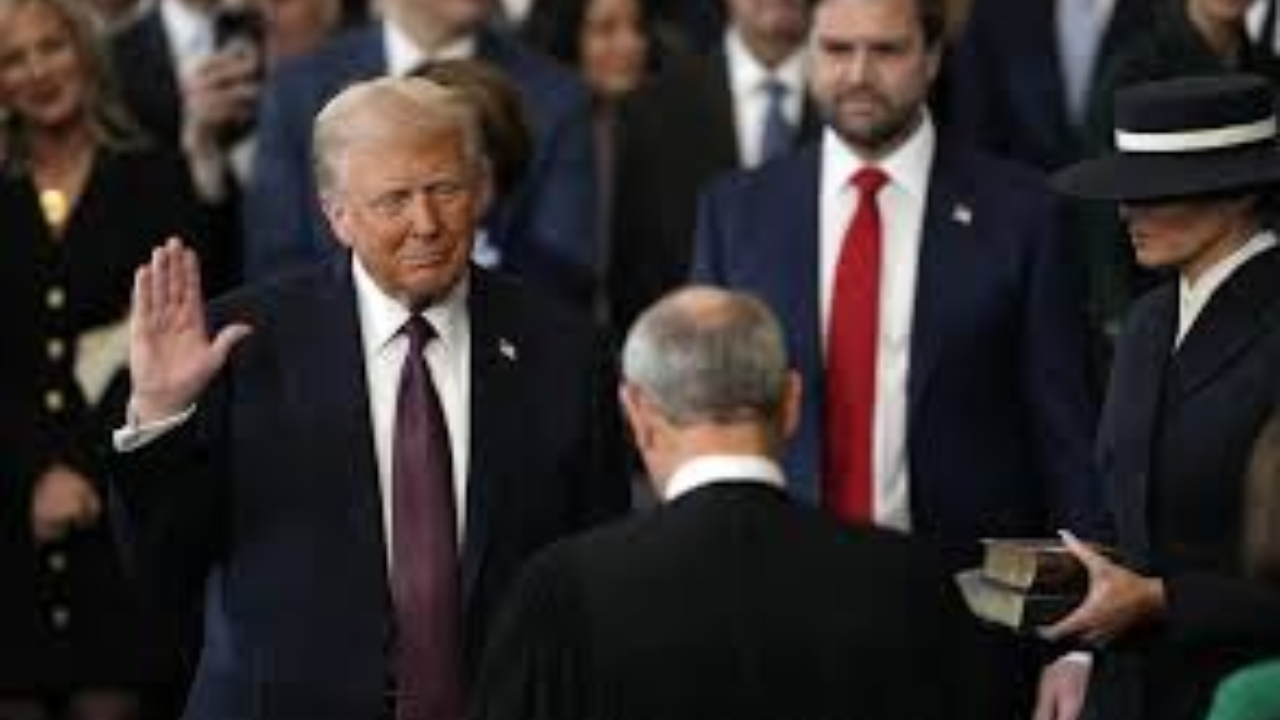
In a major shift for Middle East diplomacy, President Trump officially launched the Board of Peace today at the newly renamed Donald J. Trump U.S. Institute of Peace. The summit centered on a dual mission: bankrolling the reconstruction of Gaza and establishing a new international security apparatus that Trump suggests could eventually “overshadow” the United Nations.
Thank you for reading this post, don't forget to subscribe!The Reconstruction Fund: Who’s Paying?
While the total estimated cost to rebuild Gaza sits near $70 billion, today’s summit secured $17 billion in initial commitments:
- The U.S. Lead: President Trump committed $10 billion directly to the Board of Peace to spearhead redevelopment.
- The Arab & Central Asian Bloc: Nine nations—including Saudi Arabia, Qatar, the UAE, and Kazakhstan—pledged a combined $7 billion.
- Supplementary Aid: The UN is seeking an additional $2 billion, with Japan expected to lead a secondary fundraising round later this year.
Security: A New International Force
- Boot on the Ground: Indonesia, Morocco, and Kazakhstan are among the nations committing thousands of troops.
- Strategic Start: Initial deployments are slated for Rafah to secure the first wave of construction projects.
- Police Training: Egypt and Jordan will lead the effort to train a local police force under the Board’s supervision.
A New World Order?
The most provocative takeaway from the summit was the positioning of the Board of Peace as a direct competitor to traditional global institutions.
| Feature | The Board of Peace Model |
| Leadership | President Trump serves as the inaugural Chairman. |
| Entry Cost | Reports suggest a $1 billion contribution for a permanent seat. |
| Western Stance | Nations like the UK and France are currently “Observers,” remaining cautious of the Board’s autonomy. |