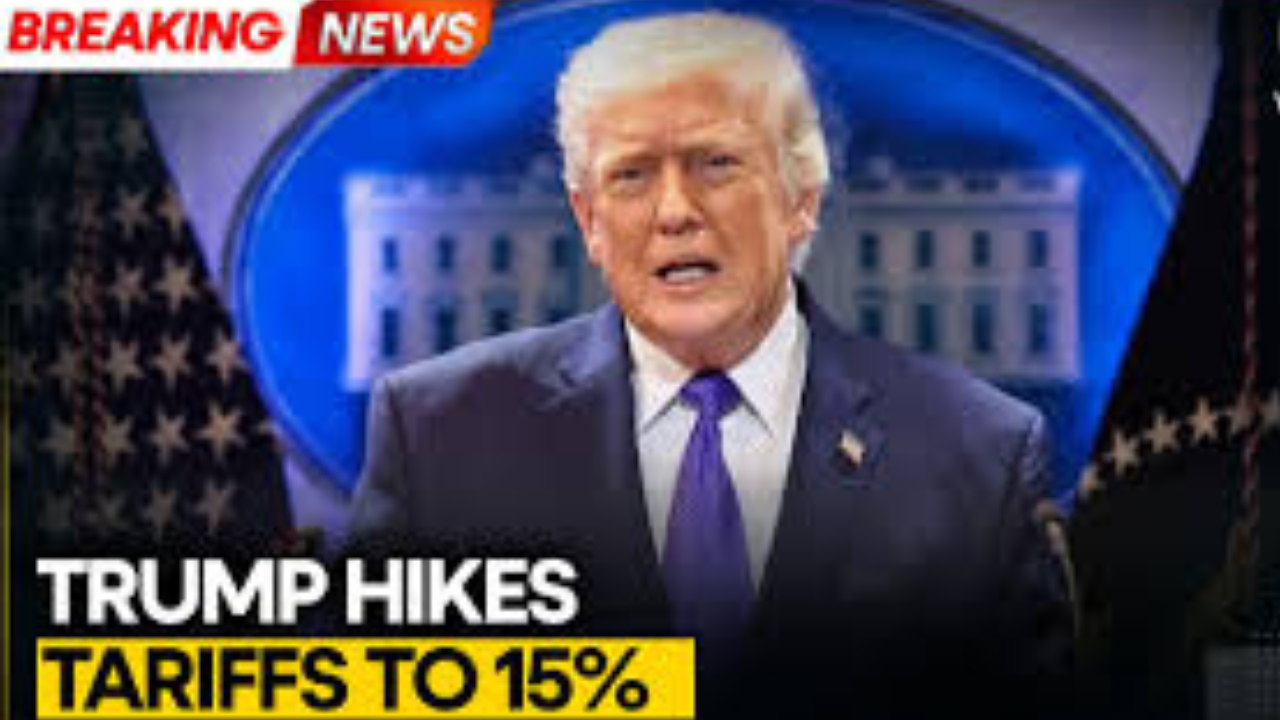
In a defiant response to a major judicial setback, President Trump announced on Saturday, February 21, 2026, that he is increasing his proposed worldwide baseline tariff from 10% to 15%. The move comes less than 24 hours after the U.S. Supreme Court struck down his previous “Liberation Day” tariffs, ruling that he had overstepped his executive authority.
Thank you for reading this post, don't forget to subscribe!The Shift in Legal Strategy
The Supreme Court’s 6–3 decision on Friday invalidated tariffs previously imposed under the International Emergency Economic Powers Act (IEEPA). To bypass this, the President is now utilizing Section 122 of the Trade Act of 1974.
- The Power of Section 122: This rarely used statute allows a president to impose temporary import surcharges of up to 15% to address serious “balance-of-payments” deficits.
- The Time Limit: Under this law, the tariffs are strictly temporary, expiring after 150 days unless Congress votes to extend them.
- Effective Date: While the 10% rate was originally set for Tuesday, February 24, 2026, the President’s latest order seeks to implement the full 15% rate immediately.
Key Impacts and Exemptions
The White House has clarified that this 15% surcharge is a baseline intended to cover nearly all global imports, though it is not a “one-size-fits-all” tax for every scenario:
- USMCA Exemption: Goods from Canada and Mexico that comply with the North American trade agreement remain exempt for the time being.
- No “Double-Counting”: The 15% surcharge generally will not be added on top of existing sector-specific duties (such as steel, aluminum, or existing China-specific Section 301 tariffs) to avoid crippling domestic supply chains.
- Critical Exceptions: To prevent immediate price spikes on essentials, the administration has carved out exemptions for pharmaceuticals, energy products (oil/gas), and certain agricultural staples.