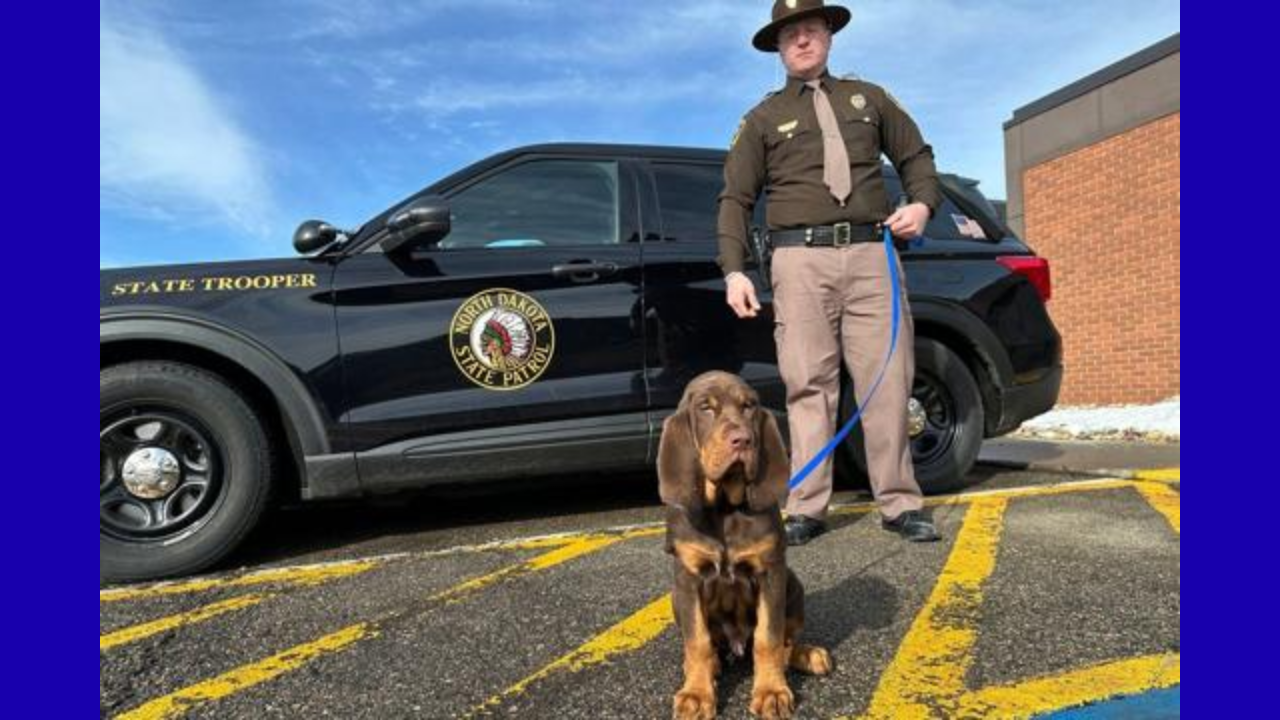
In an era of drones and thermal imaging, the most sophisticated tool in a police officer’s kit isn’t digital—it’s a “low-tech” nose with four legs and floppy ears. Bloodhounds remain the gold standard for tracking missing persons and fugitives, using a biological sensory suite that scientists are still struggling to replicate.
Thank you for reading this post, don't forget to subscribe!Built for the Trail
The Bloodhound isn’t just a dog with a good sense of smell; it is a specialized machine designed for scent collection.
- The Nose: While a human has roughly 5 million scent receptors, a Bloodhound boasts 300 million. Their olfactory bulb (the brain’s scent processor) is 40 times larger than ours.
- The Ears: Those iconic, long, drooping ears serve a mechanical purpose. As the dog put its head to the ground, the ears act as “scent sweepers,” kicking up microscopic particles from the dirt and funneling them directly toward the nostrils.
- The “Scent Memory”: Once a Bloodhound is given a “scent article” (like a worn shirt), it can lock onto 그 specific odor and ignore all others, even in a crowded city or across miles of rugged terrain.
A Living Forensic Tool
The reliability of these dogs is so high that they are the only breed whose “trailing results” are widely accepted as forensic evidence in a court of law. They don’t just find people; they provide a biological trail of proof that can link a suspect to a crime scene days after the event.