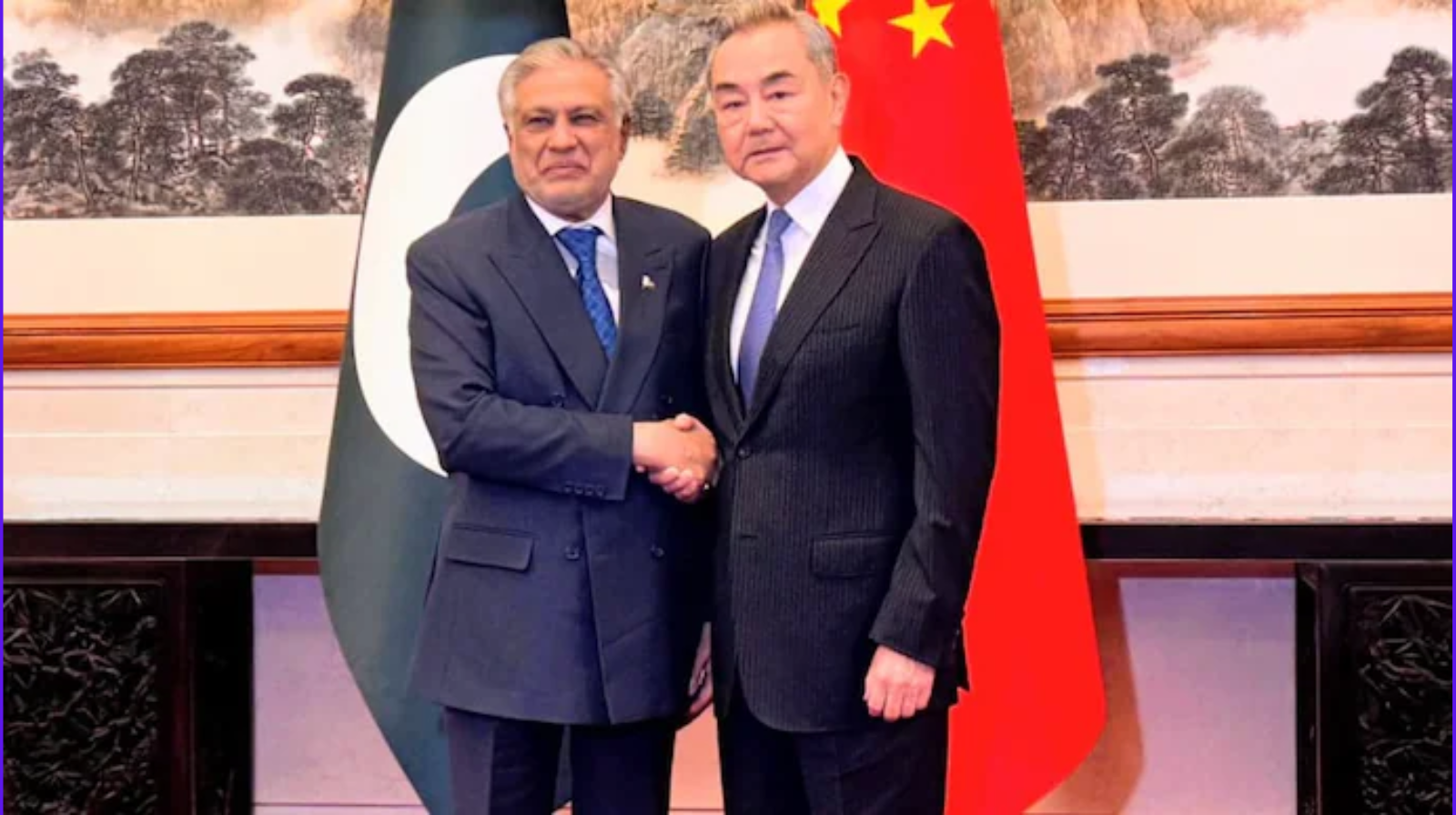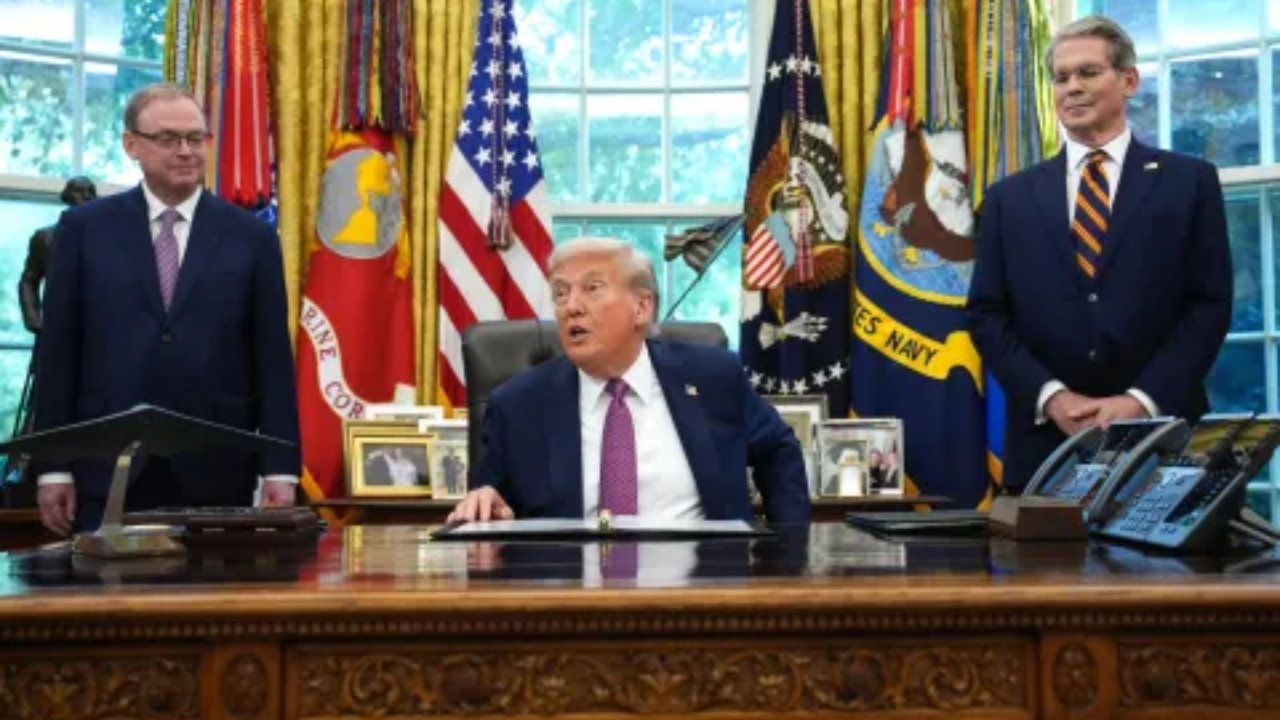
Two top economic officials, Kevin Hassett (Director of the National Economic Council) and Treasury Secretary Scott Bessent, hold contrasting views on the effectiveness of President Donald Trump’s tariffs in addressing the United States’ $\$38$ trillion national debt.
Thank you for reading this post, don't forget to subscribe!Hassett: Tariffs as a Fiscal Solution
Kevin Hassett, a favorite for the next Federal Reserve chairman, argued that the sweeping tariffs are a meaningful factor in tackling the national debt by contributing to “big reductions in the deficit.”
- Source of Revenue: Hassett noted that tariff revenue, combined with “more spending restraint,” is significantly contributing to the Treasury.
- Broader Strategy: He cast tariffs as part of a supply-side strategy intended to boost economic growth, widen the tax base, and ultimately ease the national debt burden.
Bessent: Tariffs as a Temporary Measure
Just a day earlier, Scott Bessent described tariff revenues as a “shrinking ice cube”, suggesting they are not a durable solution for the country’s fiscal challenges.
- Diminishing Returns: This view is supported by the Congressional Budget Office (CBO), which estimated that national debt savings shrunk by $\$1$ trillion between August and November as trade deals lowered the effective tariff rate.
- Shortfall: Pantheon Macroeconomics also found that tariffs have brought in $\$100$ billion less than the White House projected, primarily due to a sharp drop in imports from China.
- Ultimate Goal: Bessent stressed that the primary purpose of tariffs is to rebalance trade and rebuild domestic manufacturing, not to permanently fund the government.
Inflation and Debt Challenges
While Hassett claimed there is “spending restraint,” budget watchdogs strongly disagree:
- Debt Growth: The Peter G. Peterson Institute calculated that the debt’s growth by $\$1$ trillion in just two months was the fastest increase ever recorded outside of the pandemic.
Both officials agreed on one point regarding economic effects: they rejected the idea that tariffs are inherently inflationary, calling them a one-time price shock rather than a persistent driver of rising prices.
Supreme Court Scrutiny
The debate comes as the Supreme Court weighs whether the administration overstepped its authority by using the 1977 International Emergency Economic Powers Act to impose the tariffs.
- Administration Confidence: Hassett expressed confidence that the Court will uphold the administration’s use of emergency powers, arguing it was justified by the social damage and diminished well-being of American labor resulting from decades of large trade deficits.
- Consequence of Loss: Bessent warned that if the Supreme Court throws out the tariffs, it would be a “loss for the administration” and “a loss for the American people.”