While the victims of the infamous Salem witch trials in colonial America have been pardoned, the centuries-old witchcraft convictions of hundreds of people in Britain officially still stand.
Thank you for reading this post, don't forget to subscribe!Now, a local authority in southern England—Maidstone Borough Council—is leading a growing campaign to secure a general pardon from the British government, arguing that these historical injustices must be corrected.
The Unjust Convictions
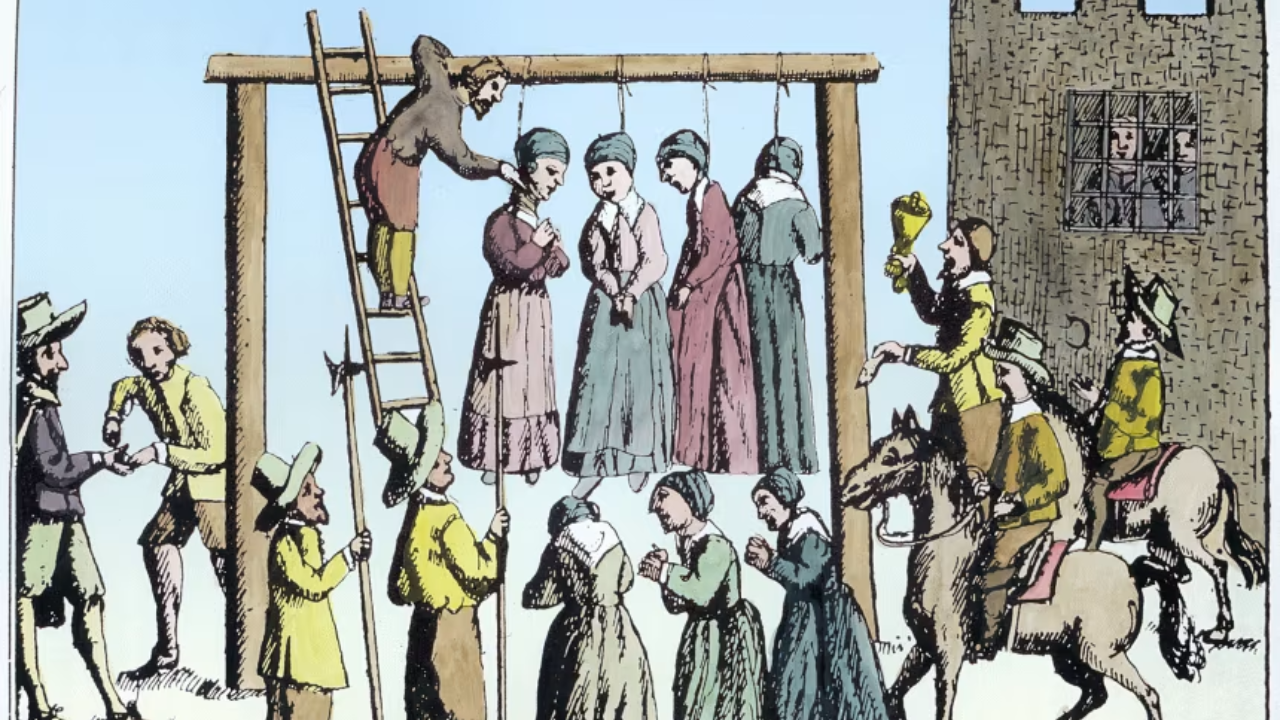
Between 1560 and 1700, more than 500 people were tried for witchcraft in England’s southeast, resulting in 112 executions. Maidstone’s campaign is driven by a particularly horrific case:
- The Maidstone Trial (1652): Six vulnerable women were accused of witchcraft, including bewitching to death an infant, its mother, and a young child.
- The ‘Proof’: Their convictions relied on crude, unverified claims and tests, such as a pin thrust into their arms allegedly drawing no blood. Two women even confessed to being impregnated “by the devil.”
- The Sentence: All six were convicted of the “execrable and diabolical crime of witchcraft” and hanged at Penenden Heath, a public spectacle attended by thousands.
- The Law: The executions were carried out under the Witchcraft Act of 1562 (later superseded by the Witchcraft Act of 1604, both of which transferred witch trials from Church to common law courts). Although the laws were repealed in 1736, the convictions remain on record.
Why the Convictions Must Be Overturned
Councilors are urging Home Secretary Shabana Mahmood to introduce legislation for a general pardon for all those executed under the Witchcraft Act.
“Justice is timeless… These were innocent, vulnerable individuals who were brutally judicially murdered—often for political or personal gain.”
“We need to set the record straight.”
They also highlight that the trials were a “very early form of violence against women and girls,” who were used as scapegoats.
Precedent for Reversing Historic Wrongs
The campaign points to successful efforts elsewhere in the UK:
- Scotland: Then-First Minister Nicola Sturgeon issued a formal apology in 2022 to the thousands of people accused and executed under Scotland’s Witchcraft Act.
- The “Turing Law” (England): In 2013, Alan Turing was posthumously pardoned for his conviction for gross indecency, and the pardon was extended to thousands of other gay and bisexual men in 2017.
Councilors hope a similar approach will be taken to finally grant justice to the victims of Britain’s witch hunts.
This movement is about more than just history; it’s about officially acknowledging a profound injustice. Do you want to learn more about the details of the Witchcraft Act of 1562 that governed these trials?