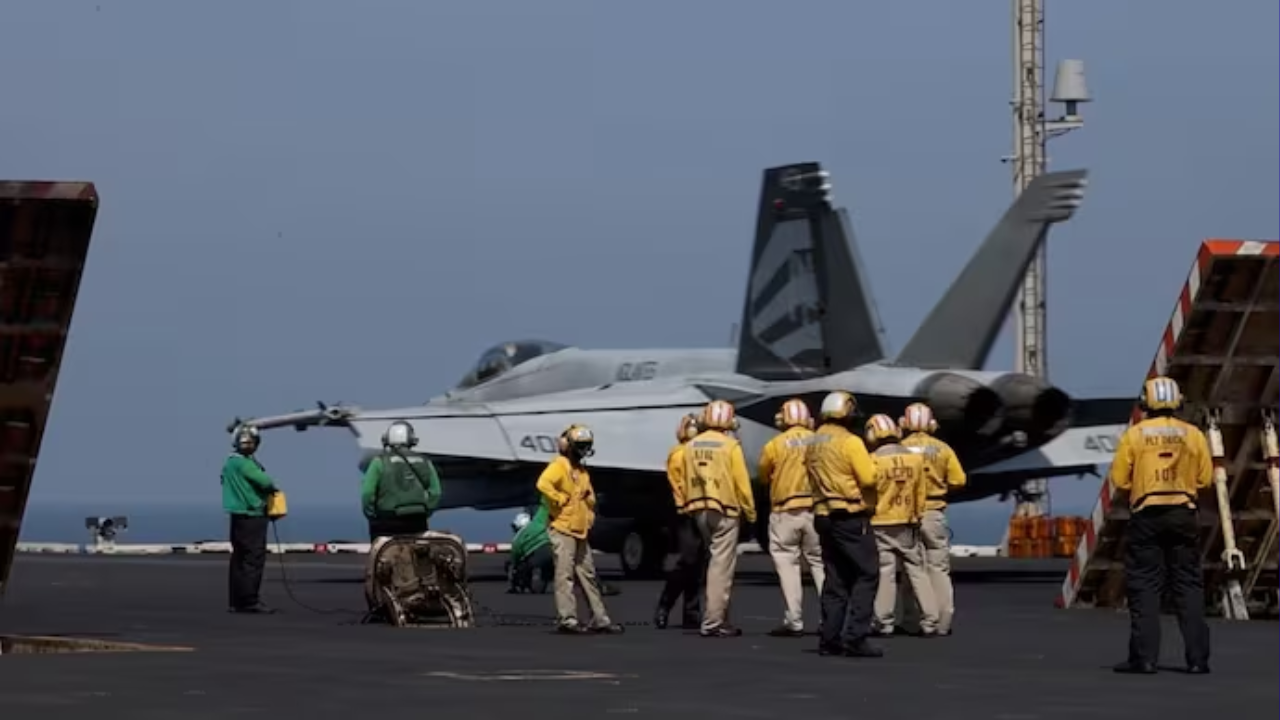
the aura of invincibility surrounding the U.S. F-35 Lightning II faced its most significant challenge to date. Despite weeks of “Operation Epic Fury” aimed at dismantling Iranian integrated air defense systems (IADS), a U.S. stealth fighter was struck over central Iran.
Thank you for reading this post, don't forget to subscribe!The incident has sparked a global debate: How did a theoretically “defenseless” nation hit a jet designed to be invisible?
1. The Tactical Reality vs. The Propaganda
While the IRGC (Islamic Revolutionary Guard Corps) claimed a total “kill,” the reality appears to be a “mission kill.” * The Strike: Iranian forces utilized what analysts believe was a “silent” tracking method to intercept the jet at 2:50 a.m.
- The Outcome: CENTCOM confirmed the aircraft sustained significant damage but emphasized the pilot’s skill in performing an emergency landing at a regional base. The jet is out of the fight, but the pilot and the airframe survived.
2. Piercing the Stealth “Shield”
Stealth is not a “cloak of invisibility”; it is the reduction of a Radar Cross Section (RCS). Iran likely exploited the F-35’s few remaining vulnerabilities:
- Infrared Search and Track (IRST): While the F-35 is hard to see on radar, its engines still generate heat. Iran has invested heavily in passive electro-optical sensors that “look” for heat signatures rather than bouncing radio waves off the fuselage. This allows them to track a target without triggering the jet’s onboard warning systems.
- The “Pop-up” Ambush: Mobile units like the Bavar-373 or Khordad-15 are designed for “shoot and scoot” tactics. By keeping their radars off until the very last second—guided by secondary passive sensors—they can launch a missile before the F-35’s electronic warfare suite can fully jam the signal.
3. A Shift in the Conflict
This event marks a turning point in the 2026 air war. It proves that even when an integrated defense network is “flattened,” asymmetric remnants remain dangerous.
| Metric | Detail |
| First-of-its-kind | First time an F-35 has been hit by hostile fire in a high-intensity conflict. |
| Tactical Shift | U.S. forces may now have to increase SEAD (Suppression of Enemy Air Defenses) sorties, slowing the pace of the campaign. |
| Cost Ratio | A missile costing roughly $500,000 successfully neutralized a $100,000,000+ asset. |
The Verdict
Iran didn’t necessarily “beat” stealth technology; they circumvented it. By using a combination of patience, passive sensors, and mobile traps, they managed to land a blow against a superior force. For the U.S., the “unkillable” label has been replaced by a more sober reality: in a modern high-end fight, no asset is truly untouchable.