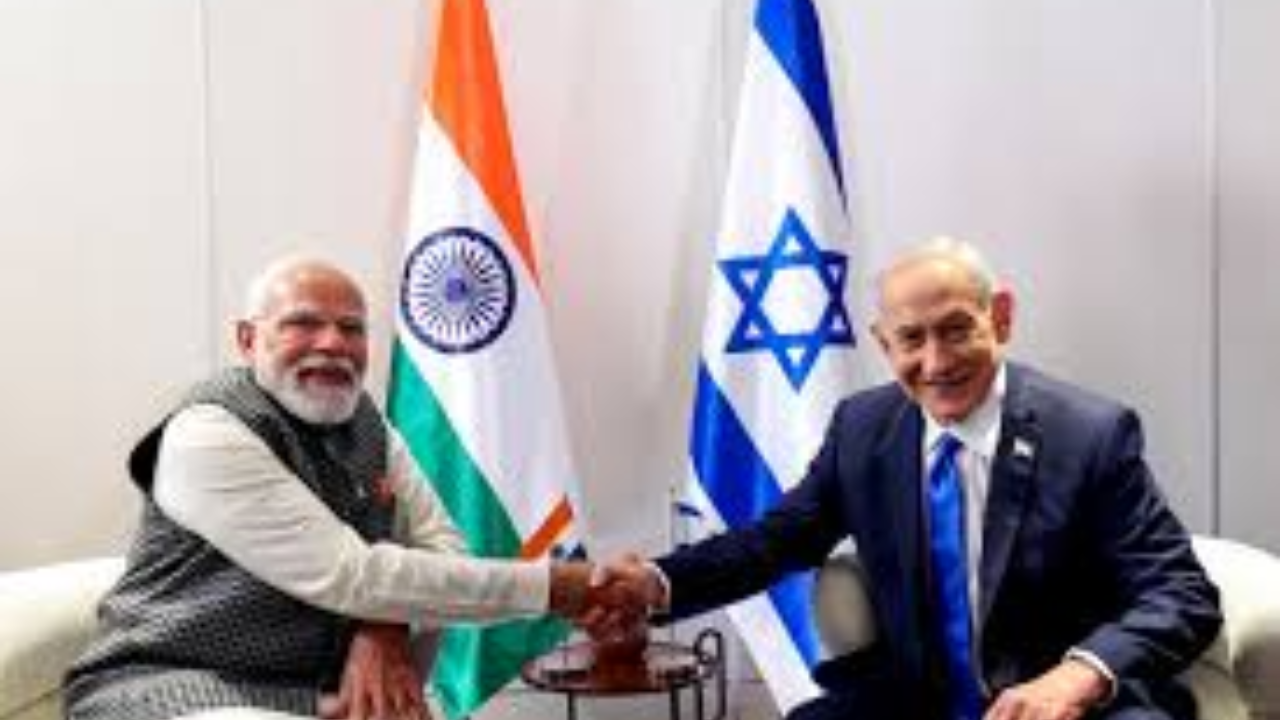
For decades, India’s West Asia policy was predictable: a staunch, ideological commitment to Palestine and a cold shoulder toward Israel. Today, that script has been flipped. India has transitioned from a policy of “solidarity” to one of “Strategic Realism.”
Thank you for reading this post, don't forget to subscribe!1. The Drivers: From Ideology to Interest
The shift wasn’t just about changing governments; it was about changing needs.
- The End of “Hyphenation”: India successfully decoupled its Israel policy from the Palestine conflict. It no longer views the two through the same lens, allowing New Delhi to maintain a “Special Strategic Partnership” with Tel Aviv while still paying diplomatic homage to Ramallah.
- The “Three Ts” (Technology, Terror, and Tanks): * Defense: Israel has become a non-negotiable security partner, providing “no-strings-attached” military hardware during India’s border crises.
- Intelligence: Shared concerns over cross-border terrorism have created a deep, quiet bond between intelligence agencies.
- Agriculture/Water: Israel’s drip irrigation and desalination tech are vital for India’s food security.
2. Why the World is Watching
This shift isn’t just a bilateral affair; it’s a tectonic move in global geopolitics.
- The New Quad (I2U2): By joining forces with Israel, the UAE, and the USA, India has cemented its role as a power broker in the Middle East, moving beyond its traditional role as a mere energy consumer.
- The IMEC Bridge: The India-Middle East-Europe Economic Corridor (IMEC) relies heavily on Israel’s Haifa port. India’s friendship with Israel is now a literal cornerstone of its global trade ambitions.
- A New Brand of Neutrality: Unlike the West, India doesn’t lecture; unlike the old India, it doesn’t protest. It now practices a brand of “transactional diplomacy” that prioritizes national growth over historical sentiment.
Summary: The 2026 Landscape
How would you like to refine this further? I can:
- Shift the tone to be more critical/skeptical of the move.
- Focus specifically on the impact on India’s relations with Arab nations like Saudi Arabia.
- Draft a formal brief suitable for a policy report.