

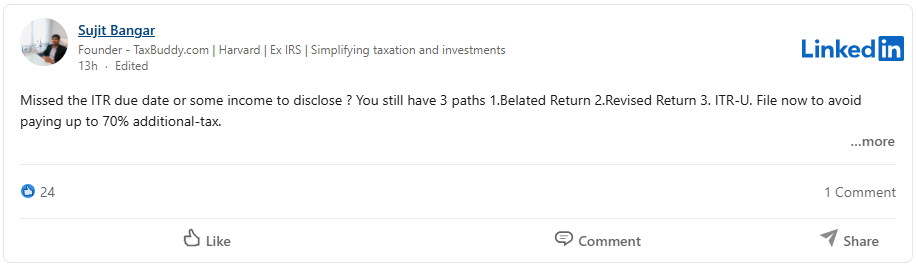
Missed the income tax return (ITR) deadline? Don’t panic. You still have a few options to get compliant, but one could be significantly more expensive. According to Sujit Bangar of TaxBuddy.com, Indian taxpayers have three main paths after missing the initial ITR deadline: a Belated Return, a Revised Return, and the most costly option, an Updated Return (ITR-U).
Thank you for reading this post, don't forget to subscribe!Belated Return: The Most Common Post-Deadline Option
Filing a belated return under Section 139(4) is the first and most common option. It’s treated like a normal return and is valid as long as it’s filed by December 31 of the relevant assessment year, or before an assessment begins.
While it’s a valid way to file, it comes with penalties: a late fee of ₹5,000 for incomes over ₹5 lakh (₹1,000 for those below), plus interest on the unpaid tax under Section 234A. A significant drawback is the forfeiture of most loss carry-forwards and key deductions. Still, Bangar notes it’s “worth it” as it validates your TDS/TCS credits and helps you avoid the much harsher penalties of an ITR-U.
Revised Return: Correcting Past Mistakes
If you’ve already filed your return—even if it was a belated one—and you’ve discovered an error, you can file a revised return. This option, which also has a deadline of December 31, allows you to correct mistakes like under-reported income or missed deductions.
ITR-U: The Last Resort
The final and most punitive option is the Updated Return (ITR-U). This is used when a taxpayer has missed both the initial and belated deadlines or has later found unreported income. While the Finance Act 2025 now allows for filing up to 48 months from the end of the assessment year, this path comes with a heavy price tag: an additional tax of 25% to 70% on the total tax and interest due, depending on the delay.
Bangar stresses that ITR-U should be seen as a “last resort, not a planning tool,” because it cannot be used to declare losses, reduce tax liability, or claim a refund.
In short, act promptly. File a belated return if you’re eligible, revise your return if needed, and only use the ITR-U for unavoidable lapses.

















Comments are closed.