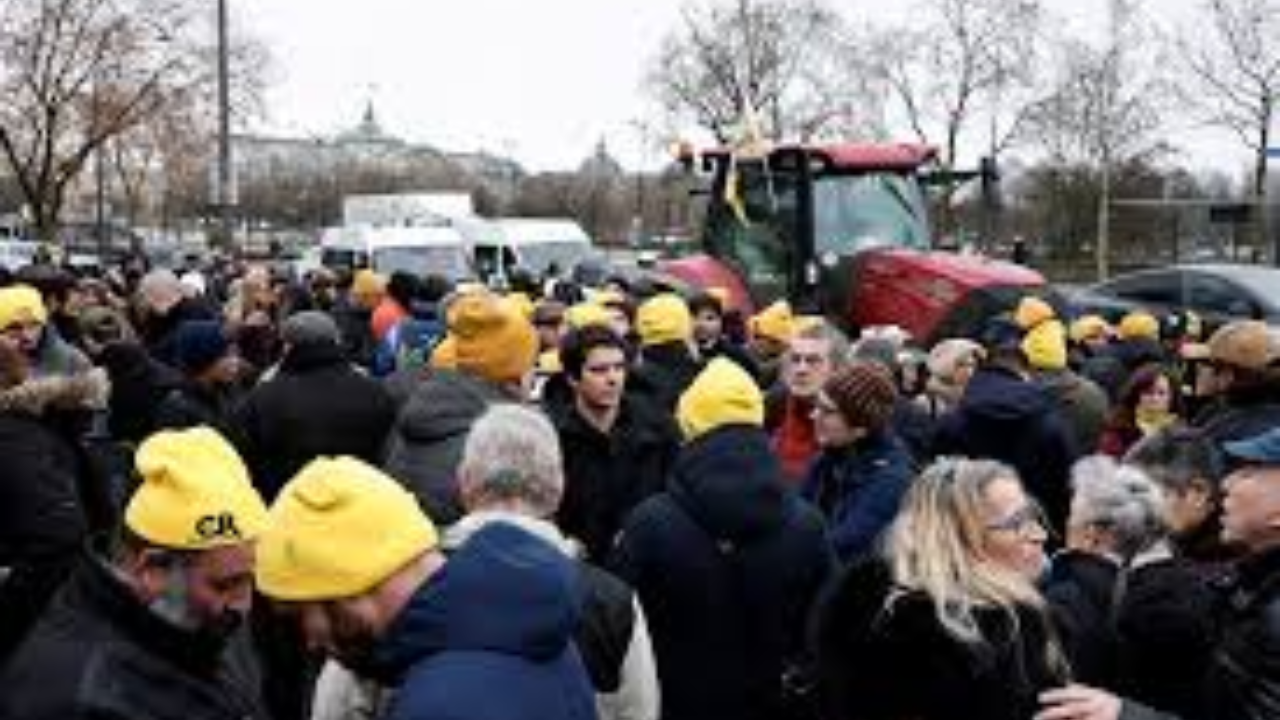
PARIS — In a dramatic escalation of rural unrest, hundreds of French farmers forced their way through police cordons early Thursday morning, parading tractors under the Eiffel Tower and circling the Arc de Triomphe. The pre-dawn “commando-style” entry into central Paris marks a defiant stand against a looming free trade agreement between the European Union and the South American Mercosur bloc.
Thank you for reading this post, don't forget to subscribe!The Siege at a Glance
- Police Barriers Broken: Despite a strict ban on agricultural vehicles in the city center, convoys from the Coordination Rurale union bypassed checkpoints to reach the Champs-Élysées.
- Traffic Paralysis: Over 150km of gridlock choked the capital’s western arteries, specifically the A13 motorway, as tractors effectively formed a ring of steel around the city limits.
- Symbolic Protest: A mannequin was hung from a tractor at the Arc de Triomphe, while banners reading “Mercosur, death for sure” were unfurled in the shadow of the Eiffel Tower.
A Convergence of Crises
The farmers argue that the trade deal is the “final nail in the coffin” for French agriculture, but their anger is fueled by a perfect storm of grievances:
- The Mercosur “Threat”: Farmers fear the market will be flooded with South American beef, sugar, and poultry produced using pesticides and hormones banned in the EU.
- Lumpy Skin Disease (LSD): Protesters are demanding an immediate halt to the mandatory mass culling of cattle, calling for vaccination programs instead of slaughter.
- The “Bribery” Accusation: Farmers have dismissed a recent EU proposal to unlock €45 billion in early funding as a “bribe” intended to buy their silence ahead of the deal’s signing.
High Stakes for the Elysée
“We are between resentment and despair. We have been abandoned in favor of a space shuttle, an Airbus, or a car.” — Stephane Pelletier, Coordination Rurale Union
With a crucial signing ceremony potentially set for January 12 in Paraguay, the French government faces a precarious domestic situation. Any perceived capitulation to Brussels could trigger a vote of no confidence in a parliament where Macron lacks a majority.