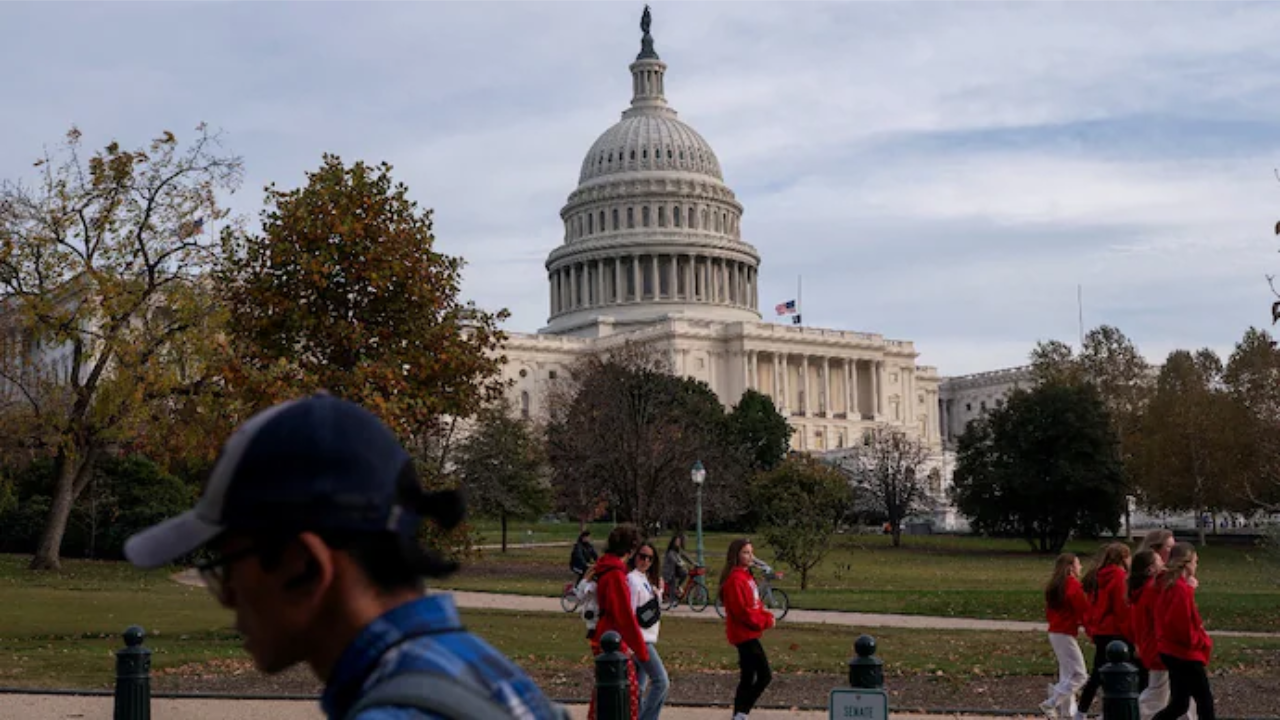
The U.S. Senate has taken the critical first step toward ending the longest government shutdown in U.S. history (40 days), but the move immediately exposed a deep rift within the Democratic party.
Thank you for reading this post, don't forget to subscribe!On Sunday night, a group of moderate Democrats, in coordination with Republican leaders and the White House, struck a deal to advance a measure to reopen the government. The key procedural vote passed 60-40, clearing the path for the bill.
Key Elements of the Compromise:
- Immediate Funding & Back Pay: The measure prevents federal agencies from laying off employees until January 30, 2026, blocks President Trump’s efforts to reduce the federal workforce, and guarantees back pay for all federal employees, including military and Border Patrol personnel.
- The Healthcare Concession: The controversial breakthrough was achieved without a guaranteed extension of expiring Affordable Care Act (ACA) health care subsidies. These subsidies are credited with helping double ACA enrollment to 24 million since 2021.
Democratic Fallout:
- The omission of guaranteed ACA subsidy extension was immediately labeled a “betrayal” by critics within the Democratic party.
- Senate Minority Leader Chuck Schumer voted against the measure, stating he could not “in good faith” support the proposal given the threat to healthcare.
- The deal was brokered by Senators Maggie Hassan and Jeanne Shaheen (Democrats of New Hampshire), and Angus King (Independent of Maine).
The Next Steps:
The bill now moves through additional procedural hurdles in the Senate before heading to the House for approval. Republican leaders plan to amend the bill to include a full-year funding package for some departments, with temporary funding extended through January 2026 for others. President Trump, who recently criticized the ACA subsidies on Truth Social, has stated he is ready to work with both parties “once the government is open.”