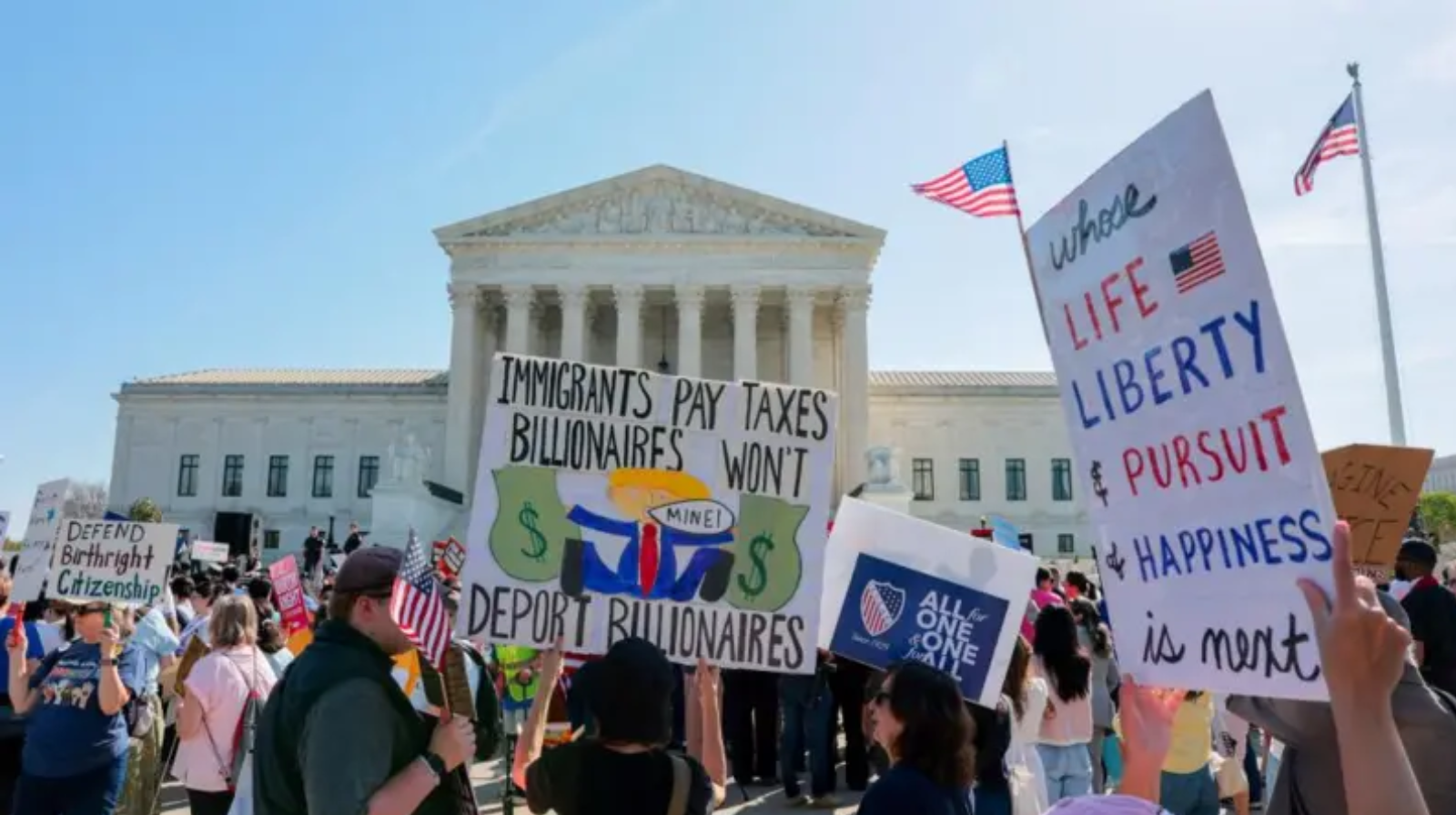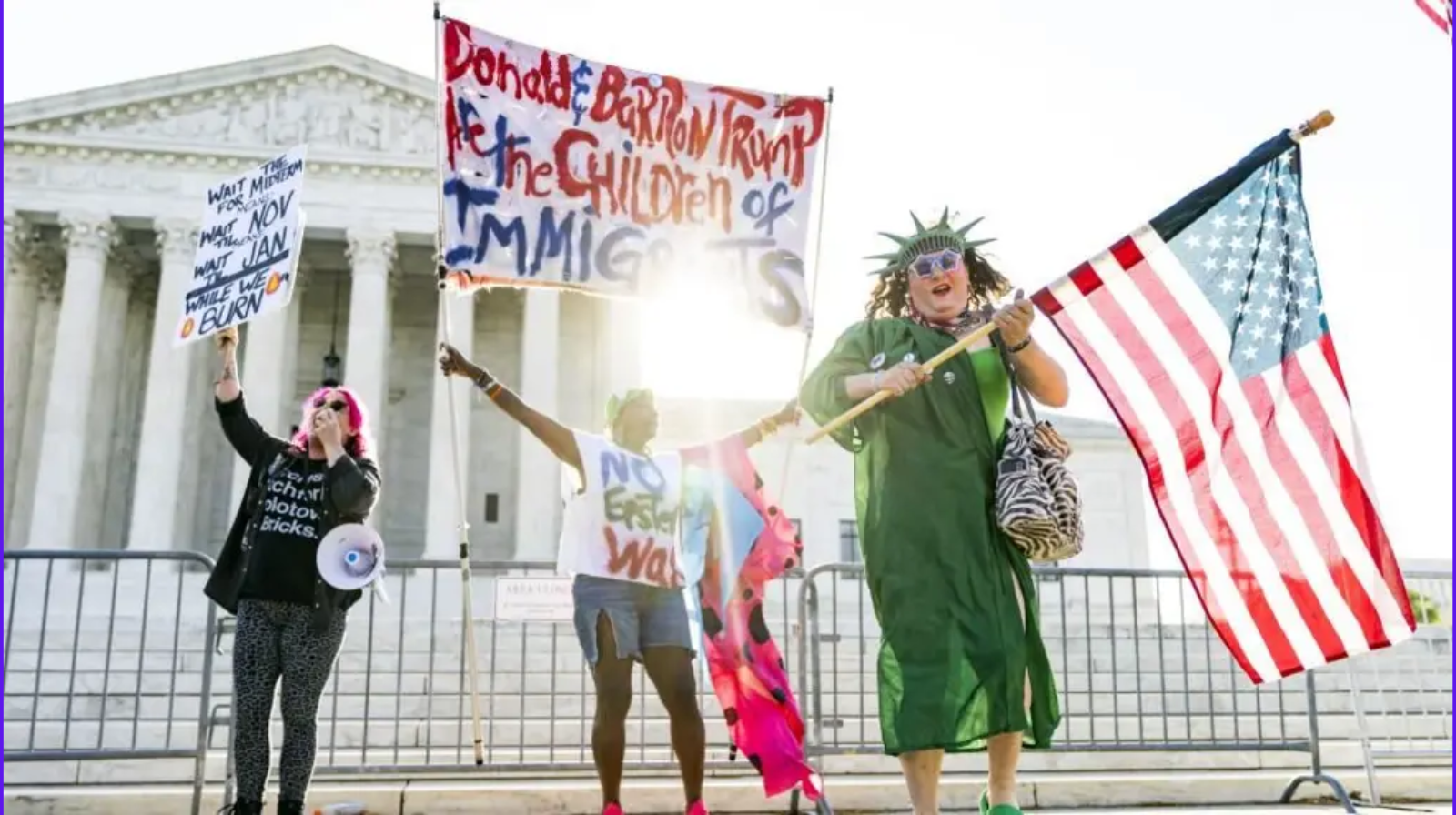
The Supreme Court signaled significant doubt on Wednesday, April 1, 2026, during oral arguments for Trump v. Barbara. The case centers on the administration’s attempt to redefine the 14th Amendment and end birthright citizenship for children of undocumented immigrants and temporary visa holders.
Thank you for reading this post, don't forget to subscribe!The Legal Conflict: Reinterpreting the 14th Amendment
- The Allegiance Argument: The government contends that “subject to the jurisdiction thereof” implies an “undivided allegiance” to the U.S., arguing that children of non-permanent residents do not meet this constitutional threshold.
- The Judicial Response: Skepticism was not limited to the court’s liberal wing. Chief Justice John Roberts labeled the government’s specific theory as “quirky,” while Justice Brett Kavanaugh questioned the validity of discarding decades of settled legal practice.
- The Practicality Gap: Justice Sonia Sotomayor pushed back on the jurisdiction argument, noting that anyone physically present in the U.S. is legally bound by its laws and, by definition, under its jurisdiction.
Impact of Executive Order 14,160
- Are in the U.S. without legal status.
- Are in the U.S. on temporary visas (such as work or student status).
Looking Ahead
The plaintiffs, led by the ACLU, rely heavily on the 1898 precedent United States v. Wong Kim Ark, which established that birth on American soil confers citizenship regardless of parental status.
A final decision is expected by early summer 2026. Based on the justices’ skeptical questioning, many legal analysts predict the Court will uphold the current interpretation of birthright citizenship and strike down the administration’s order.