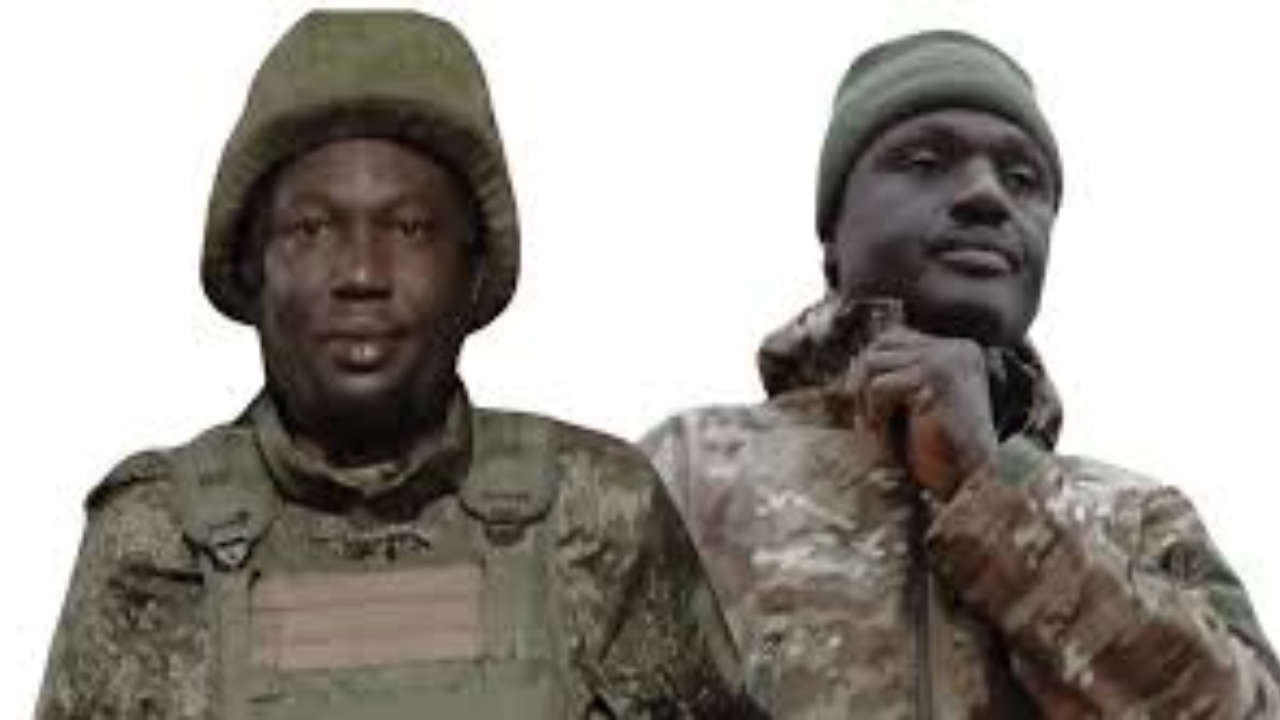
Ukrainian military intelligence (HUR) has confirmed the deaths of two Nigerian men, Hamzat Kazeen Kolawole (42) and Mbah Stephen Udoka (38), following a drone strike in the occupied Luhansk region.
Thank you for reading this post, don't forget to subscribe!Profile of the Deceased
| Name | Age | Enlistment Date | Background Info |
| Hamzat Kazeen Kolawole | 42 | August 29, 2025 | Survived by a wife and three children. |
| Mbah Stephen Udoka | 38 | September 28, 2025 | Deployed to the front just five days after enlistment. |
The “Cannon Fodder” Allegation
The Ukrainian Main Directorate of Intelligence (HUR) highlighted several troubling details regarding their service:
- Rapid Deployment: Udoka was reportedly sent into a combat zone less than a week after signing his contract, suggesting he received zero formal military training.
- Unit Assignment: Both men were assigned to the 423rd Guards Motor Rifle Regiment, a unit that has seen heavy action.
- The Incident: Intelligence suggests the men never participated in a direct firefight. Instead, they were killed by a Ukrainian drone strike while attempting to storm defensive positions.
The Recruitment Trap
Ukrainian officials and international observers warn that many African recruits are lured to Russia under false pretenses—often promised lucrative civilian contracts in security or logistics—only to be coerced into “stormtrooper” assault units upon arrival.
While the Russian Embassy in Nigeria has previously distanced itself from these recruitment efforts, this discovery provides physical evidence of Nigerian citizens being utilized in active combat roles.
Warning from HUR: Ukrainian authorities have urged foreign nationals to be extremely cautious of Russian job offers, stating that such contracts are often a “one-way ticket” to the front lines.