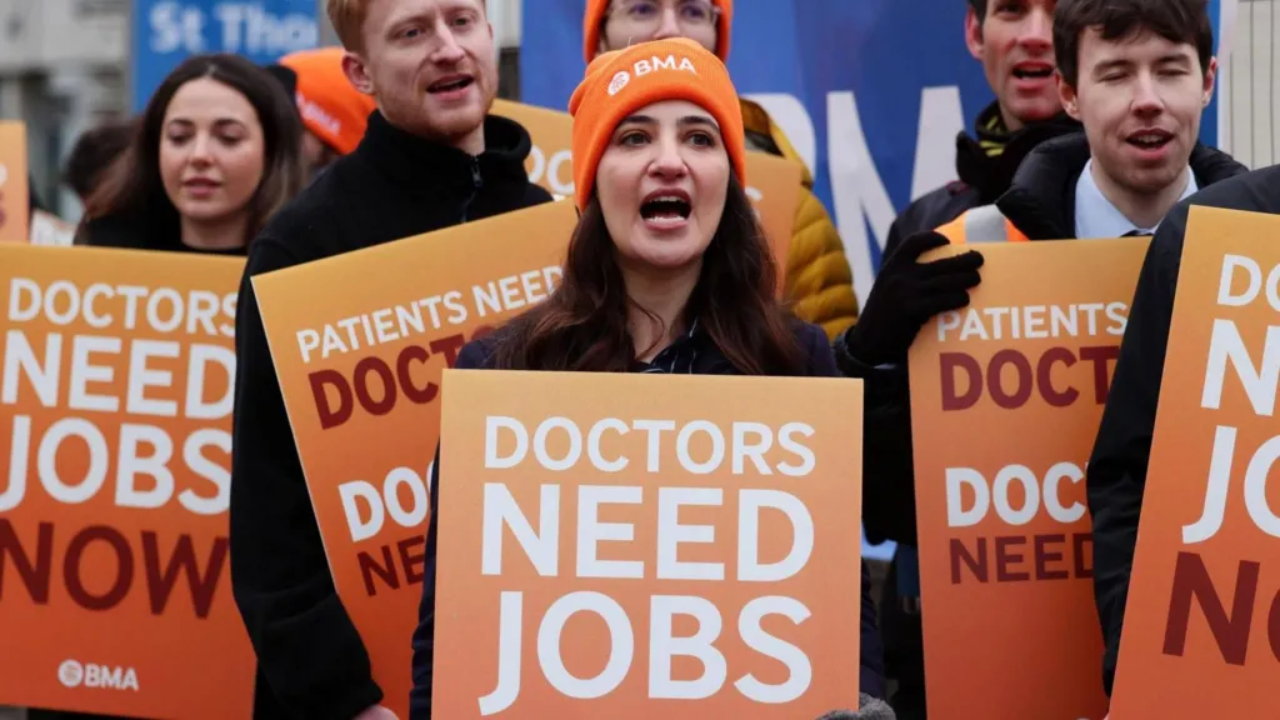
A major six-day walkout by resident doctors in England began today, Tuesday, April 7, and is set to continue until Monday, April 13. This marks one of the longest periods of industrial action in NHS history, following a collapse in pay negotiations between the government and the British Medical Association (BMA).
Thank you for reading this post, don't forget to subscribe!The Core Conflict
The strike was triggered after the BMA membership rejected a government pay proposal.
- The “Final” Offer: The government offered a cumulative pay rise of approximately 35% over three years.
- The Deadlock: Union leaders argue the deal does not sufficiently restore pay lost to inflation over the last decade.
- The Fallout: In response to the rejection, the government retracted a promise to fund 1,000 new training positions, heightening tensions between health officials and frontline staff.
What This Means for Patients
Coming immediately after the Easter holiday, the timing is critical for a service already facing backlogs.
- Service Disruptions: While the NHS expects to maintain nearly 95% of planned care, thousands of elective surgeries and routine consultations will be rescheduled.
- Emergency Services: Critical care, maternity, and A&E remain operational. Patients in life-threatening conditions are urged to call 999.
- Patient Advice: If your appointment has not been explicitly cancelled, show up as scheduled. Use NHS 111 for non-emergency medical advice to help ease the pressure on hospitals.