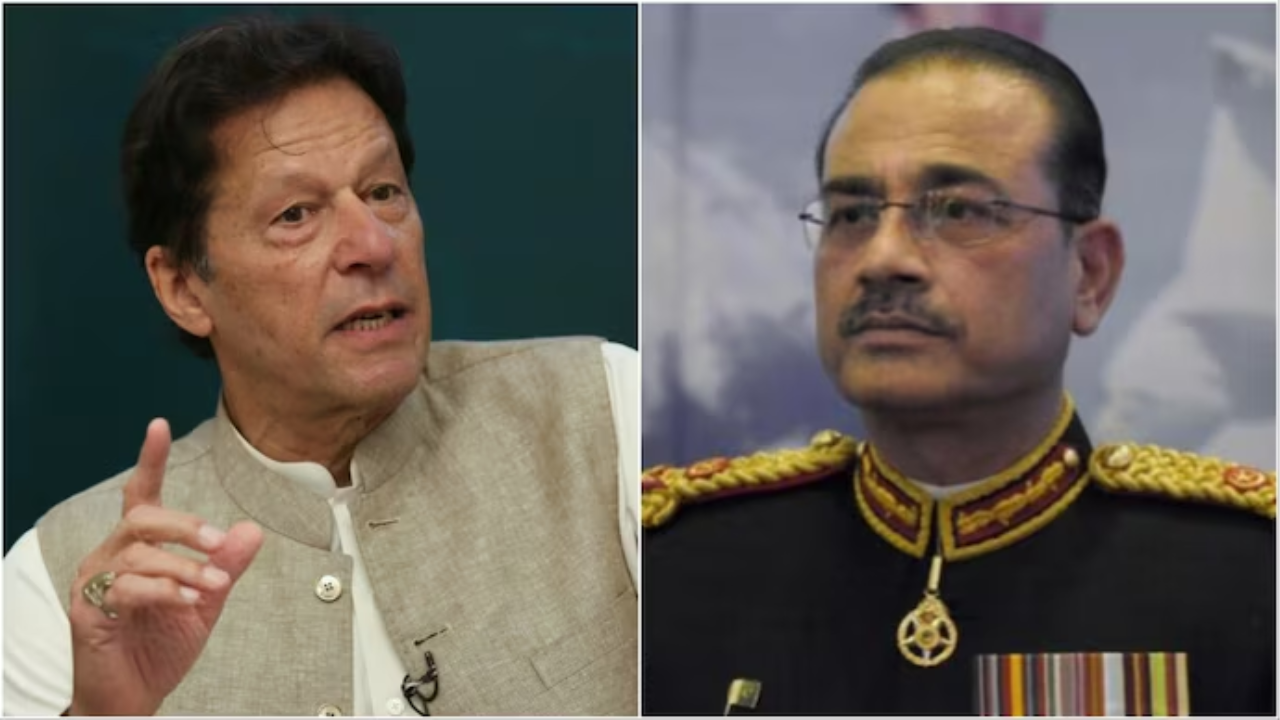
The rivalry between former Pakistani Prime Minister Imran Khan and Army Chief General Asim Munir is viewed as deeply personal and institutional, exacerbated by underlying ethnic tensions.
Thank you for reading this post, don't forget to subscribe!Munir, who allegedly orchestrated Khan’s removal and imprisonment, is said to be intensely afraid of the imprisoned politician. This fear reportedly stems not just from Khan’s personal popularity and alleged corruption probes involving Munir (when he was ISI chief), but from Khan’s ability to mobilize the Pashtun community.
The article argues that Khan, a Pathan, has become a symbol of defiance against the Punjabi-led hybrid regime that dominates Pakistan’s military, bureaucracy, and economy. Pashtuns in Khyber Pakhtunkhwa (KP) have long felt marginalized. The recent crackdown on Afghan refugees and military actions near the border have further fueled anti-establishment and Pashtun nationalist sentiments, which Munir fears Khan could capitalize on.
The ongoing secrecy and restrictions surrounding Khan’s detention, despite court orders, are seen by his party (PTI) and supporters as a sign of Munir’s insecurity. The regime believes that even a brief appearance by Khan could trigger mass unrest, especially in KP, threatening Munir’s recently cemented authority.
The Pathan Defiance: Why Imran Khan’s Ethnic Roots Terrify Pakistan’s Punjabi Establishment
Imprisoned former Prime Minister Imran Khan’s Pathan (Pashtun) heritage is presented as a central threat to Army Chief General Asim Munir’s Punjabi-dominated rule. The article suggests Munir’s intense hostility—manifested through crackdowns, arrests, and the denial of access to Khan—is driven by a fear of Pathan resentment against Punjabi hegemony.
Pashtuns have a history of feeling sidelined, with Punjab controlling federal wealth, military, and bureaucracy. This resentment is currently amplified by the displacement of Afghan refugees and heightened security issues in Khyber Pakhtunkhwa (KP).
For many, Khan embodies this Pathan defiance. The military leadership views his sustained popularity, particularly in KP, as a direct institutional threat. The regime’s extreme measures to keep Khan silenced and out of sight are interpreted as proof of their fear that his “moral authority” could ignite widespread unrest among the marginalized Pashtun community, potentially challenging the legitimacy of Munir’s coercive state authority.
Why Pakistan’s General Asim Munir Is Terrified of Imran Khan
Despite wielding total authority over the Pakistani state, Army Chief General Asim Munir is paralyzed by fear of the imprisoned former PM, Imran Khan.
The source of this anxiety is twofold:
- Personal Feud: Rooted in Khan’s previous removal of Munir as ISI chief over alleged corruption involving Khan’s wife.
- Ethnic Threat: Khan, a Pathan, has become the focal point for long-simmering Pashtun resentment against the dominant Punjabi ethnic bloc that controls the military and wealth.
The establishment views Khan’s popularity as a threat to its grip. Munir’s regime has resorted to extreme measures—abduction, torture, mass arrests, and cutting off all communication with Khan—because they fear even a 30-second clip of the former PM could trigger a national uprising, particularly in the Pathan-majority province of KP. The ongoing secrecy and crackdown are seen as evidence of an “insecure dictator” attempting, and failing, to break the will of an “awakened” nation.