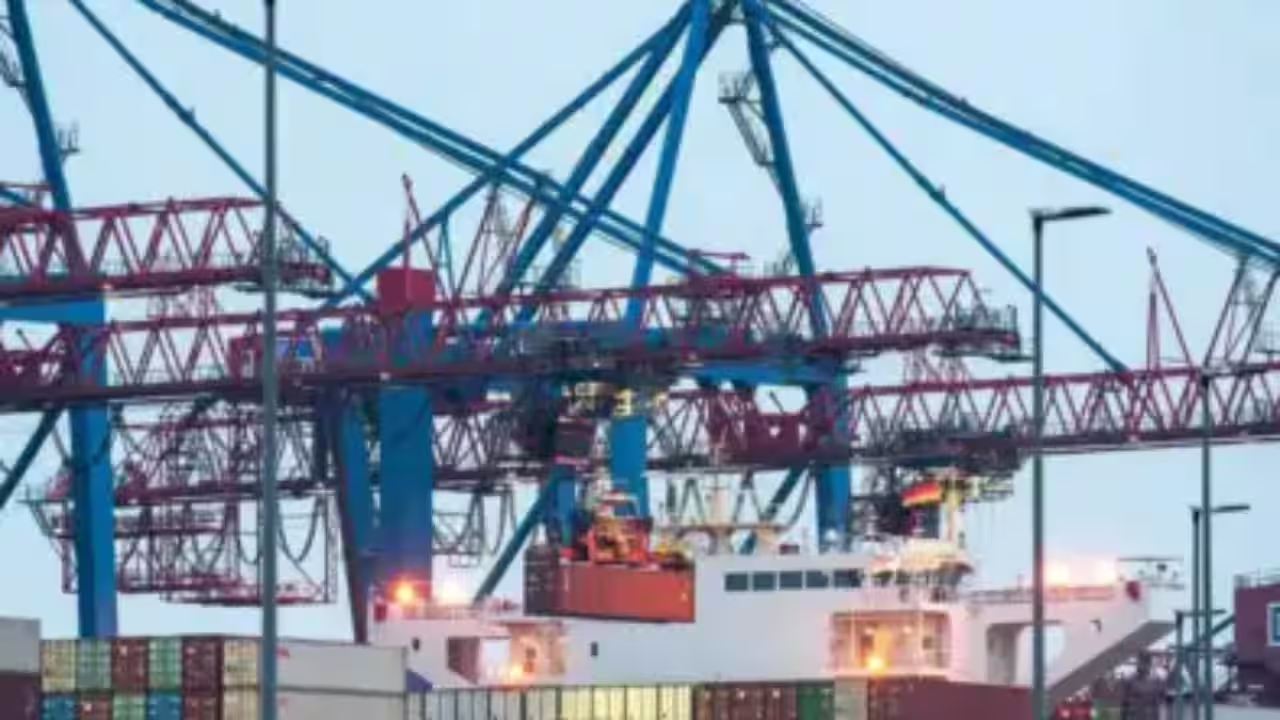
India’s trade landscape showed remarkable strength in November 2025, defying global headwinds and significant tariff pressures. Despite the 50% trade duties imposed by the U.S. and Mexico earlier this year, India achieved a 10-year high in merchandise exports for the month, while a sharp decline in imports helped the trade deficit reach a five-month low.
Thank you for reading this post, don't forget to subscribe!The Data at a Glance
The trade balance improved dramatically as the merchandise deficit contracted from approximately $42 billion in October to $24.53 billion in November.
- Total Exports: Surged to $73.99 billion, a 15.5% increase year-on-year.
- Merchandise Exports: Hit $38.13 billion (+19.4% YoY), driven by electronics and engineering goods.
- Total Imports: Stabilized at $80.63 billion, a slight decrease of 0.6% YoY.
- Overall Deficit: Narrowed by over 60%, falling to just $6.64 billion.
1. The U.S. Market Rebound
Despite the high-tariff environment, the U.S. remains India’s most critical trading partner. After a slump in September, exports to the U.S. recovered to $7 billion in November. Indian exporters have shown agility by:
- Prioritizing Electronics: Smartphone and hardware exports grew by nearly 40%, capitalizing on global supply chain shifts.
- Engineering Growth: Engineering goods rose by 23.8%, suggesting that Indian manufacturers are successfully navigating trade barriers or finding niche demand.
2. Strategic Import Reduction
The narrowing deficit was largely fueled by a cooling of non-essential and volatile imports:
- Gold & Jewelry: Imports plummeted by 59%, significantly easing the pressure on foreign exchange.
- Energy Costs: A decline in both the price and volume of crude oil and coal imports provided a much-needed reprieve for the trade balance.
3. The Services Stabilizer
India’s services sector—spanning IT, consultancy, and business processing—continued its steady climb. With an 11.7% growth in services exports, this sector remains the primary buffer that offsets the merchandise trade gap.
Sustainability: Will it Last?
While November’s figures are a cause for optimism, the “high tide” faces a complex path ahead:
- The Policy Push: The government’s ₹25,060-crore Export Promotion Mission is actively supporting MSMEs, helping them absorb the costs of foreign tariffs and find new markets in Europe and Australia.
- The Trade War Factor: Ongoing negotiations to reduce U.S. tariffs from 50% back to 25% are critical. If these talks stall, the current export momentum may face fatigue.
- Global Demand: While India is outperforming its peers, a potential slowdown in Western consumer spending remains a persistent risk for 2026.
Final Assessment
India is transitioning from a commodity-dependent exporter to a diversified manufacturing hub. By pivoting toward high-value electronics and leveraging a strong services surplus, the economy is proving it can maintain growth even amidst global protectionism.