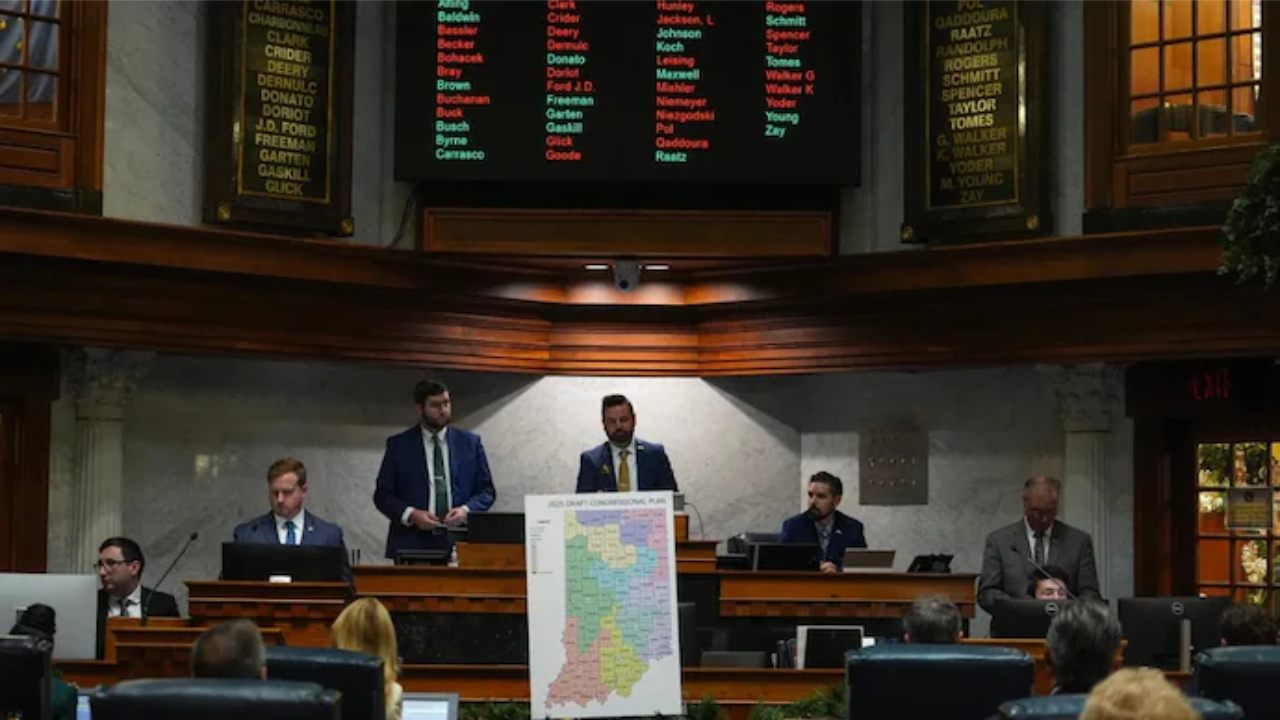
INDIANAPOLIS—Indiana’s Republican-led Senate overwhelmingly rejected a proposed redrawn congressional map on Thursday, delivering a significant setback to President Donald Trump and signaling the limits of his influence, even in one of the nation’s most conservative states.
Thank you for reading this post, don't forget to subscribe!The vote against the redistricting measure was 31-19, with a majority of Republican senators joining Democrats to defeat the bill. This result defied months of intense pressure from the White House and conservative national groups pushing for a mid-cycle boundary adjustment.
Limits of White House Pressure
The proposed map was designed to boost the Republican advantage by aiming to secure all nine of Indiana’s congressional seats, up from the seven they currently hold. This would have been achieved by effectively dismantling the two Democrat-held districts, splitting Indianapolis among four rural-extending districts, and reshaping the seats of U.S. Reps. André Carson and Frank Mrvan.
President Trump had personally engaged in the campaign, urging Republicans nationwide to redraw maps to secure the party’s slim House majority. While states like Texas, Ohio, and North Carolina adopted new maps, Indiana’s Senate refused.
“The federal government should not dictate by threat or other means what should happen in our states,” stated Republican Senator Spencer Deery, explaining his vote against the measure.
The debate, which saw cheers and shouts of “thank you!” upon the bill’s failure, was intense and accompanied by threats to some lawmakers, underscoring the high stakes involved.
A “Black Eye” for Trump
Former Indiana Governor Mitch Daniels, a Republican critic of the former president, praised the senators for their “courageous principled leadership.” Daniels called the outcome “a major black eye for him [Trump] and all the Washington groups that piled in, spent money, blustered and threatened.”
The effort had the backing of major conservative organizations like Club for Growth and Turning Point Action, whose leaders had pledged to fund primary campaigns against senators who voted no.
Republican supporters of the bill, such as Sen. Mike Gaskill, argued that Indiana should engage in the same gerrymandering tactics used by other states, particularly those controlled by Democrats. However, opponents like Democratic Sen. Fady Qaddoura countered, “Competition is healthy my friends. Any political party on earth that cannot run and win based on the merits of its ideas is unworthy of governing.”
The defeat came despite a “full-court press” from the administration, which included Vice President J.D. Vance meeting with senators three times and President Trump joining an October conference call to make a personal pitch.