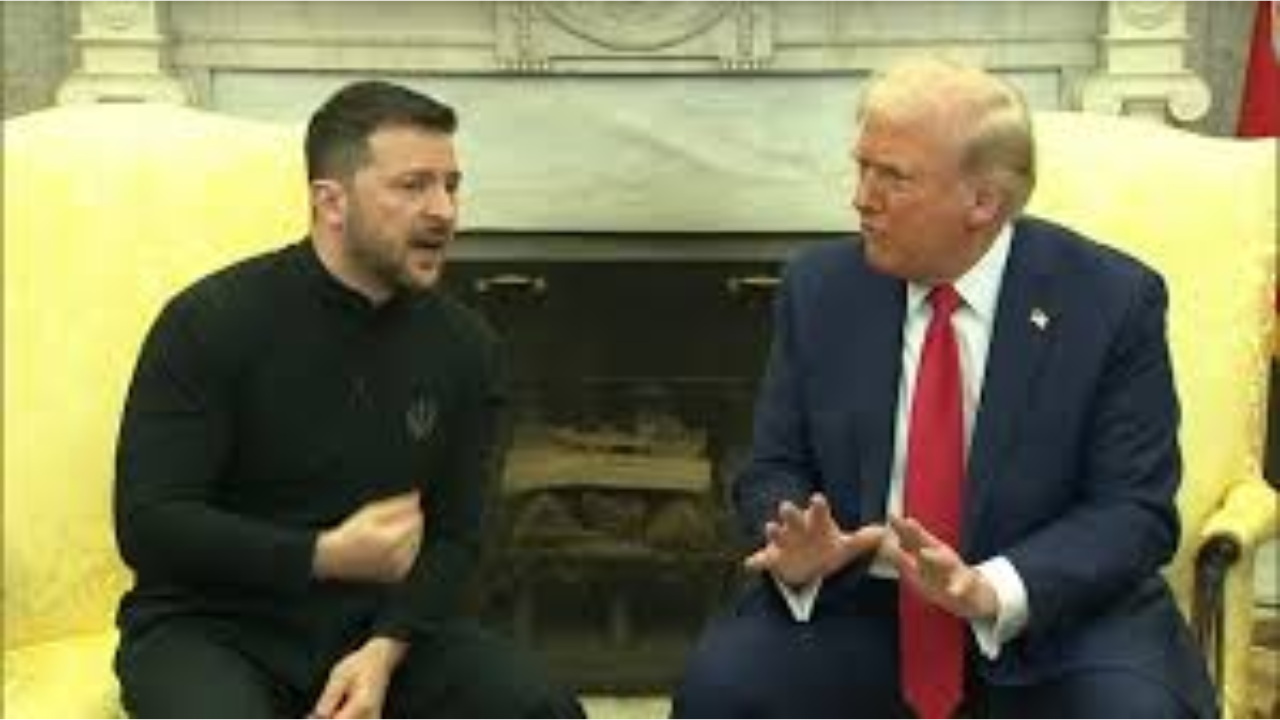
Ukrainian President Volodymyr Zelenskyy has arrived at Mar-a-Lago for a pivotal meeting with President Donald Trump. This encounter serves as a critical juncture in the Trump administration’s aggressive push to broker an end to the Russia-Ukraine war, which has reached a point of intense, multi-front negotiation.
Thank you for reading this post, don't forget to subscribe!The Core of the Negotiation
Zelenskyy is bringing a refined 20-point peace proposal to the table. While the two leaders have communicated frequently through intermediaries, this face-to-face sit-down aims to bridge the “final 10%” of disagreements.
- The Security Trade-off: Kyiv has signaled a historic shift, potentially moving away from its demand for full NATO membership in exchange for ironclad, NATO-style security guarantees from the U.S. and its allies.
- The “60-Day Window”: Ukraine is pushing for a two-month ceasefire to allow for a national referendum on potential territorial concessions, insisting that no long-term deal can be signed while under active fire.
The “Peace through Strength” Friction
Despite the shared goal of ending the conflict, the path forward is marked by significant friction points:
- Russian Sabotage: Moscow has responded to the diplomatic surge with military escalation. A massive drone and missile barrage on Kyiv today serves as a reminder that Vladimir Putin remains resistant to any deal that doesn’t meet his maximalist territorial demands.
- Trump’s Final Say: President Trump has maintained a firm stance on his role as the dealmaker, recently noting that no proposal is final until he personally approves it.
- Territorial Integrity: Russia continues to demand full control of the Donbas, a condition that remains a non-starter for the Ukrainian public without significant security offsets.
Summary of Strategic Hurdles
| Hurdle | The Ukrainian Position | The Trump Admin Position |
| NATO Status | Open to “neutrality” if security is guaranteed. | Prefers a non-NATO solution to de-escalate with Russia. |
| Territory | Requires a ceasefire and referendum for any loss of land. | Focused on a “realistic” freeze of current front lines. |
| Funding | Needs continued U.S. support for reconstruction. | Expects European allies to take the lead on the financial burden. |