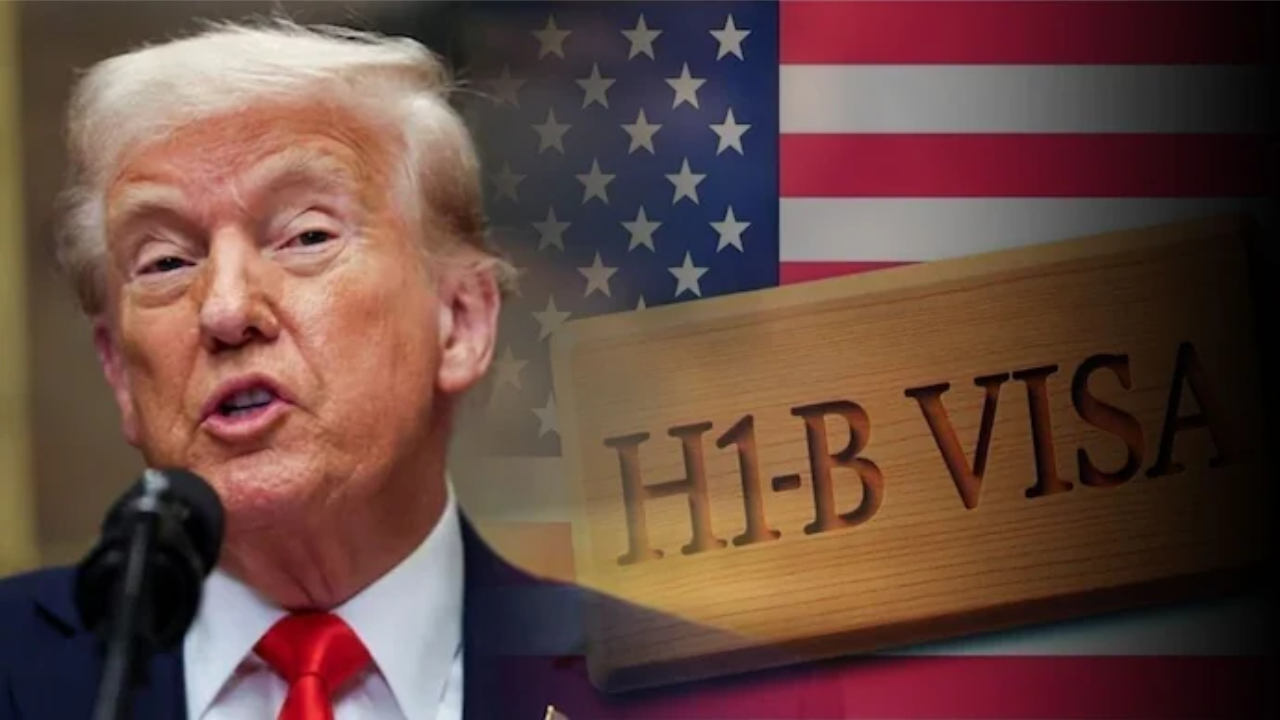
Twenty U.S. states, led by California, have filed a lawsuit against the Trump administration to block a new, drastically increased $100,000 fee on H-1B visas. The states argue that the President overstepped his authority by imposing the massive charge, which they say threatens to dismantle the critical skilled-worker program and exacerbate labor shortages in essential services.
Thank you for reading this post, don't forget to subscribe!Key Points of the Legal Challenge
1. Presidential Authority Questioned
- The Surcharge: The fee of $100,000 is a significant increase over the typical $2,000 to $5,000 visa charges. This new policy bars new H-1B recipients from entering the US unless their employer pays this amount.
- States’ Argument: California Attorney General Rob Bonta asserts that the President does not have the constitutional authority to impose fees for the purpose of generating revenue. Federal law, according to the suit, only allows immigration authorities to collect fees to cover the administrative costs of the visa programs.
- Separation of Powers: Bonta emphasized, “No president can ignore the co-equal branch of government of Congress, ignore the Constitution, or ignore the law,” arguing that revenue generation is a power reserved for Congress.
2. Impacts on Critical Sectors
- Labor Shortages: The states warn that the six-figure fee will create severe financial strain, potentially leading to deepening labor shortages and service cuts in sectors reliant on H-1B workers.
- Key Users: Technology companies are the largest users, but hospitals, universities, and schools also depend heavily on the program, employing tens of thousands of professionals like educators and healthcare workers.
3. Administration’s Defense
- The White House defended the policy as necessary and lawful, stating its intent is to curb alleged abuse of the H-1B system.
- The order uses presidential powers under federal immigration law to restrict the entry of foreign nationals deemed detrimental to U.S. interests.
4. Coalition of Opposition
- California, New York, Massachusetts, Illinois, New Jersey, and Washington are among the 20 states involved, all represented by Democratic attorneys general.
- The lawsuit is one of at least three legal challenges; the U.S. Chamber of Commerce and various labor/employer coalitions have filed separate suits against the fee.
In essence, the lawsuit pits the executive branch’s use of power to control immigration against the legislature’s exclusive authority to impose taxes and fees, with significant implications for the future of skilled foreign labor in the U.S.