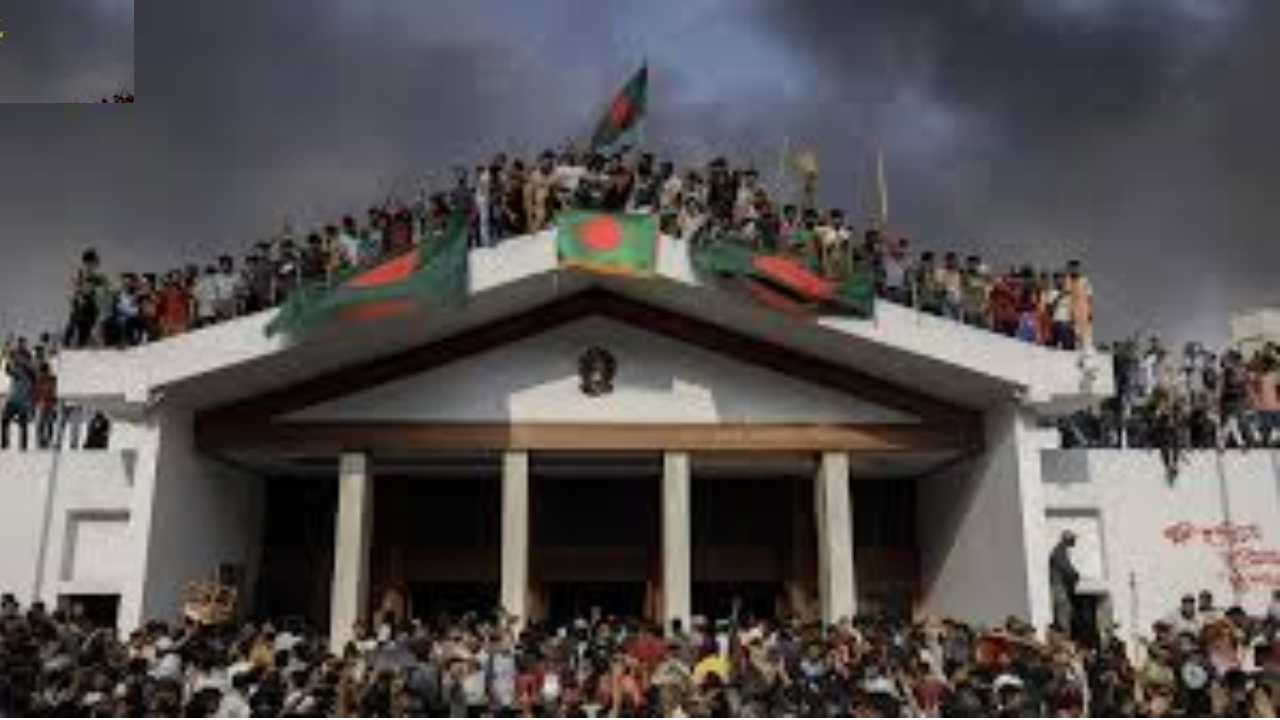
A recent high-stakes debate on India Today, hosted by Gaurav Sawant, highlighted the deepening crisis in Bangladesh, with experts warning of systemic radicalization and a total breakdown of law and order. The discussion centered on the “Ukraine” analogy, the rise of extremist influence, and the recent violent suppression of the free press.
Thank you for reading this post, don't forget to subscribe!The “Ukraine” Analogy: A Regional Security Threat
Journalist Muktadir Rashid delivered the most striking assessment of the evening, arguing that the instability in Bangladesh has transcended local politics.
- Beyond “Pakistanization”: Rashid claimed that describing Bangladesh as “the next Pakistan” (referring to economic and military instability) is no longer sufficient.
- The Ukraine Warning: He cautioned that the nation is becoming an “Ukraine for South Asia”—implying a volatile, long-term conflict zone that could drag neighboring powers into a broader regional proxy war.
Assault on the Fourth Estate
The panel addressed the unprecedented arson attacks on the Dhaka offices of Prothom Alo and The Daily Star.
- Mob Violence: Radical groups, specifically the Inqilab Mancha, targeted these outlets following the death of leader Sharif Osman Hadi.
- Silencing Dissent: For the first time in decades, these premier newspapers were forced to halt publication. Experts noted that the failure of the interim government’s security forces to intervene signals a dangerous precedent for press freedom.
Expert Perspectives: Political Motives & ISI Influence
The debate featured sharp criticisms of the current interim administration and external actors:
- Political Immunity: Veteran journalist Subir Bhaumik criticized Chief Adviser Muhammad Yunus, alleging that his pursuit of the presidency is a strategic move to gain legal immunity from ongoing prosecutions. Bhaumik argued that the interim government has failed to protect the secular pillars of the 1971 liberation.
- The Pakistan Factor: Lt Gen KJS Dhillon (Retd) highlighted the “increasingly visible footprint” of Pakistan’s ISI within Bangladesh. He issued a stern warning that India would not tolerate its neighbor being used as a base for anti-India operations.
- Targeting Minorities: The panel expressed grave concern over the rising tide of radicalism, specifically the systematic targeting of religious minorities and the destruction of cultural landmarks.
Conclusion: A Nation at the Crossroads
The experts concluded that with national elections looming in February 2026, the current atmosphere of fear and the rise of the Jamaat-e-Islami influence threaten to fundamentally alter the identity of Bangladesh. The shift from a secular democracy to a radicalized “frontline state” poses the single greatest security challenge to South Asia in decades.