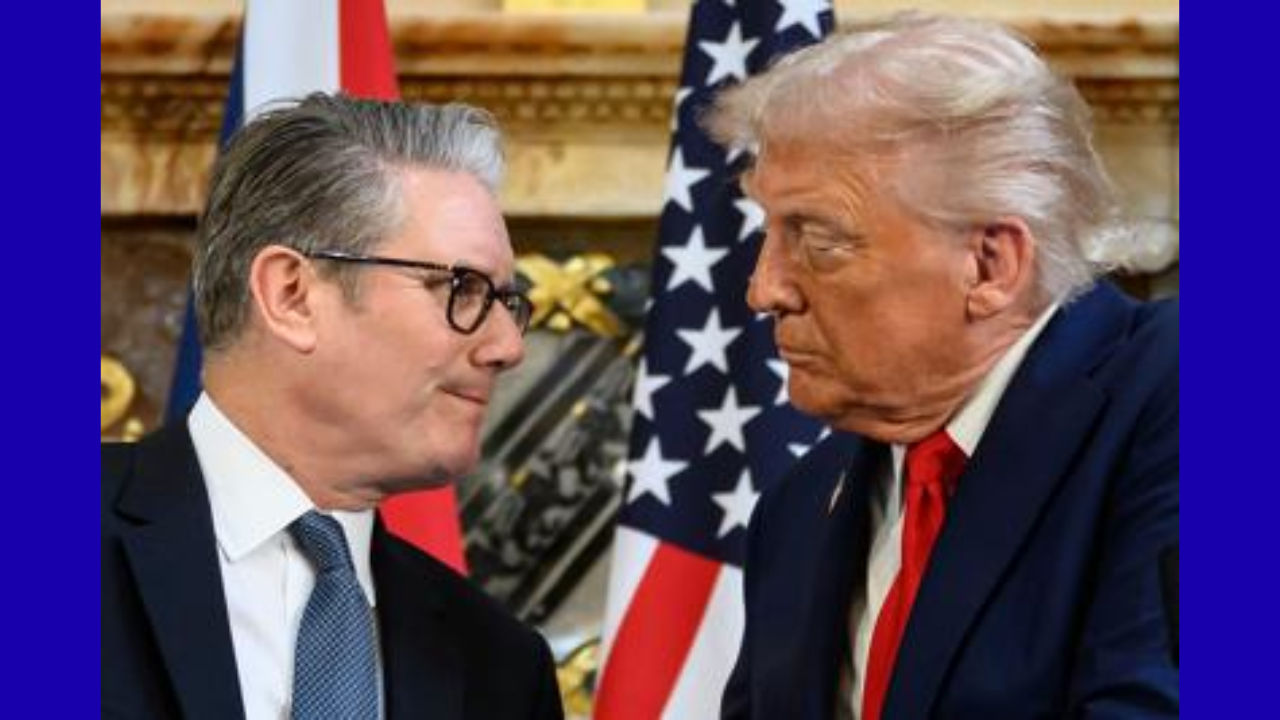
The “Special Relationship” between London and Washington is facing its most severe test in decades as Prime Minister Keir Starmer and President Donald Trump find themselves on opposite sides of the escalating war with Iran. The friction, which began following the U.S.-Israeli strikes that killed Iran’s Supreme Leader on February 28, has moved from private diplomatic disagreement to public rebuke.
Thank you for reading this post, don't forget to subscribe!The Core Conflict: “Offensive vs. Defensive”
- The UK’s “Defensive” Pivot: Initially, Starmer refused to participate in any strikes. However, after an Iranian drone struck the RAF Akrotiri base in Cyprus on March 2, the UK authorized the use of its bases (including Akrotiri and Diego Garcia) for “limited defensive purposes” to intercept incoming missiles and drones.
- Trump’s “Dither and Delay” Critique: In a sharp interview with The Sun, Trump lambasted the Prime Minister’s caution, stating that the UK took “far too much time” to grant base access. He suggested that Starmer’s focus on international law was a sign of weakness, signaling a shift toward a more transactional relationship with America’s oldest ally.
The “Iraq Shadow” and Legal Standing
Starmer has grounded his resistance in the “lessons of Iraq,” telling Parliament that the UK will not join “regime change from the skies.”
- Legal Scrutiny: As a former Director of Public Prosecutions, Starmer has insisted that any British action must have a clear lawful basis under the principle of collective self-defence.
- Regional Fallout: The UK’s cautious stance is also driven by the safety of the 300,000 British nationals currently in the Middle East. While the U.S. pushes for total victory, London is focused on a “negotiated settlement” to prevent a total regional collapse.
Escalation on the Ground
The conflict is no longer a distant threat for the UK. On March 2, a Shahed-type drone hit the runway at RAF Akrotiri, marking the first attack on a British sovereign base in Cyprus since 1986. While there were no casualties, the event forced Starmer to balance his “non-offensive” stance with the reality that British assets are now active targets.
“It is my duty to judge what is in Britain’s national interest. We will not join offensive strikes, but we will protect our people.” — Keir Starmer, March 2, 2026
Current Status: As of March 3, the UK remains a “defensive partner,” providing intelligence and interception capabilities while steadfastly refusing to join the U.S. in direct strikes against the Iranian mainland.