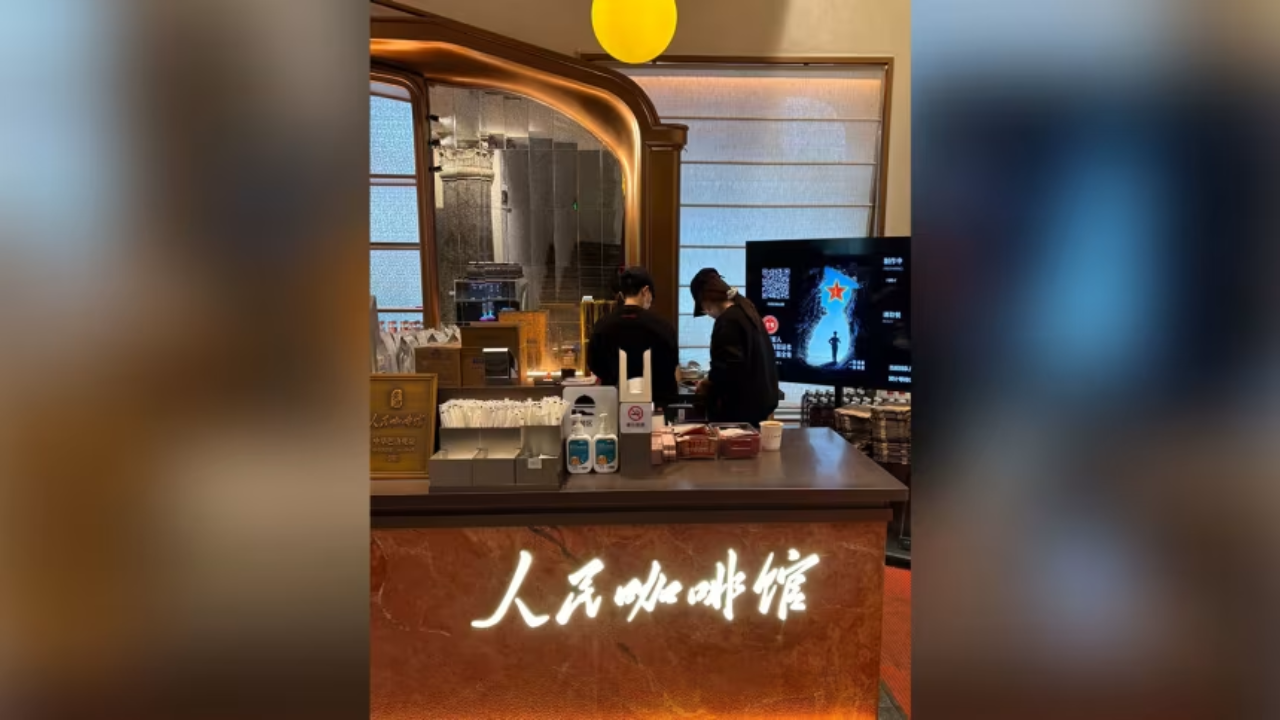
A Chinese coffee chain, People’s Cafe, has apologized and rebranded after drawing fierce criticism from state media for misusing politically revered terminology and aesthetics.
Thank you for reading this post, don't forget to subscribe!The chain’s branches were styled with a heavy Chinese Communist Party (CCP) aesthetic, featuring bright red decor, stars, and a typeface inspired by Mao Zedong’s calligraphy. Most controversially, the name “People’s”—or “renmin“—is a term with “profound political connotations,” according to the Communist Party mouthpiece, People’s Daily. This term is reserved for authoritative state institutions like the People’s Republic of China and the People’s Liberation Army.
The People’s Daily condemned the cafe for riding the “gimmick economy,” stating the term “must not be profaned.” Following the rebuke, the company, formerly known as Yao Chao People’s Cafe, issued an apology and announced it would add “Yao Chao” back to the name of all mainland shops.
The incident highlights the perilous line businesses walk when leveraging nationalistic or political themes in China’s rapidly expanding, cut-throat coffee market, where local brands are challenging giants like Starbucks.
Too Red, Too Bold: Why a Chinese Coffee Shop’s Name Became a National Scandal
Imagine a coffee shop so eager for attention it adopts the look and name of the national government. That’s what happened with People’s Cafe in China, and the stunt spectacularly backfired.
The chain decked out its stores in bright Communist red, using stars and a calligraphy style straight out of the Mao era. Its name, “People’s” (renmin), is the same highly sensitive prefix used for the country itself (People’s Republic of China) and its military.
This aggressive brand strategy quickly landed the cafe in hot water. State media, led by the People’s Daily, slammed the chain for crossing the “bottom line” of marketing by exploiting a term that “embodies specific social sentiments.”
After being publicly roasted—and facing heat on social media—the company issued a “sincerest apology.” It’s now dropping the controversial moniker in mainland China, reverting to the full “Yao Chao People’s Cafe.” The episode serves as a powerful reminder that while China’s coffee market is booming, using political symbolism as a marketing tool is a risky brew indeed.
Which style do you prefer, or would you like a different focus, such as one concentrating on the booming coffee market?