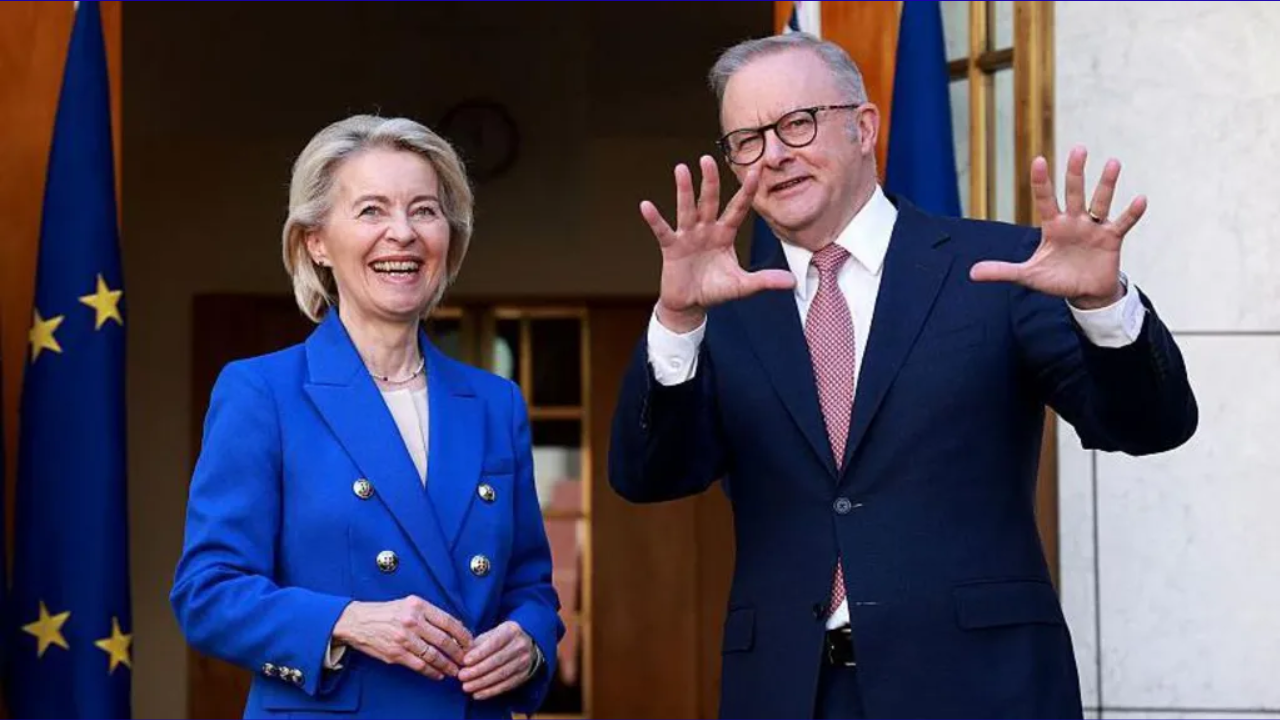
The “Stability Pact” aims to reshape global supply chains amidst rising geopolitical tension.
Thank you for reading this post, don't forget to subscribe!After nearly a decade of “will-they-won’t-they” diplomacy, Australia and the European Union have finally signed a sweeping Free Trade Agreement (FTA). The deal marks a massive shift in economic strategy, as both powers look to insulate themselves from market volatility and reduce their reliance on single-country trade dependencies.
The Core Breakthroughs
| Feature | The Outcome |
| Tariffs | 98% of Australian goods enter the EU duty-free; EU companies save €1B annually. |
| Minerals | Fast-tracked EU access to Australian lithium and cobalt for EV production. |
| Naming Rights | A “Grandfather” clause allows existing Aussie brands to keep using names like Feta. |
| Luxury Goods | Immediate removal of the 5% import tax on European cars, spirits, and fashion. |
The “Agri-Conflict” Compromise
The deal wasn’t without its casualties. While Australian beef and sheep meat producers gained significantly more access than they had previously, the National Farmers’ Federation (NFF) remains vocal, arguing the quotas still fall short of true “free trade.” Conversely, European dairy farmers secured protections that will eventually phase out the use of certain “European” regional names in Australian exports over the next decade.
A New Shield: The Defense Pact
- Cyber Defense: Real-time intelligence sharing on state-sponsored hacking.
- Maritime Stability: Increased European naval presence and joint drills in the Indo-Pacific.
- Green Energy: Joint investment in hydrogen technology and sustainable mining.
“This agreement is about more than just cheaper wine or better beef; it is a strategic insurance policy in an increasingly unpredictable world.” — PM Anthony Albanese