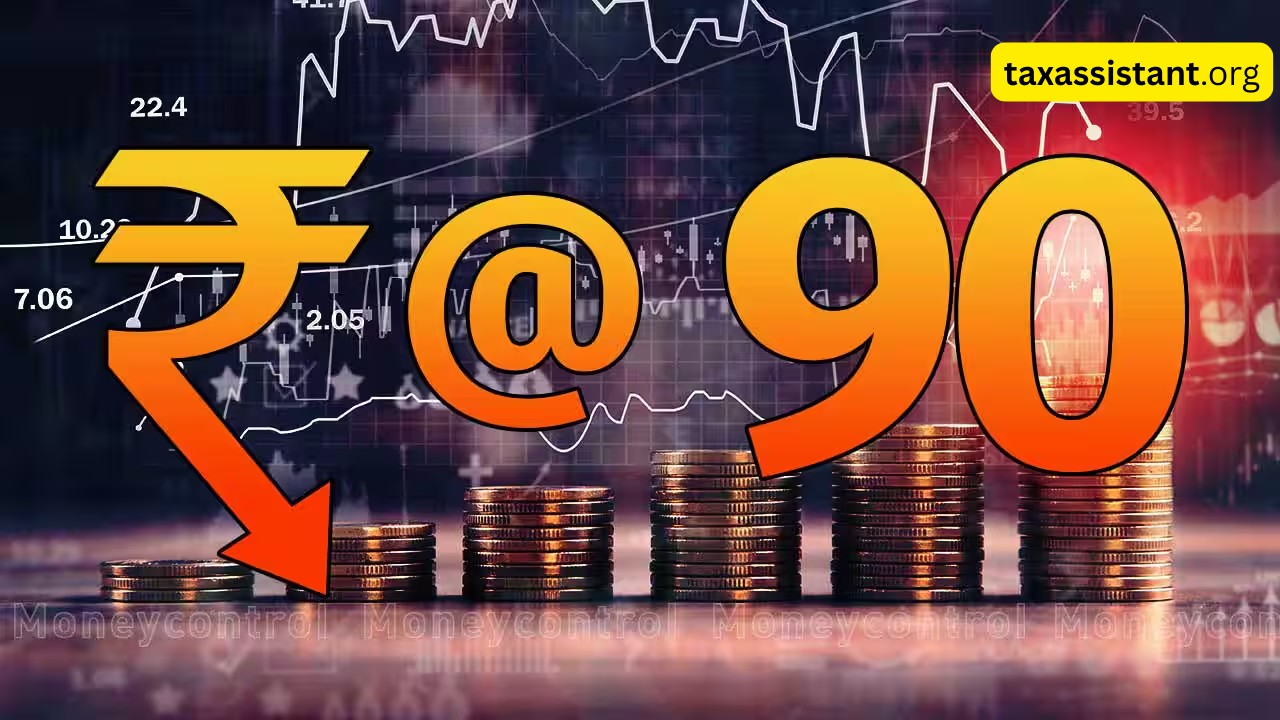
The prospect of a “Goldilocks” economy—an ideal state of steady growth paired with low inflation—is the cornerstone of India’s 2026 economic outlook. While domestic fundamentals look promising, the Indian Rupee (INR) remains caught in a tug-of-war between internal strength and external volatility.
Thank you for reading this post, don't forget to subscribe!The Bull Case: India’s Internal Resilience
The “just right” scenario for 2026 is built on three pillars that could provide a much-needed floor for the currency:
- Growth Dominance: With GDP growth projected to hover between 6.7% and 7.5%, India remains the fastest-growing major economy. This relative outperformance is a natural magnet for Foreign Direct Investment (FDI).
- Inflation Mastery: Having successfully reined in inflation to the 1%–2% range, the Reserve Bank of India (RBI) has achieved a rare level of price stability. This increases the “real” return for investors, even if nominal interest rates move lower.
- Capital Account Recovery: Financial institutions like Citi anticipate a shift toward a Balance of Payments (BOP) surplus by FY27. As Indian bonds are integrated into global indices, a steady stream of passive inflows could counteract trade-related outflows.
The Bear Case: Global Headwinds and Trade Friction
Even a perfect domestic economy cannot fully insulate a currency from global tectonic shifts. The Rupee faces significant “bear” threats that originate outside India’s borders:
- The “Trump Trade” Factor: Aggressive U.S. tariff policies and a “strong dollar” narrative continue to drain liquidity from emerging markets. If 2026 sees heightened trade protectionism, the Rupee may struggle to appreciate despite local growth.
- The Yield Spread Gap: As the RBI prioritizes growth by cutting the repo rate (potentially toward 5.25%), the narrowing interest rate gap between India and the U.S. could lead some short-term investors to favor the Greenback.
- Persistent Trade Deficits: While services exports are booming, the merchandise trade deficit remains a structural weight. The Rupee cannot truly “break out” until the investment inflows significantly outweigh the cost of imports.
Protection, Not necessarily a Pivot
Will the Goldilocks economy “rescue” the Rupee? The answer is a matter of stability rather than strength.
The current trajectory suggests that while the Rupee may not see a dramatic rally back to previous years’ highs, the “Goldilocks” environment will prevent a freefall. We are likely entering an era of “Managed Depreciation,” where the RBI uses its massive forex reserves to ensure the Rupee weakens at a much slower, more predictable pace than its peers.
Summary of Indicators for 2026
| Indicator | Outlook | Impact on INR |
| GDP Growth | Strong (7%+) | Bullish |
| Foreign Inflows | Increasing (BOP Surplus) | Bullish |
| U.S. Dollar Index | Volatile/High | Bearish |
| Global Trade | Restrictive (Tariffs) | Bearish |