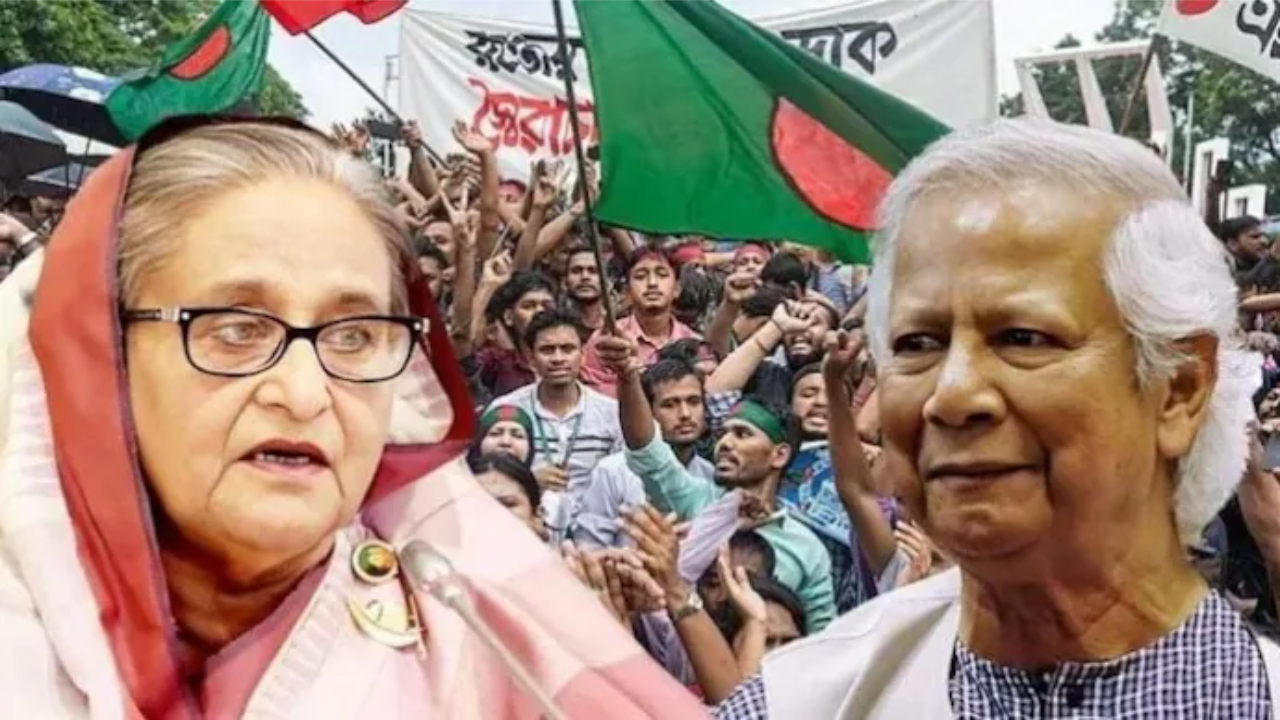
Bangladesh is entering a period of extreme political volatility following the outright rejection of the upcoming general election by Sheikh Hasina’s Awami League (AL) party. The AL has harshly condemned the interim government led by Chief Adviser Muhammad Yunus as an “illegal, occupying, killer-fascist clique,” claiming it is incapable of ensuring a transparent and fair electoral process.
Thank you for reading this post, don't forget to subscribe!Chief Election Commissioner AMM Nasir Uddin has confirmed the national election is scheduled for February 12, 2026, alongside a national referendum on the “July Charter” constitutional reforms. However, the political landscape is fractured by the AL’s refusal and its current status.
The Core of the Rupture
- AL’s Exclusion: The Awami League has been banned from political activities and its registration suspended by the Election Commission, effectively preventing it from contesting the polls. The party, which ruled for over 20 years and won nine elections, argues that excluding it pushes the country toward a deep crisis.
- Demand for Neutrality: The AL demands the immediate lifting of all restrictions on the party, the unconditional release of political prisoners, the withdrawal of cases against leaders like Sheikh Hasina, and the replacement of the Yunus administration with a neutral caretaker government before any legitimate election can be held.
- Accusations of Bias: The AL’s official statement asserts that the current authority is “entirely biased” and cannot reflect the people’s will.
Escalating Instability
The deepening political mistrust and the absence of dialogue are severely straining the nation’s stability. With a major political force like the Awami League banned, the general election is widely expected to be contested primarily by the Bangladesh Nationalist Party (BNP) and Jamaat-e-Islami, along with the National Citizens Party (NCP), which spearheaded the 2024 student uprising.
This high-stakes rupture is seen as tightening the lid on a “pressure cooker society” and raises serious concerns about the potential for civil unrest and its implications for regional security, particularly for India, due to the shared 4,000-kilometre porous border. The political standoff and institutional paralysis suggest dark days ahead for Bangladesh as it moves toward the controversial poll date.