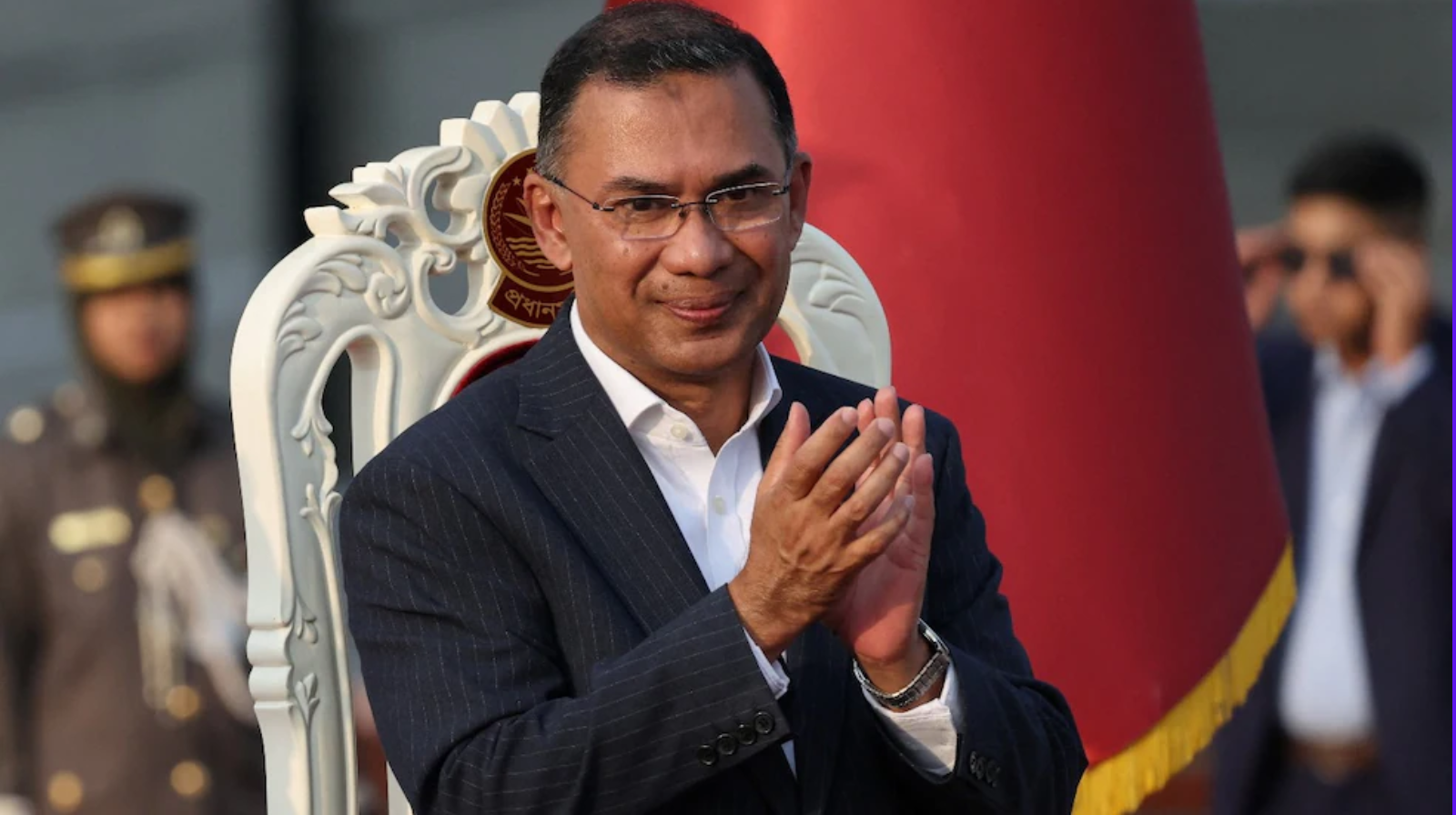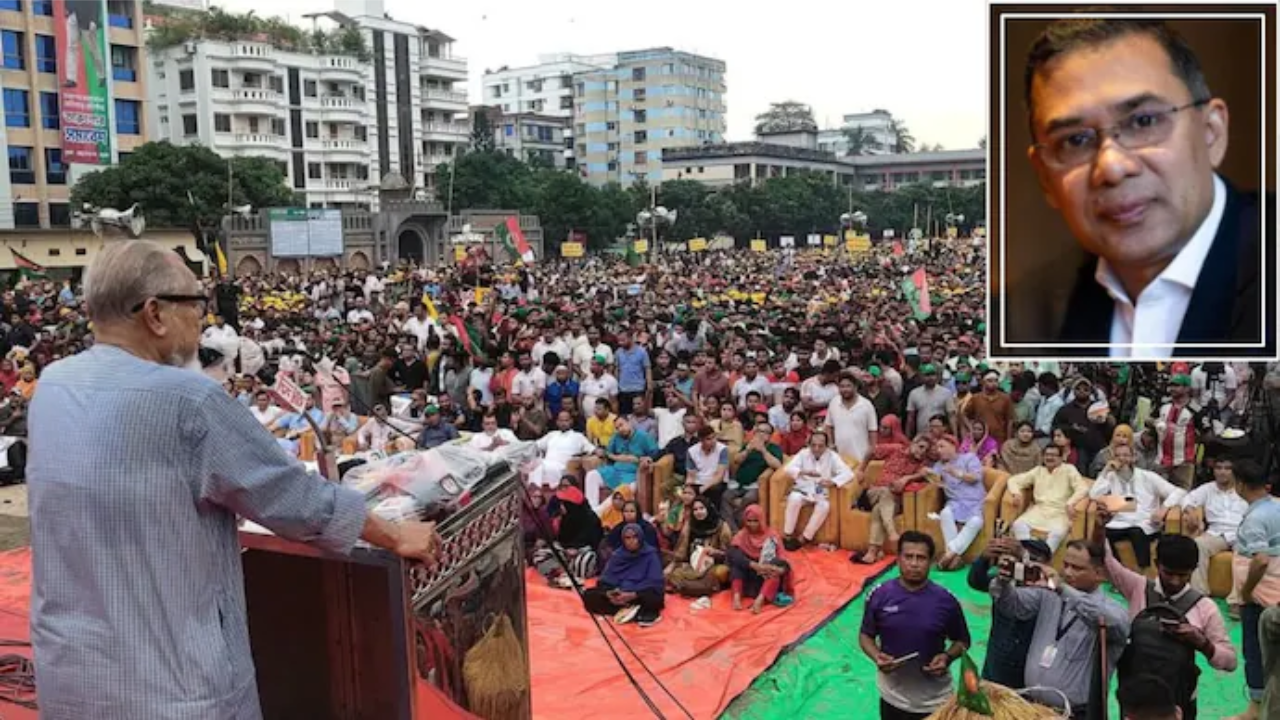
The upcoming Bangladeshi national election on February 12, 2026, is highlighting a major political battle in the Bogura 6 constituency, where Tarique Rahman, the likely next Prime Minister if his Bangladesh Nationalist Party (BNP) wins, is facing an unusual and direct challenge to his family’s political heritage.
Thank you for reading this post, don't forget to subscribe!The Bogura 6 Challenge
Tarique Rahman, the son of BNP founder and former President Ziaur Rahman, is being challenged by Abdullah-al-Waki of the student-led National Citizens Party (NCP). Waki’s strategy is to accuse the BNP of having strayed from Ziaur Rahman’s ideals and political path.
- Waki’s Claim: Waki, who calls Ziaur Rahman the “Father of the Nation,” claims he is the true political inheritor and labels the BNP an “impostor” party. He specifically condemns the BNP for entering an alliance with the Awami League in the 1980s, viewing it as a betrayal.
- Tarique’s Position: As the Acting Chairman of the BNP and running for his mother Khaleda Zia’s former seat (she is currently critically ill), Tarique is the frontrunner to become PM, according to surveys. His decision to contest Bogura 6 is a clear signal of him taking full control of the party.
The Contested Legacy of Ziaur Rahman
Ziaur Rahman (who was killed in an attempted coup in 1981) remains a divisive figure:
- Founder of the BNP: He founded the BNP in 1978 and became President after political turmoil in the 1970s. He ended the one-party rule and introduced political and economic reforms.
- Role in Independence: He is remembered for announcing the Declaration of Independence on March 27, 1971, and served as a key commander in the Mukti Bahini.
- Controversy: His legacy is “contested,” as some view him as a dictator, while others hail him as the key military officer who secured independence.
The outcome in Bogura 6, a BNP stronghold, will be keenly watched as it tests whether the party’s founder’s legacy can be successfully weaponized against his own son.